
Both materials build beautiful outdoor spaces. The right one depends on your home, how you use the yard, and how the surface performs in July.
When you’re planning a new patio, pool deck, walkway, or outdoor living space, one of the biggest decisions you’ll make is the paving material. In Arizona, where extreme temperatures and intense sun are part of everyday life, the right paver makes a real difference in both appearance and long-term performance.
Two of the most popular choices are porcelain pavers and natural stone. Both create beautiful outdoor spaces. Each has real advantages depending on your home’s style, how much upkeep you want, and what you’re comfortable spending on the project.
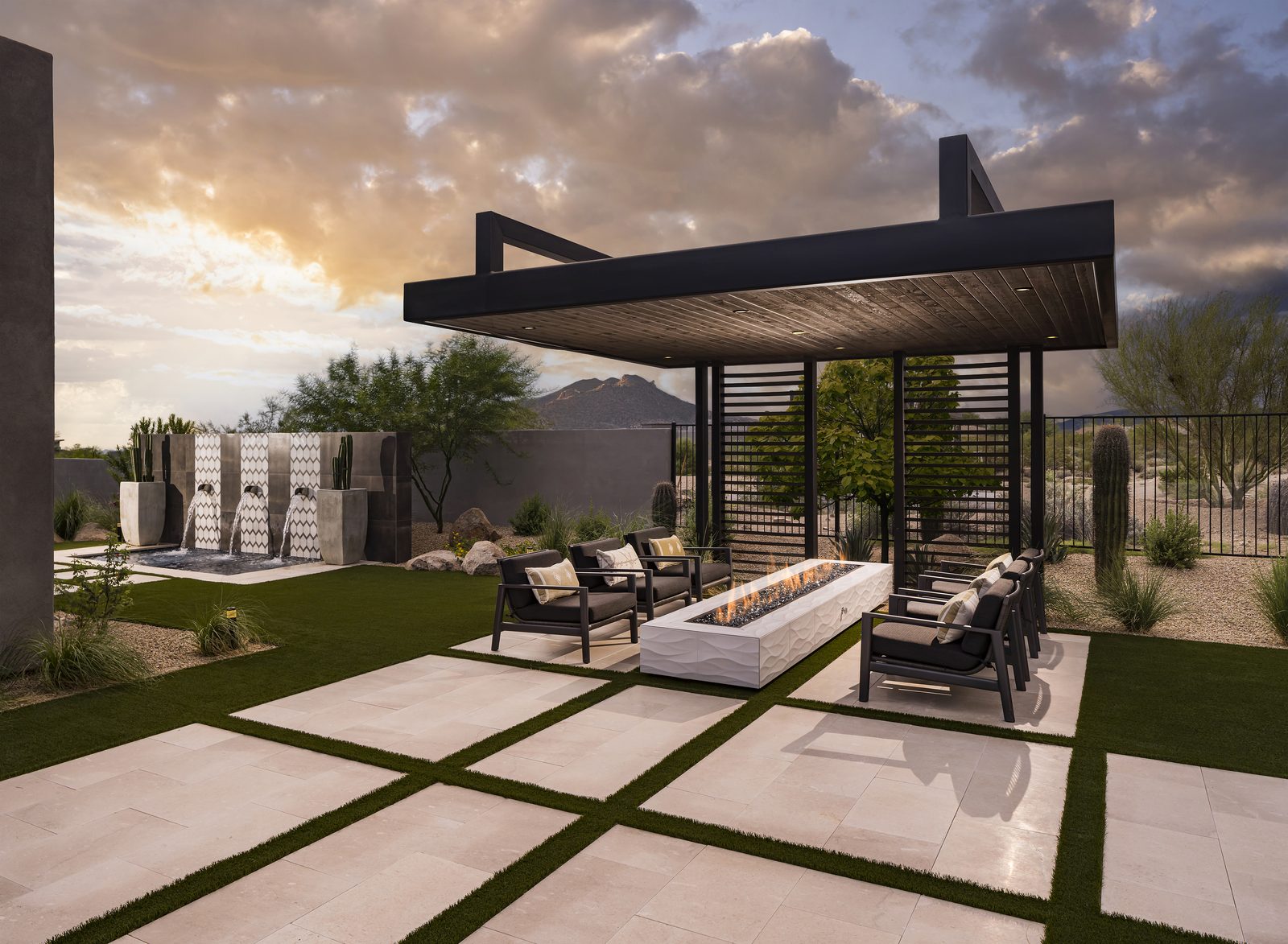
Why porcelain pavers are growing in popularity
Porcelain has become one of the fastest-growing materials in modern landscape design across the Valley. Homeowners like the clean appearance, the durability, and how little attention it needs.
Manufactured durability. Porcelain is fired at extremely high temperatures, creating a dense material that resists scratching, staining, fading, and everyday wear. It holds its appearance for years with very little upkeep.
A clean, modern look. Because every paver is manufactured, color, texture, and dimensions stay uniform across the whole project. That consistency produces crisp lines and a refined finish that pairs beautifully with contemporary desert architecture.
Excellent stain resistance. Outdoor entertaining means spilled drinks, food, dirt, and leaves. Porcelain’s non-porous surface makes cleanup simple and resists discoloration from soil, irrigation water, and fertilizers.
Things to know. Exposed porcelain edges usually need finishing pieces or a specialized edge treatment to look right — something we account for during design. Porcelain is also strong under normal use, but its corners can chip if struck hard during delivery or installation, which is why professional handling matters.
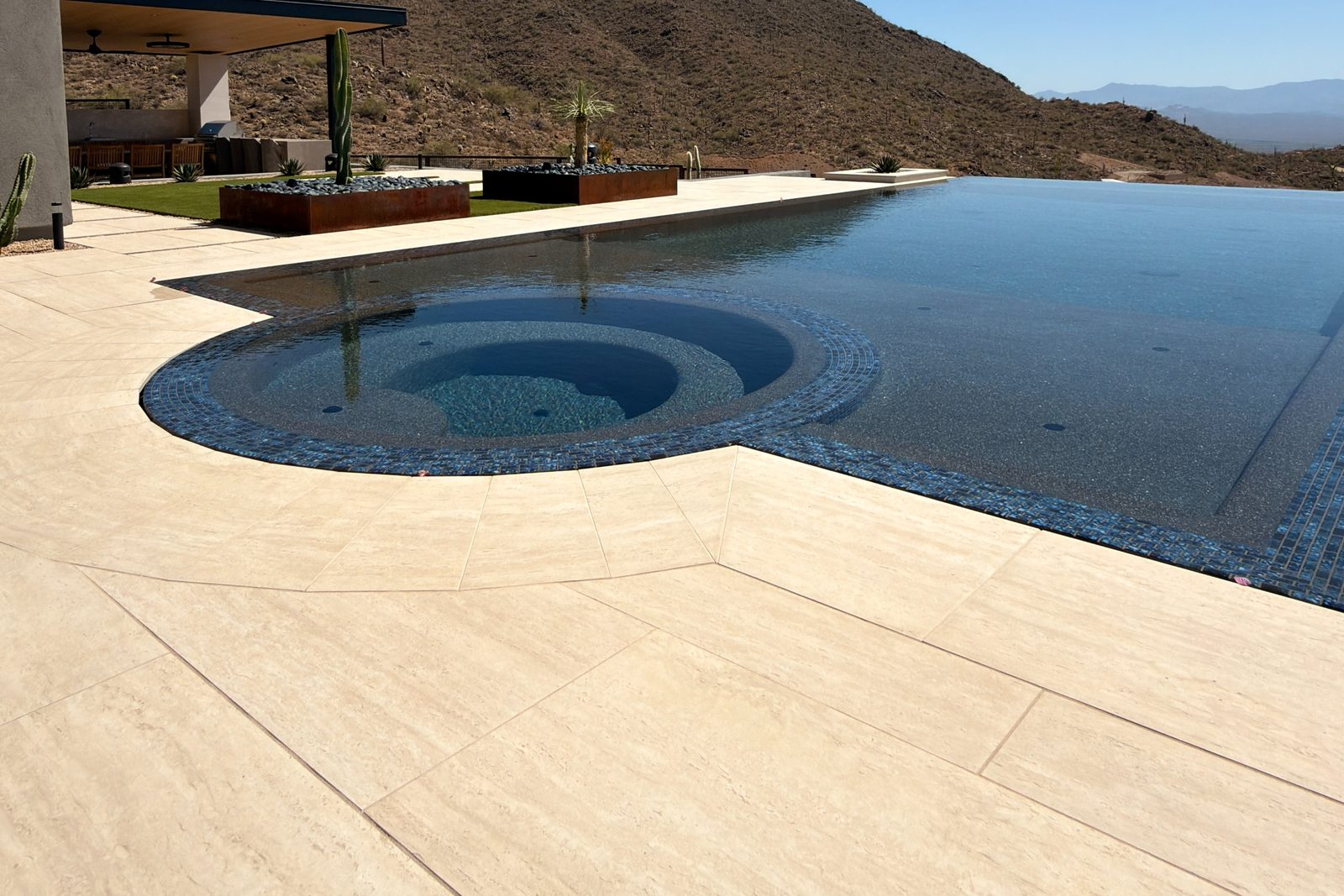
Why homeowners still love natural stone
Natural stone has been the Valley’s pool deck material for decades, and for good reasons that go well beyond looks.
Cooler underfoot. This is where stone earns its place in Arizona. Travertine’s porous structure doesn’t hold heat the way dense materials do, and its naturally light, earthy tones reflect sun rather than absorbing it. Against a poured concrete deck, light travertine has measured roughly 25°F cooler in Phoenix conditions. Around a pool, where people are barefoot, that difference is the whole experience.
Character no manufactured product duplicates. Every piece carries its own veining, tone, and texture. Stone brings a warmth and authenticity that works beautifully with Mediterranean, Southwestern, Spanish Colonial, ranch, and traditional Arizona homes — and it grounds contemporary desert architecture just as well, because it reads as genuine.
Natural grip when wet. Tumbled and honed finishes give stone real traction around water without needing an applied texture, which matters on a pool deck as much as temperature does.
Things to know. Stone will weather and shift subtly in tone over the years. Many homeowners consider that part of its charm — the deck settles into the landscape instead of staying frozen the day it was installed.
What about Arizona heat?
This is the first question almost every homeowner asks, and it deserves a straight answer.
Natural stone generally wins on barefoot comfort. Light travertine’s combination of porosity and pale color keeps it noticeably cooler than dense, non-porous surfaces in direct sun.
That said, color and finish matter enormously — often more than most people expect. A dark porcelain and a dark stone will both get hot. A light porcelain in a matte finish performs far better than a dark walnut travertine. Within a single porcelain manufacturer’s line, the coolest and warmest colors can be worlds apart.
There’s also a limit worth knowing about. Research by ASU and the City of Phoenix on reflective pavement found that highly reflective surfaces measured cooler, but the people standing on them actually felt hotter — by as much as 5.5°F — because reflected sunlight lands on the person instead of the pavement. Chasing maximum reflectivity isn’t automatically the answer. Placement, shade, and orientation do as much work as the material itself.
Which paver is right for your home?
There isn’t one best material — only the best choice for your project.
Porcelain makes sense when you want a sleek modern appearance, consistent color and sizing, exceptional stain resistance, and the lowest possible upkeep.
Natural stone makes sense when you want the coolest surface underfoot, unique variation piece to piece, natural traction around water, and a material with genuine character.
Plenty of our projects use both — travertine around the pool where bare feet live, porcelain on patios, walkways, and outdoor kitchens where durability and clean lines matter more.
Let the design guide the decision
The best paving material is the one that suits your home’s architecture, fits how you actually use the space, and performs in Arizona’s climate. Sun exposure, shade structures, pool placement, and the colors already in your home all factor in — which is why this decision belongs in the design conversation rather than a showroom.
Whether you’re building a modern entertaining space or a timeless backyard retreat, understanding how each material behaves will get you to a choice you’ll be happy with for years.
Planning a pool deck or patio? Let’s start with a conversation.