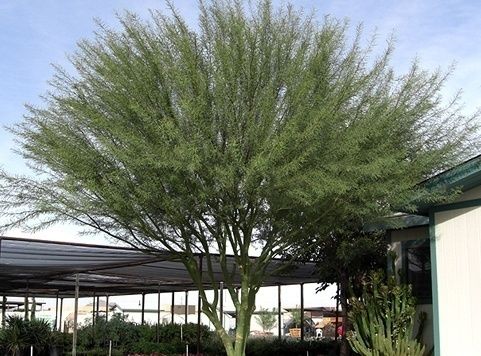
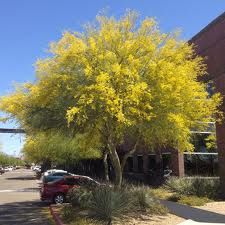
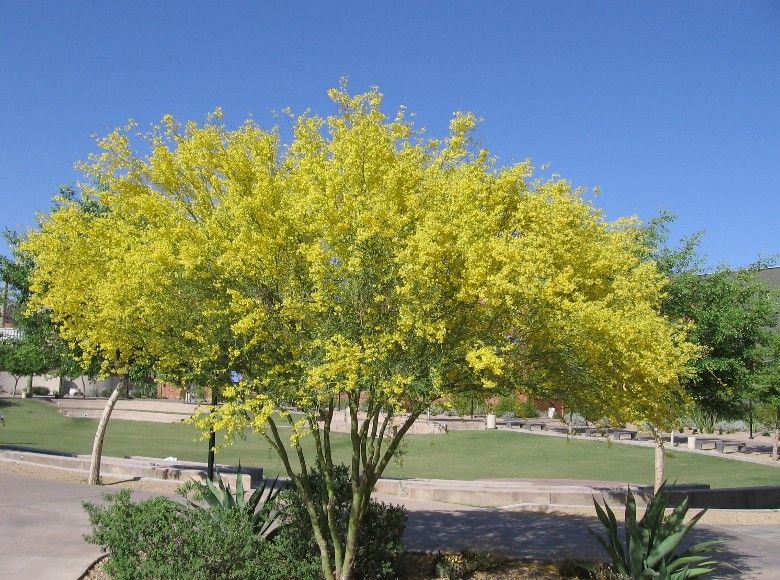
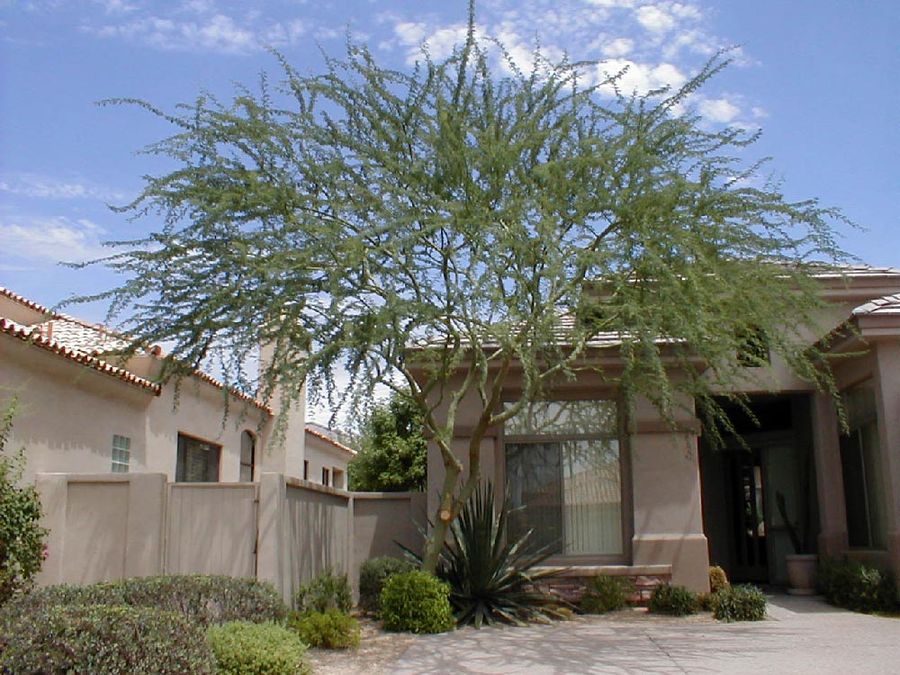
A thornless hybrid of three palo verdes, with bright green trunks, a long spring bloom and light, filtered shade. It has become one of the Valley’s most popular landscape trees, and for good reason: it grows quickly, stays tidy and asks for very little water once established.
Living with it in the Phoenix Valley
Watering
Follow the tree schedule in our Landscape Care guide while it establishes. Once mature, it gets by on far less water than most landscape trees. Too much water pushes fast, weak growth that is prone to limb breakage in monsoon winds, so lean is better than lush.
Pruning
Thin lightly during the warm season, when limbs are flexible. Remove competing leaders while the tree is young so one strong trunk dominates. Avoid heading back or topping, and never take more than about a quarter of the canopy in summer, which invites sunburn on exposed bark.
Cold
Young trees can be nipped by hard freezes in the low teens. Established trees shrug off a typical Phoenix winter.
Pests
Generally trouble-free. Spider mites can appear in the dry stretch of May and June; a strong rinse of water is usually all it takes.
How our designers use it
Filtered shade
The open canopy lets light through, so it shades a patio or courtyard without darkening it, and plants can still grow beneath it.
Near walkways and play areas
With no thorns, it is one of the few palo verdes we are comfortable placing beside paths, seating and entries.
A canopy for a cactus garden
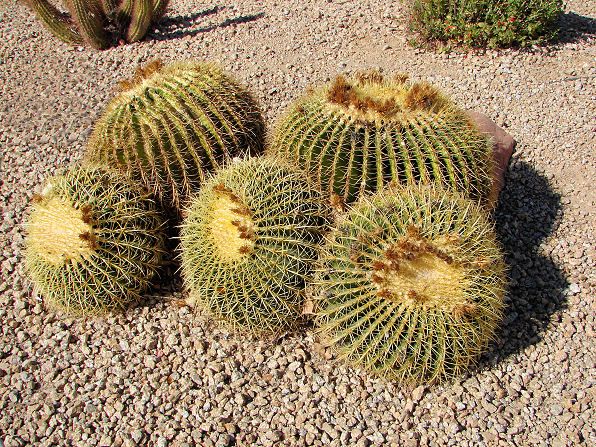
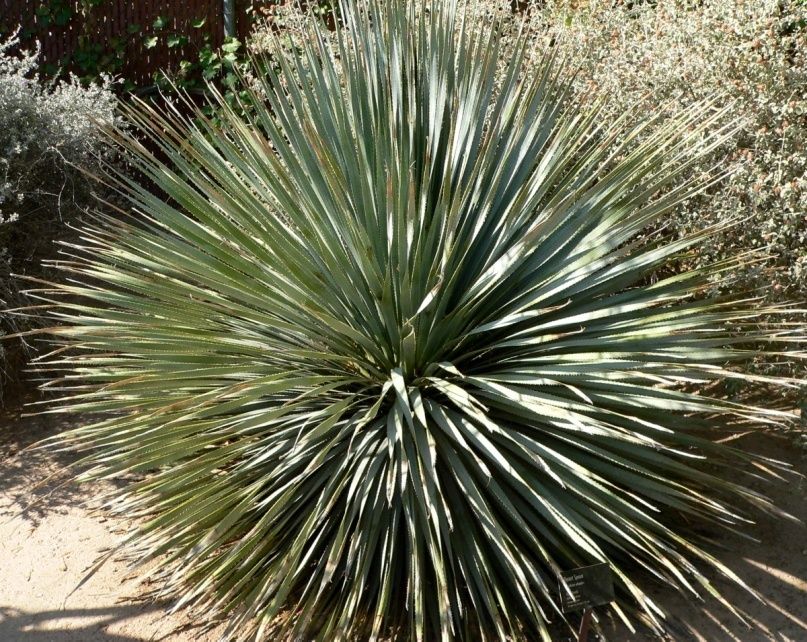
Its dappled shade shelters barrels, agaves and other succulents from the harshest afternoon sun.
Good to know
Around the pool
It drops yellow blossoms for several weeks in spring and fine leaflets through the year. Litter is light compared with Blue or Foothills palo verde, but we generally avoid letting the canopy hang directly over the water.
Wind
Fast growth and a broad canopy can catch monsoon gusts. Lean watering and good early structure are the best protection.