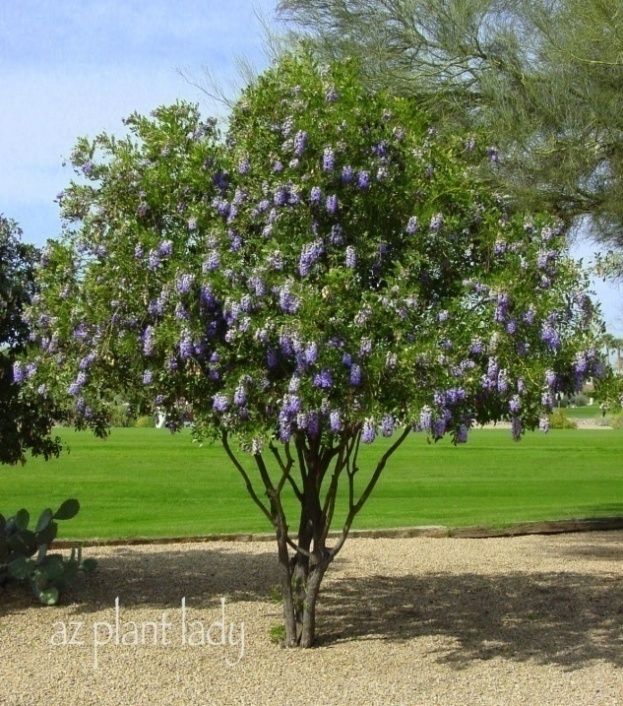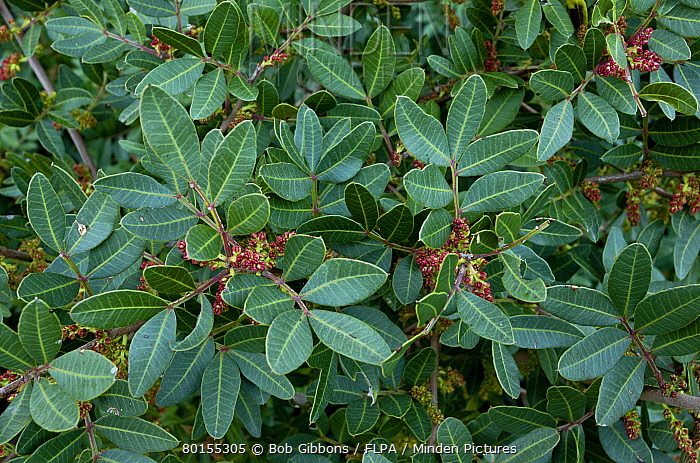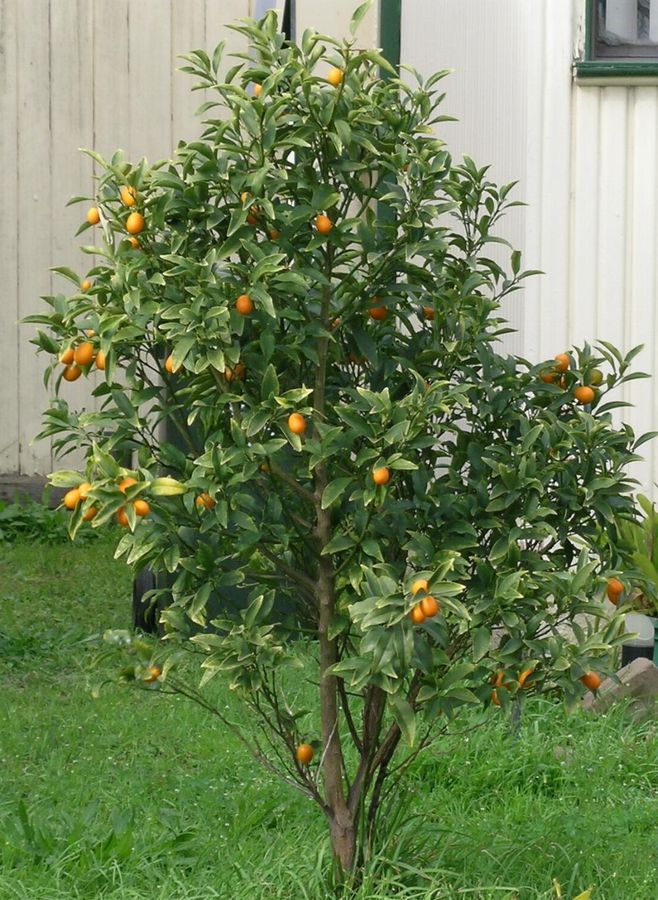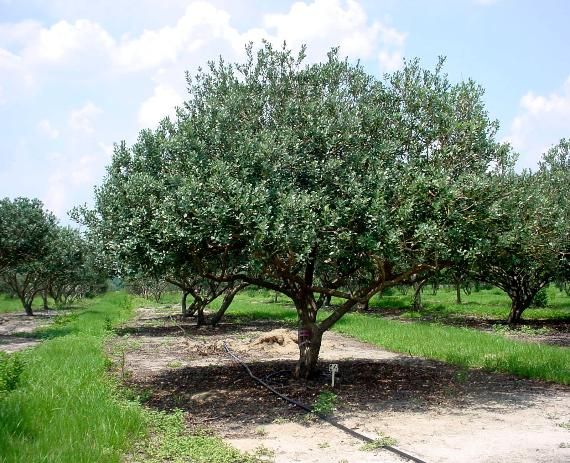
A South American evergreen with gray-green leaves, unusual white-and-pink flowers with deep red stamens, and edible petals and fruit. Trained to a single or multi-trunk form, it makes a tidy, easy-care patio tree.
Living with it in the Phoenix Valley
Watering
Follow the tree schedule in our Landscape Care guide. It is fairly drought tolerant once established but looks and fruits best with steady moisture. A layer of organic mulch over the root zone helps in summer.
Pruning
It needs little pruning. To grow it as a tree, remove low shoots and suckers so one or a few trunks carry the canopy. It also takes shaping well as a hedge or screen.
Heat
Temperatures over 100°F can cause young fruit to drop, so crops in Phoenix can be light. Afternoon shade from a wall or larger tree helps both leaves and fruit.
Harvest
Fruit is ripe when it softens and begins to drop. The flower petals are sweet and edible in spring.
How our designers use it
A small patio tree
Its modest size and evergreen leaves suit courtyards and seating areas where a larger shade tree would overwhelm the space.
An edible screen
Planted in a row and allowed to grow as shrubs, it makes a soft, year-round privacy screen that also flowers and fruits.
Lush, Mediterranean-style gardens
The silvery foliage pairs well with lavender, rosemary and other gray-leaved plants.
Good to know
Around the pool
Fallen fruit and occasional leaf drop create some litter. It works at the edge of a pool area, but we avoid placing it where fruit will fall into the water.