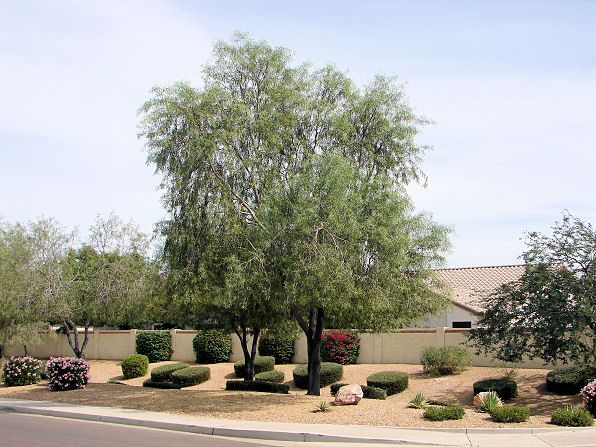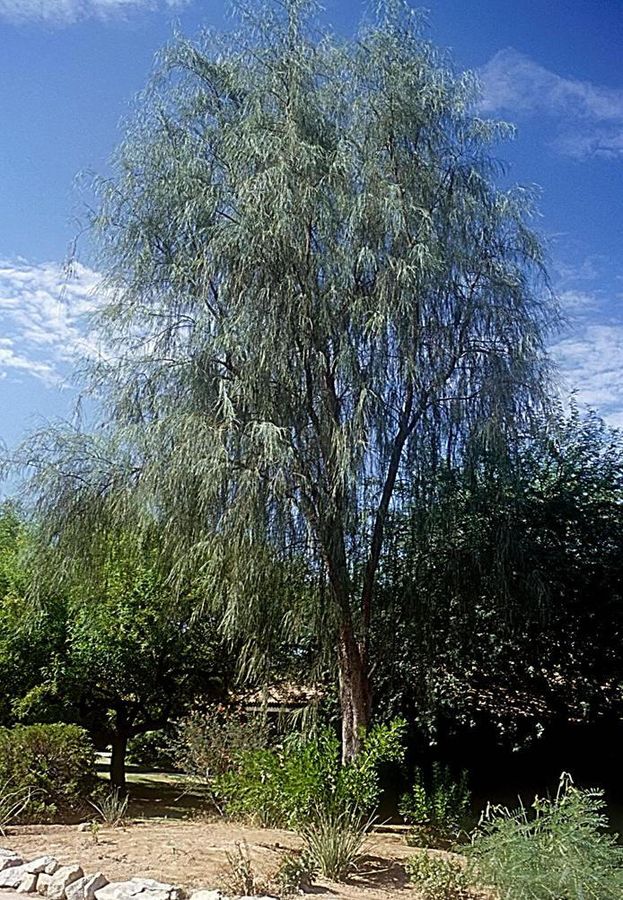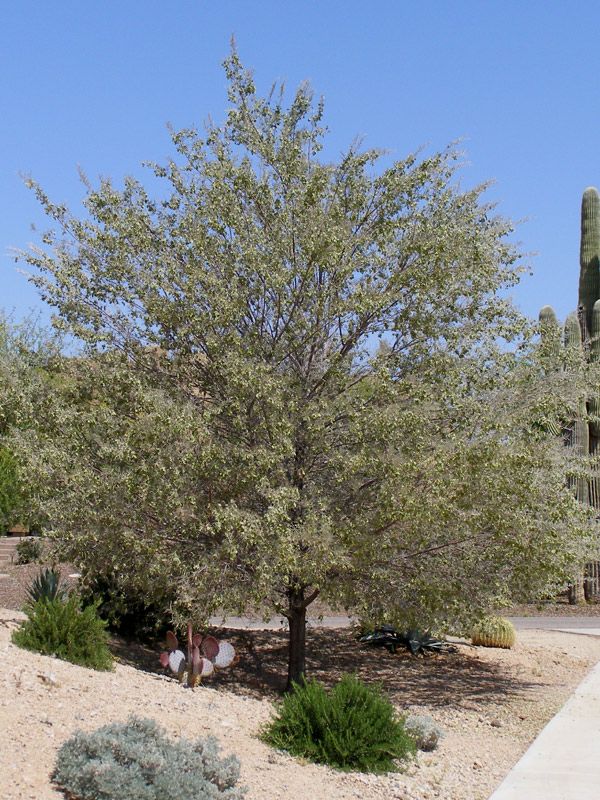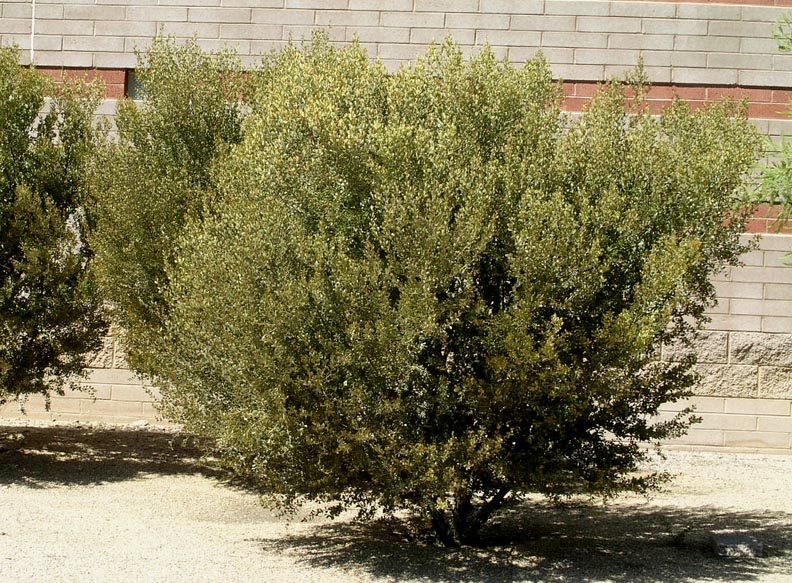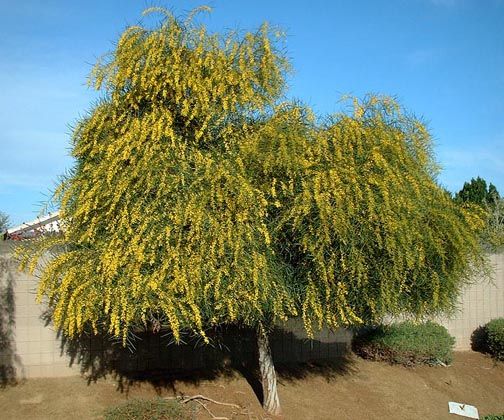
An Australian acacia with long, blue-green leaves and a brief, heavy show of yellow flowers in early spring. It grows fast, has no thorns and gives a soft, weeping look on very little water, which makes it a quick way to add green and shade.
Living with it in the Phoenix Valley
Watering
Follow the tree schedule in our Landscape Care guide while it establishes. Once mature, it needs little extra water. More water only pushes soft, rank growth and keeps the soil wet, which invites root rot, so err on the dry side.
Pruning
It grows wide with drooping branches, so expect to raise the canopy over time. Thin rather than shear, and avoid taking more than about a quarter of the canopy in summer, when exposed bark can sunburn.
Wind
The wood is weak and brittle. A heavy, wide canopy can lose limbs in monsoon storms, especially on an overwatered tree. Lean watering and regular thinning help.
How our designers use it
Fast green and privacy
It fills in quickly, so it works where a homeowner wants green along a wall or property line within a few seasons.
Blue-green contrast
The cool leaf color sits well beside silver and gray desert plants and lightens a planting of darker evergreens.
Larger yards
It needs room to spread. Our designers place it in open side or back yards rather than tight courtyards, where it would need constant pruning.
Good to know
Around the pool
Flowers, long leaves and flat seed pods drop through the year. We keep it back from the water’s edge rather than over it.
Invasive elsewhere
It has become invasive in many mild, dry regions of the world, including parts of coastal California, where it spreads by seed into natural areas.