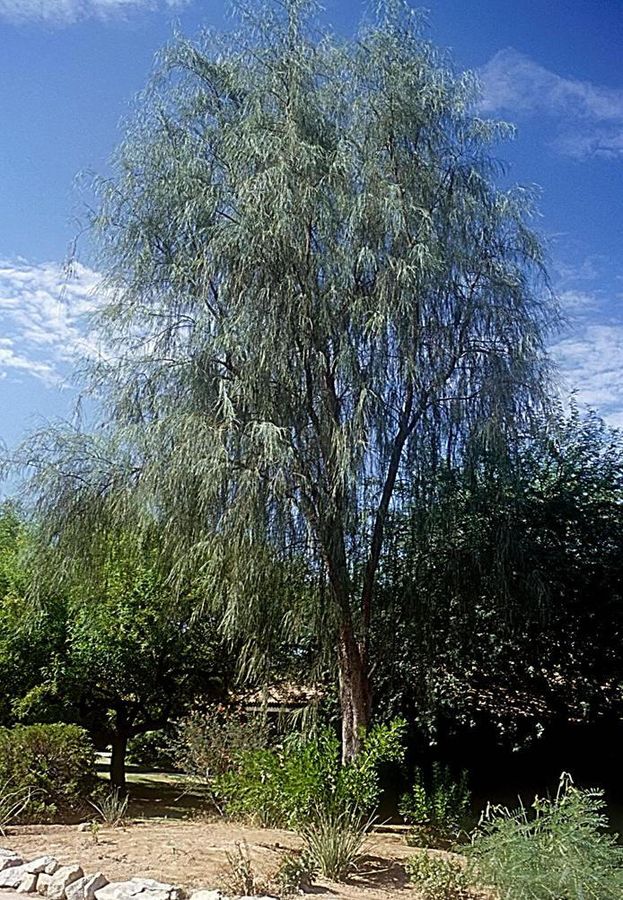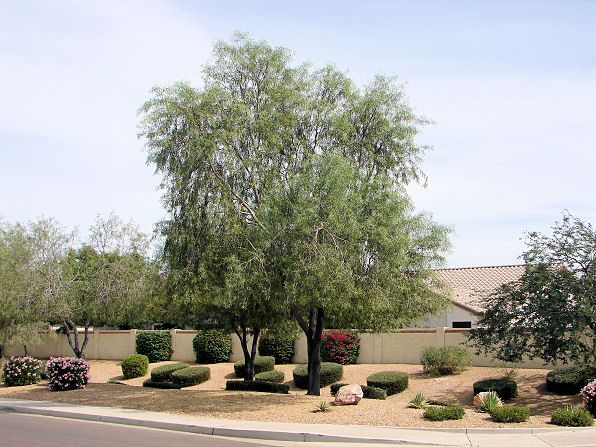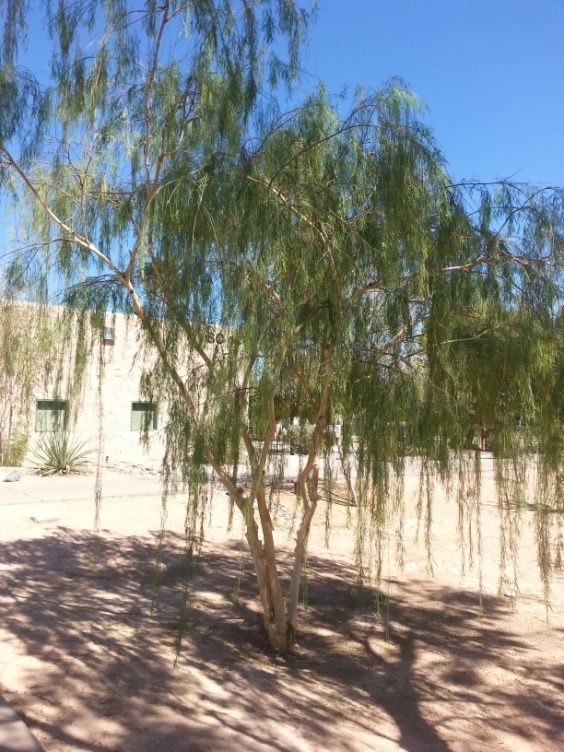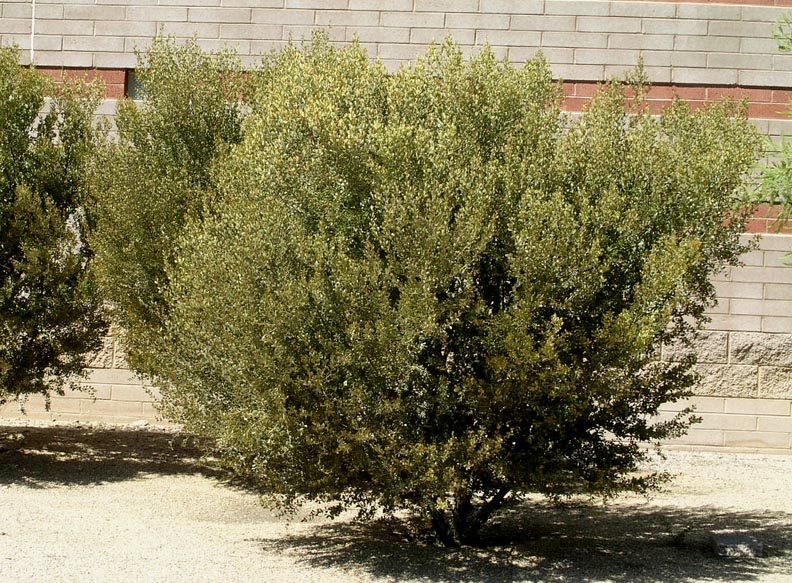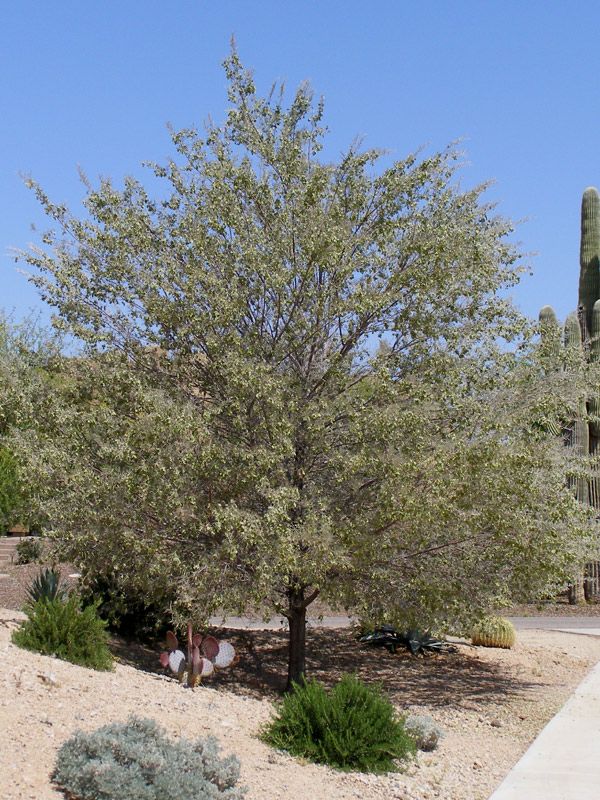
A thornless Australian acacia with fine, silver-gray foliage and dark reddish-brown branches. It stays fairly compact and upright, blooms several times a year, and drops little. People choose it for smaller yards and side spaces that need a tree without much cleanup.
Living with it in the Phoenix Valley
Watering
Follow the tree schedule in our Landscape Care guide while it establishes. It needs well-drained soil and dislikes staying wet, so keep it away from lawn and thirsty plantings. More water makes it grow faster but looser and more open.
Pruning
Very little needed. Thin occasionally rather than shearing. Raise the lower limbs to show the trunks as a small tree, or leave them for a fuller, shrubby screen. Avoid taking more than about 30% of the canopy in summer.
Soil
It tolerates alkaline soil, but leaves can yellow in soil that stays wet. Easing off the water usually corrects it.
Pests
Generally free of serious problems. Spider mites can appear in the dusty weeks of May and June.
How our designers use it
Narrow spaces and courtyards
Its upright habit fits side yards, entries and courtyards where a broad-canopy tree would crowd walls and roofs.
Evergreen screening
Planted in a row and left full to the ground, it makes a soft, silver screen for privacy or to hide equipment.
A cool-color accent
The silver-gray foliage contrasts well with deep green shrubs and bright flowering perennials.
Good to know
Around the pool
With no thorns and light litter, it is one of the easier trees to place near a pool. It does drop small flowers and short seed pods after blooming, so expect some light cleanup.