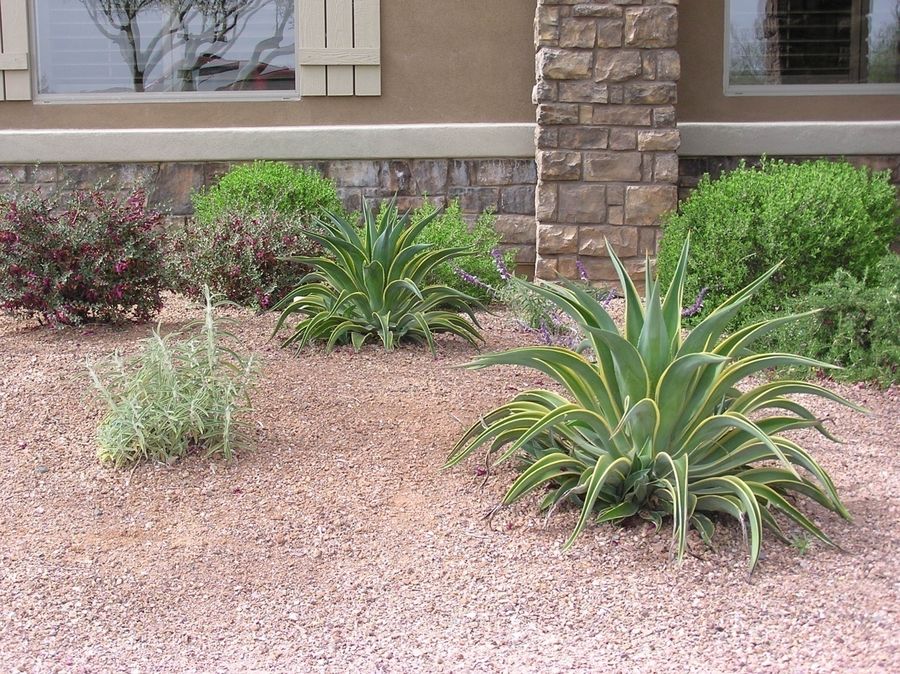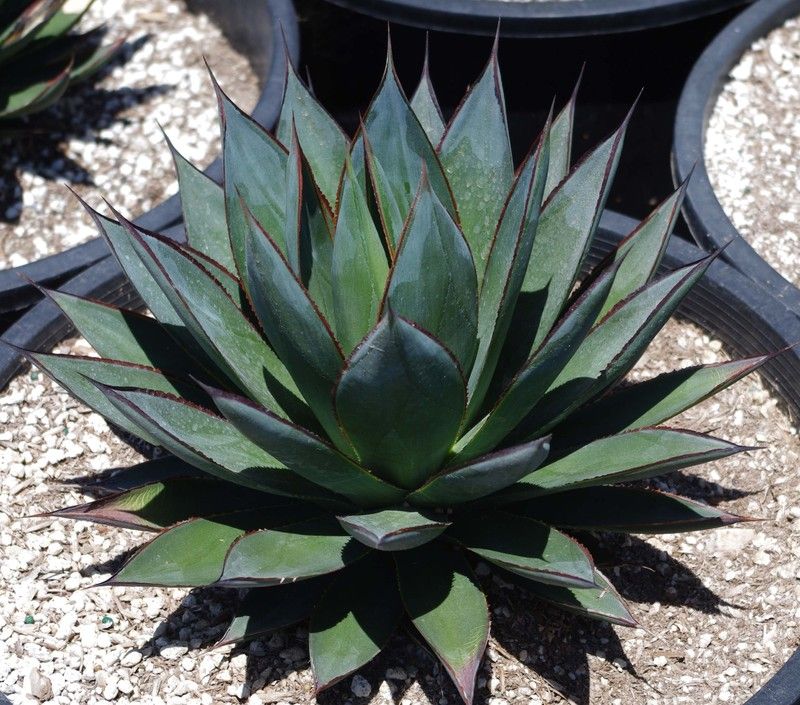
A hybrid agave with smooth blue-green leaves edged in red and gold that seem to light up when the sun is behind them. It stays a manageable size, rarely sends up pups and keeps one clean, symmetrical rosette, which is why it suits entries, courtyards and pots.
Living with it in the Phoenix Valley
Watering
Follow the shrub, groundcover and succulent schedule in our Landscape Care guide. In Phoenix it does better with regular summer water than most agaves, but the soil must drain quickly. Soggy, poorly drained soil leads to root rot.
Pruning
None needed. Remove only leaves that have fully dried; trimming green leaves spoils the clean rosette.
Heat and sunburn
Intense afternoon sun on top of summer heat can scorch it. An east exposure or the filtered shade of a desert tree suits it best.
Pests
Agave snout weevil attacks many agaves in the low desert, and this one is no exception.
How our designers use it
Backlit accent
Placed where low morning sun or landscape lighting comes from behind, its red and gold edges glow. It is one of the best agaves for night lighting.
Entries and courtyards
Its smaller size and softer edges make it comfortable in close quarters, near doors, benches and patios.
Containers
A single rosette in a simple pot makes a clean, modern focal point on a shaded terrace.
Good to know
Around the pool
Its edges are nearly smooth, so it is one of the friendlier agaves near seating. The stout tip is still sharp, so keep it a step back from where people walk barefoot.
Flowering
It dies after blooming and rarely leaves pups, so plan on replacing it at that point.