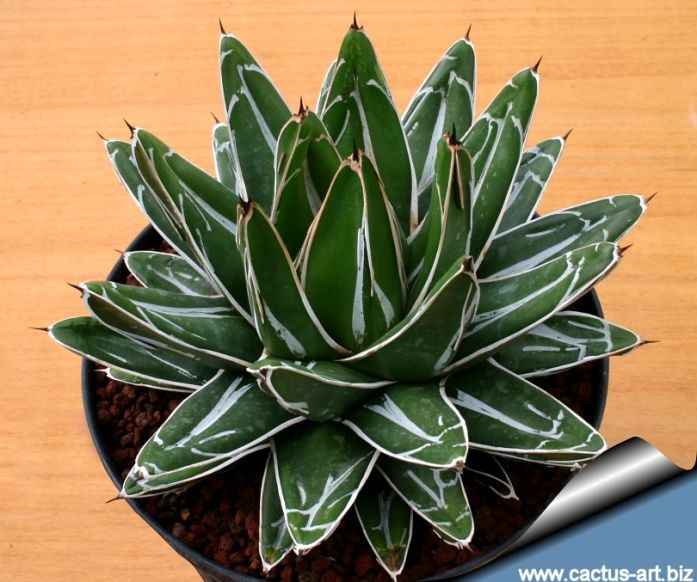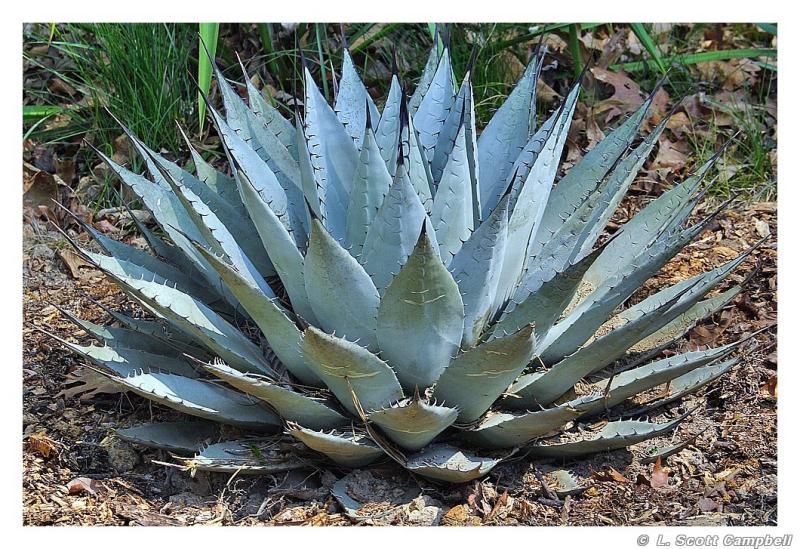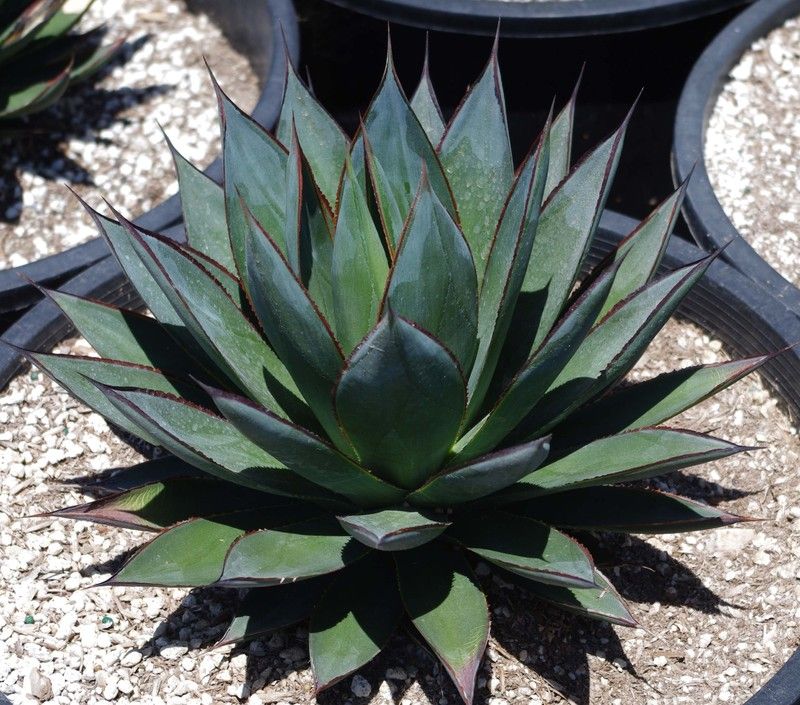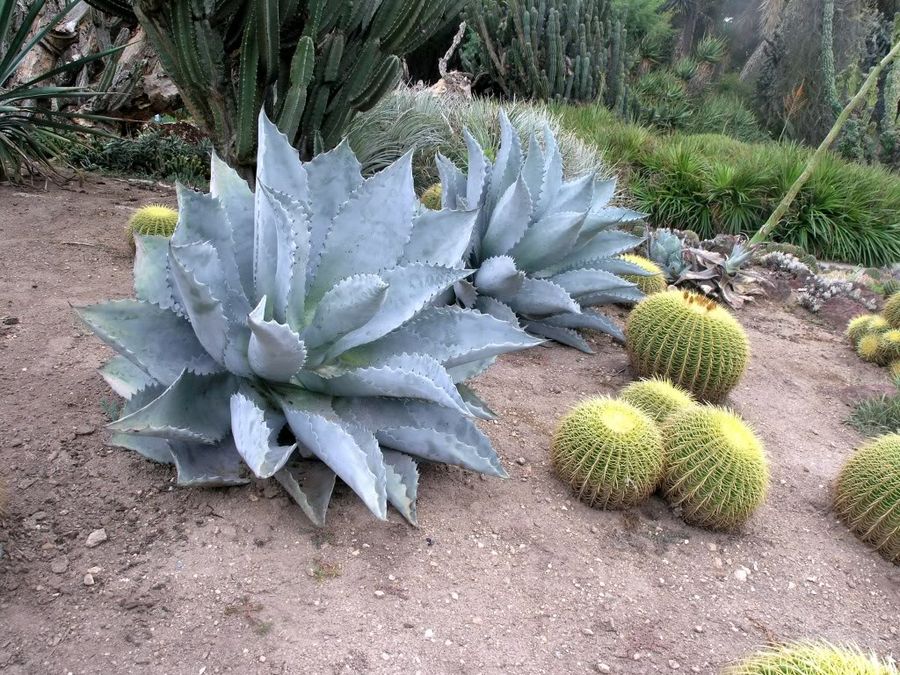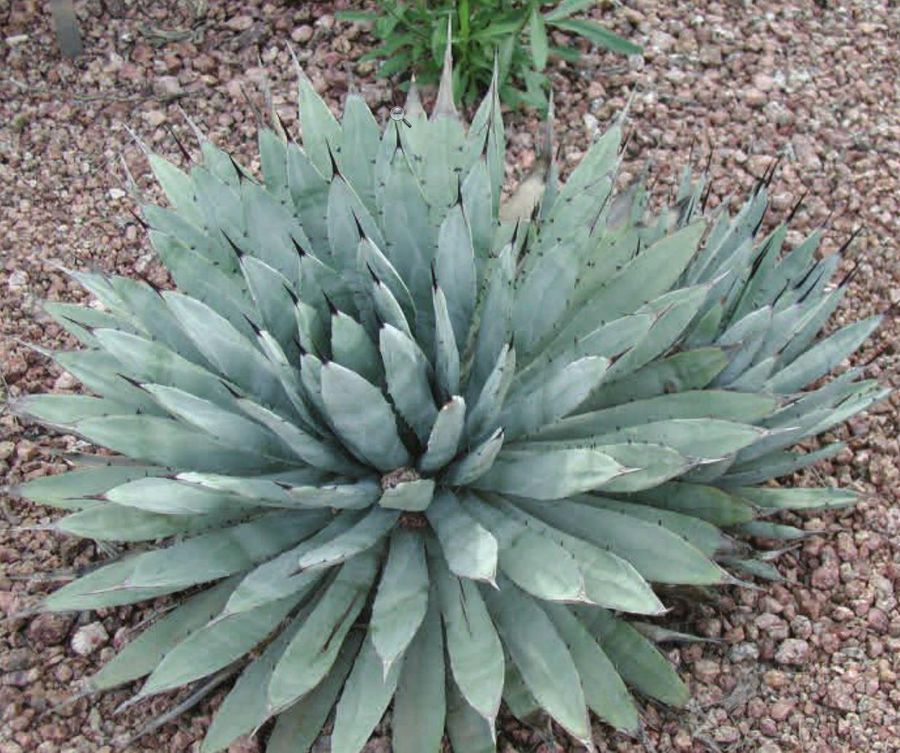
A compact agave from central Mexico with narrow blue-gray leaves, each ending in a glossy black spine. It slowly builds a tidy clump of small rosettes and looks more refined every year, which makes it a favorite for small gardens, planters and pots.
Living with it in the Phoenix Valley
Watering
Follow the shrub, groundcover and succulent schedule in our Landscape Care guide. It needs only a little extra water in summer and prefers rocky, fast-draining soil. Soggy ground is a bigger threat than drought.
Pruning
None needed. Each rosette dies after it flowers; cut the spent one out carefully and the pups around it fill the gap.
Cold
Leaves can be damaged below about 25°F. On a hard-freeze night, a frost cloth protects young pups and potted plants.
Heat
It handles Phoenix heat well. A little filtered shade from the west keeps the leaves at their bluest, but it is not required.
How our designers use it
Small spaces
Its modest size suits narrow side yards, rock gardens and raised planters where a large agave would overwhelm the space.
Containers
It stays in scale in a pot for years, and the black spines read clearly against a smooth, solid-colored container.
A repeated accent
Our designers like it in groups of three or five along a gravel bed, where the slowly widening clumps tie the planting together.
Good to know
Around the pool
The black tips are sharp. Keep it back from pool decking, steps and anywhere bare legs pass; a raised planter lifts the spines above foot level.
Flowering
Each rosette blooms once after many years and then dies, but the clump carries on through its pups.