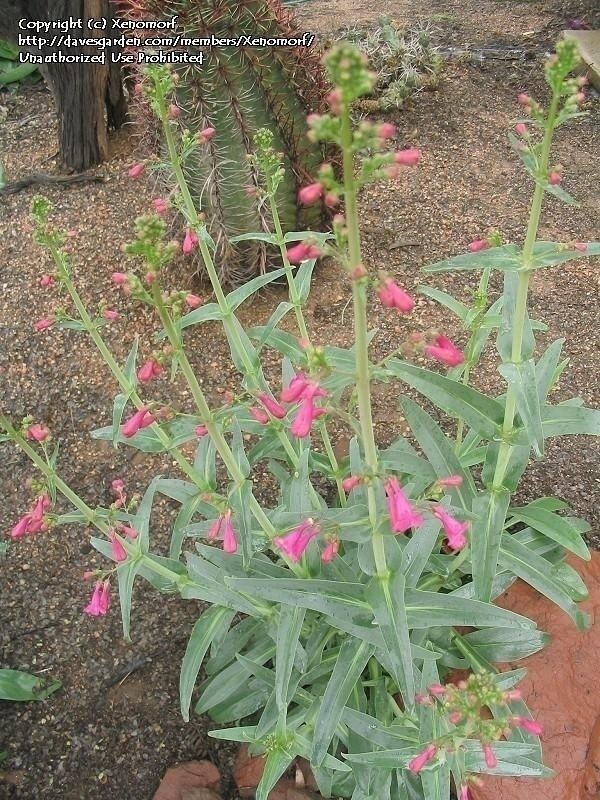
A native wildflower from the deserts of southern Arizona, with a low rosette of blue-green leaves that sends up tall spikes of hot pink flowers in spring. It needs very little water and draws hummingbirds and bees.
Living with it in the Phoenix Valley
Watering
Follow the shrub schedule in our Landscape Care guide while it establishes. As a desert native, it should be kept lean. It needs well-drained soil, and soggy ground or overwatering shortens its already short life. Water during long dry spells, especially for young seedlings.
Pruning
Cut the flower stalks to the base once blooming ends. If you want new plants, leave a few stalks until the seed drops first.
Reseeding
Individual plants live only a few years, but seedlings fill in around them when the ground is left undisturbed. Avoid heavy mulch or pre-emergent weed control where you want it to spread.
Feeding
None needed. Fertilizer tends to make it floppy and short-lived.
How our designers use it
Spring color in native gardens
Drifts of it give a strong pink show among boulders, cactus and desert shrubs in late winter and spring.
Hummingbird planting
It is one of the earliest nectar sources of the year in a Phoenix garden.
Naturalized edges
We like it at the outer edges of a landscape, where it can reseed freely and blend into the desert.
Good to know
Around the pool
No thorns and very little litter. The flowers draw bees in spring, so keep it a few feet from where people sit and swim.