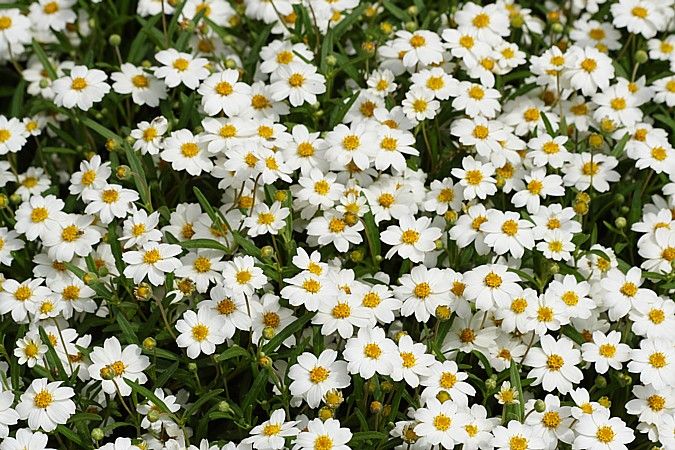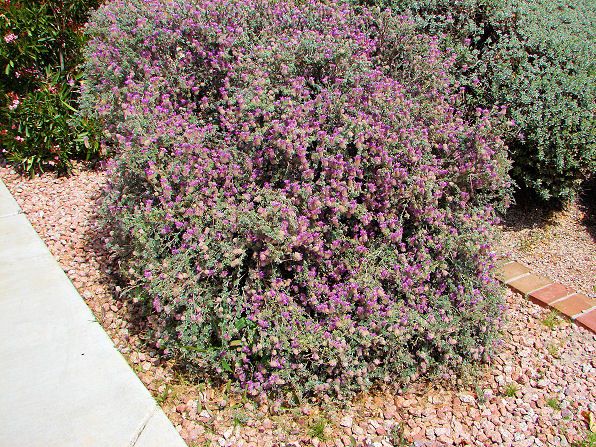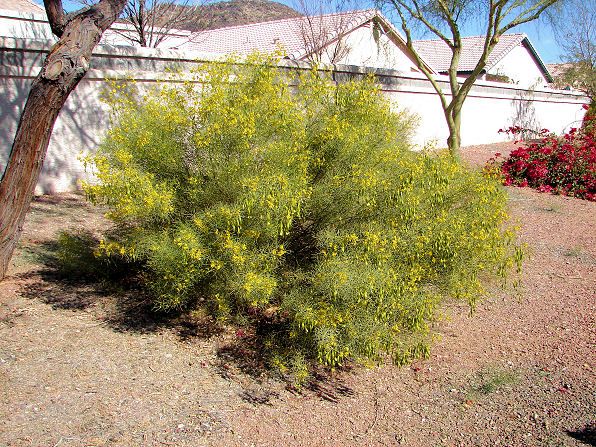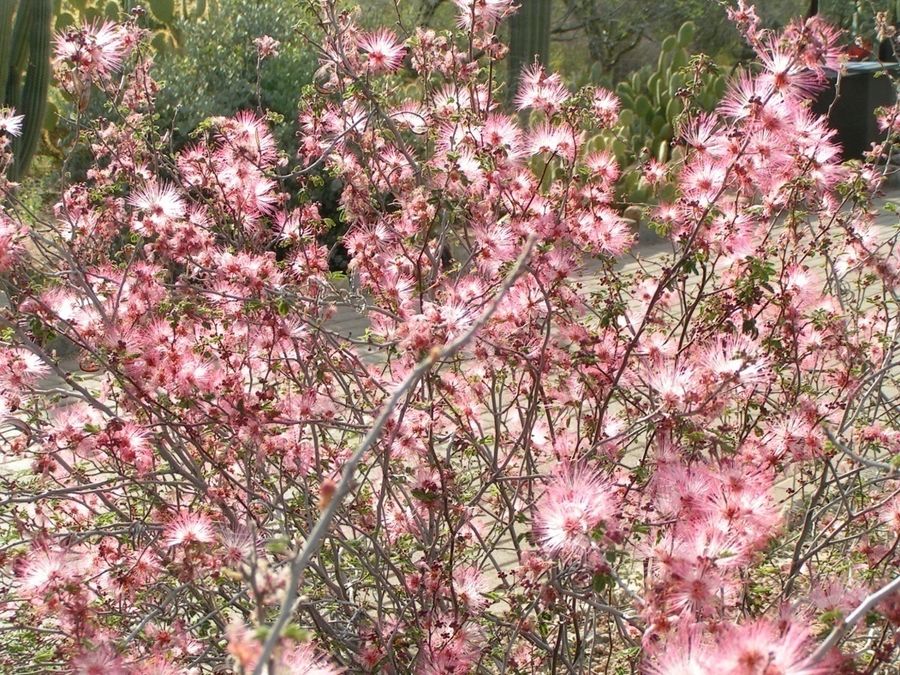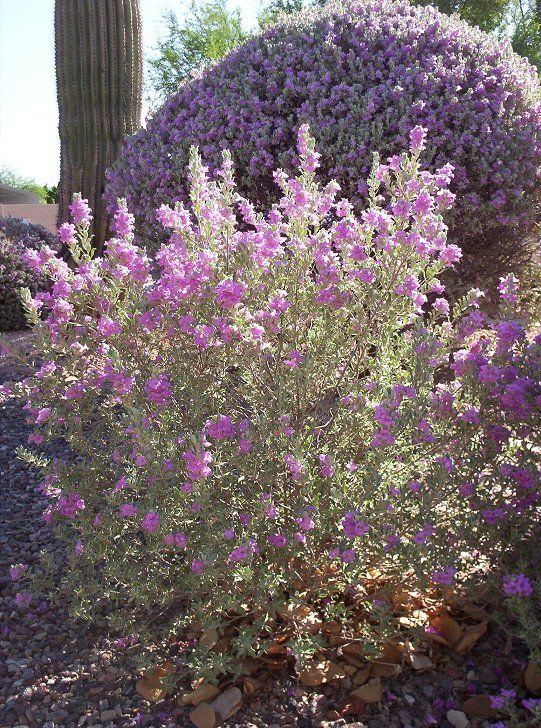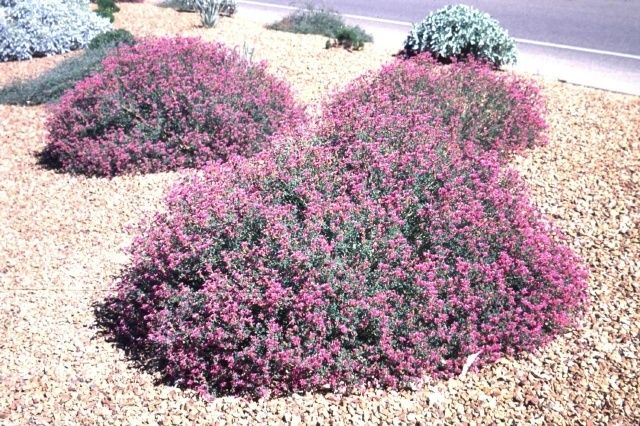
A rounded, fine-textured Chihuahuan Desert shrub that covers itself in small rose-purple flowers from late summer into fall. It takes full sun and reflected heat on very little water, and gives the garden color at a time when few desert shrubs are blooming.
Living with it in the Phoenix Valley
Watering
Follow the shrub schedule in our Landscape Care guide while it establishes. It is a true desert shrub and should be kept lean once mature. Overwatering makes it leggy and cuts down on flowers.
Pruning
Cut it back hard in late winter or early spring. This keeps it dense and leads to heavier bloom in late summer and fall.
Soil
It prefers well-drained, unamended native soil and handles rocky ground well.
Winter look
Cold is no concern, but it sheds much of its foliage in winter and can look thin until spring growth returns.
How our designers use it
Fall color
It blooms when most desert shrubs are resting, so our designers use it to carry color from late summer into fall.
Natural desert plantings and slopes
Its mounding form fills space on rocky slopes and in open, native-style landscapes.
Pollinator gardens
The flowers are busy with bees and butterflies through the bloom season.
Good to know
Around the pool
No thorns and little litter, but the flowers draw bees in late summer and fall. Keep it a few steps back from the water and seating.
Winter
It can look bare for part of the winter. Mix it with evergreen shrubs if that spot needs to look full year-round.