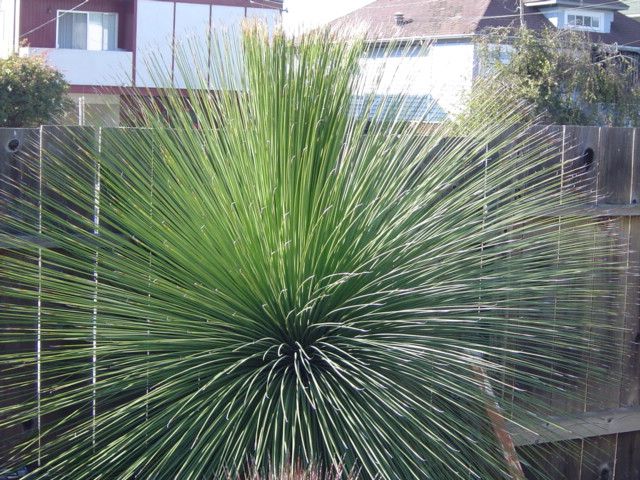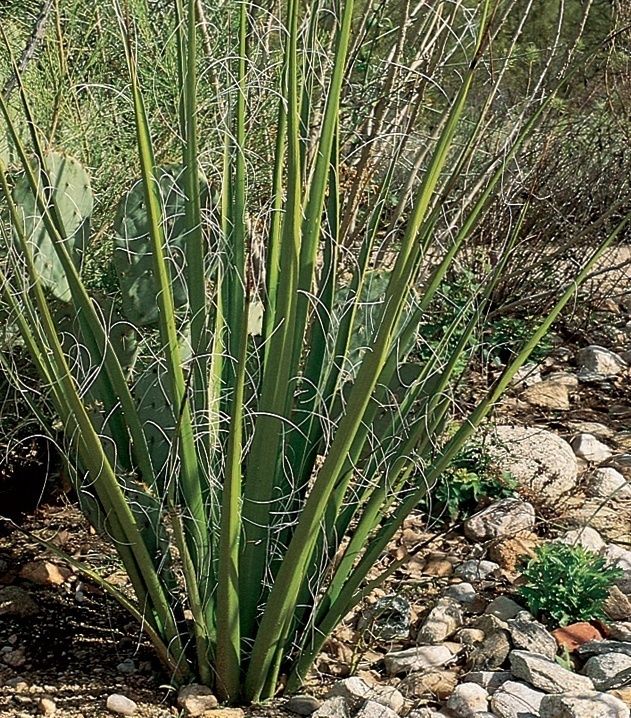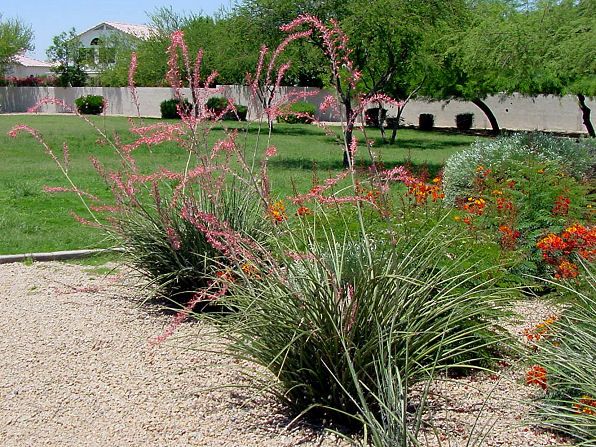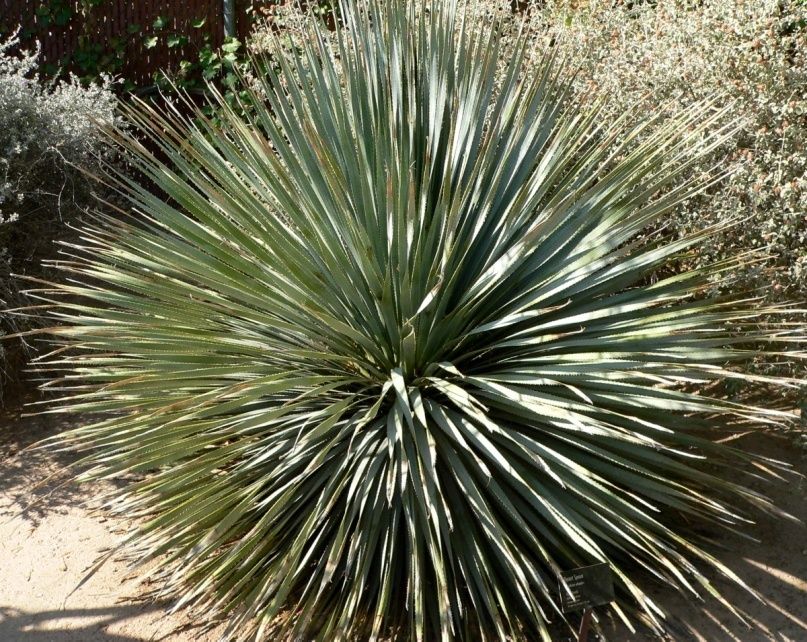
A native sotol of the Sonoran and Chihuahuan deserts that forms a dense, rounded burst of narrow gray-green leaves. It holds its shape all year, takes full sun and heat, and reads as desert or tropical depending on what surrounds it. Unlike an agave, it does not die after blooming.
Living with it in the Phoenix Valley
Watering
Follow the shrub, groundcover and succulent schedule in our Landscape Care guide. In the low desert it looks best with some summer water and needs little or none in winter. Soggy soil leads to root rot, so plant it where water drains away.
Pruning
Cut off only dead lower leaves, wearing long sleeves and gloves, because the leaf teeth can draw blood. Never shear it or strip the trunk into a “pineapple,” which ruins its natural shape. Remove the flower stalk once it dries.
Heat
It handles Phoenix summers well, though plants with no irrigation can show stress during long stretches above 115°F.
How our designers use it
Specimen plant
A single plant makes a strong focal point in gravel, with a round, symmetrical form that reads clearly from a distance.
Desert or tropical
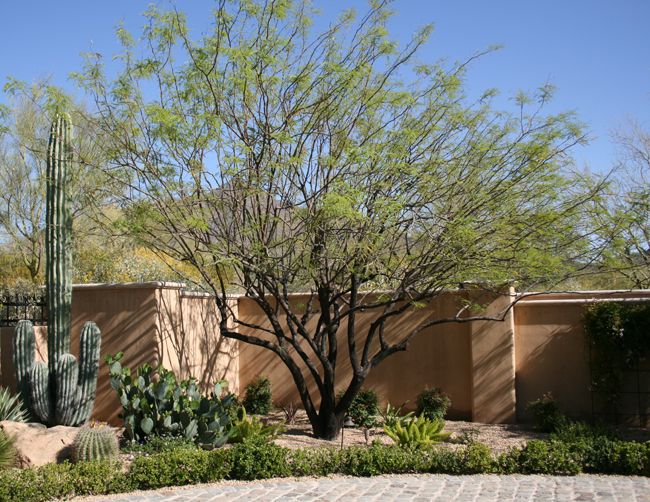
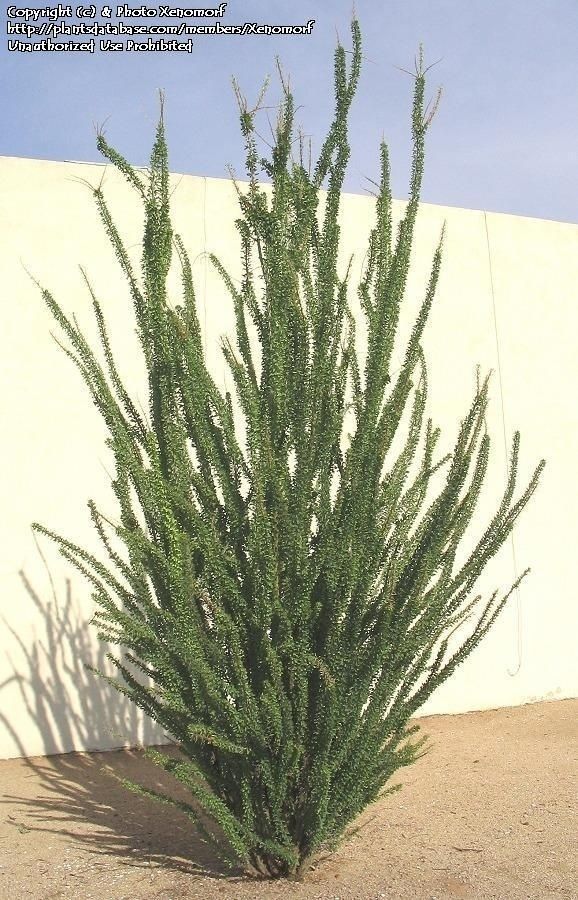
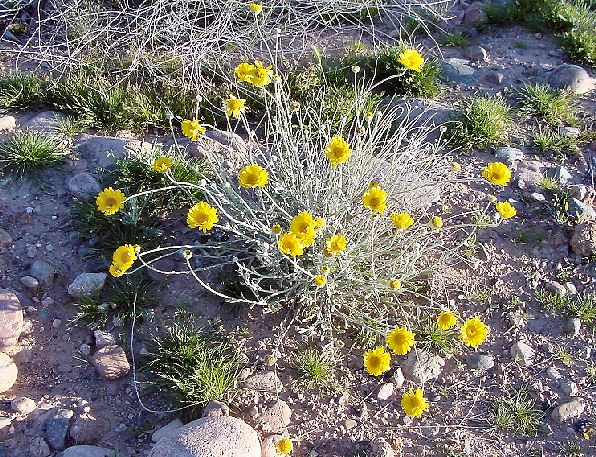
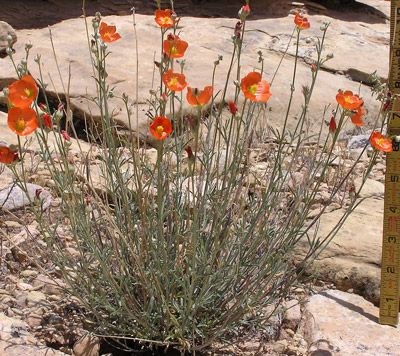
With mesquite, ocotillo and wildflowers it looks native. Beside a pool with smooth boulders, the fine leaves can feel almost tropical.
Room to grow
It looks small in a nursery container but gets wide. We give it plenty of space rather than crowding it against walls or paths.
Good to know
Around the pool
The leaf edges carry sharp, forward-hooked teeth. Set it well back from walkways, seating and pool edges so the leaves can’t brush bare legs.