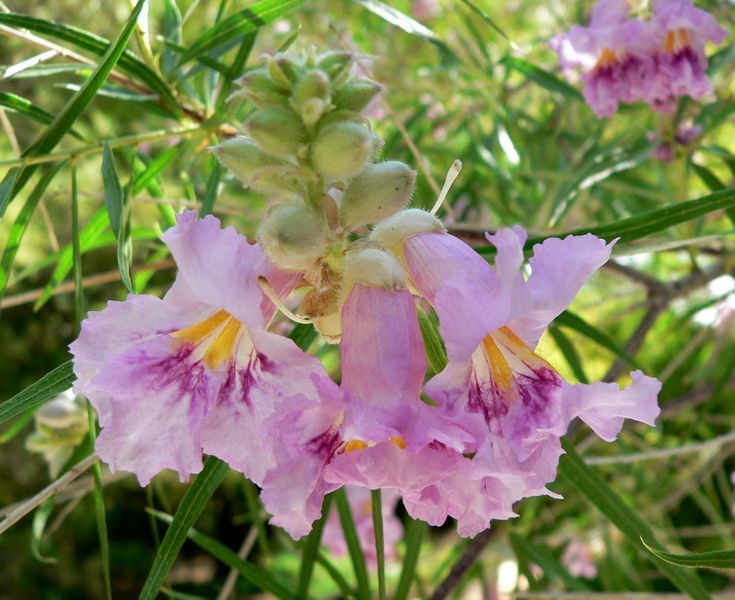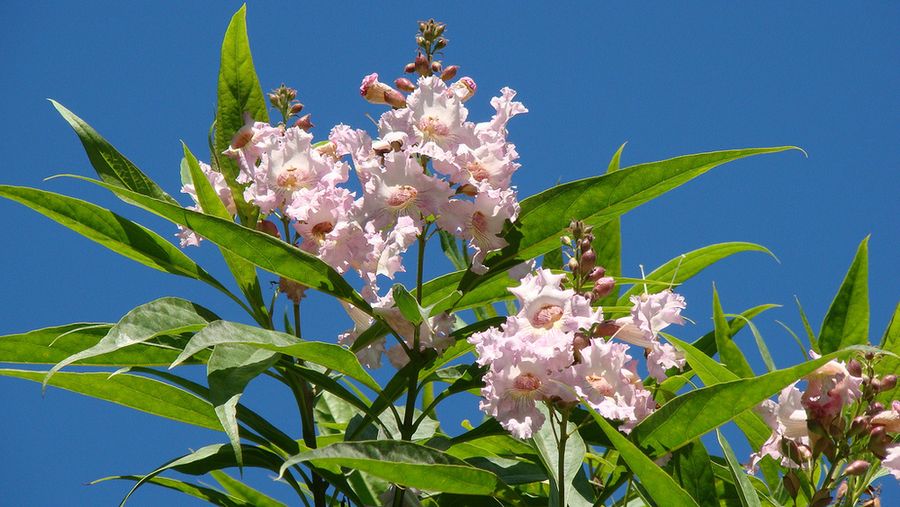
A hybrid of our native desert willow and the southern catalpa, chitalpa carries large clusters of pink to white flowers on a leafy, spreading canopy. Homeowners choose it for a softer, greener look than most desert trees, with color from late spring well into summer.
Living with it in the Phoenix Valley
Watering
Follow the tree schedule in our Landscape Care guide. Chitalpa is not as drought-tough as its desert willow parent and needs steady summer water to hold a full canopy. Good drainage matters too, since soggy soil invites root rot.
Pruning
Prune in winter while it is bare. Choose one trunk or a few strong ones early and remove suckers from the base. It tends toward an open, rangy shape, so light structural pruning each year keeps it tidy. Avoid heavy summer thinning, which exposes the bark to sun.
Heat and sunburn
The trunk sunburns easily, especially on west exposures or beside hot paving. Keeping some lower branches to shade the trunk helps. Some early leaf drop in mid to late summer is common.
Pests and disease
Bacterial leaf scorch (Xylella) can brown and thin the canopy over several seasons. There is no cure, so a tree in steady decline may need replacing. Powdery mildew can appear in a damp spring.
How our designers use it
Color in a greener zone
Our designers use it where a yard shifts from desert planting to a lusher, irrigated space such as a patio or courtyard.
Summer bloom without pods
It flowers when few trees do, and because it sets no seed pods it stays cleaner than desert willow.
Multi-trunk accent
Trained with several trunks, it makes a soft, informal specimen beside a seating area or entry.
Good to know
Around the pool
There are no seed pods, but spent flowers drop through the warm season and leaves fall in late summer and autumn. It can work near a pool if the canopy is kept back from the water’s edge.