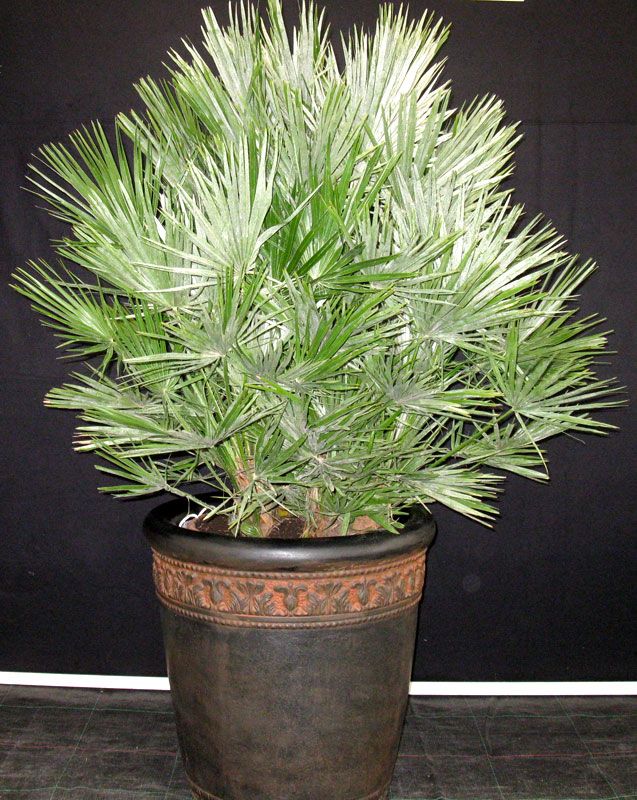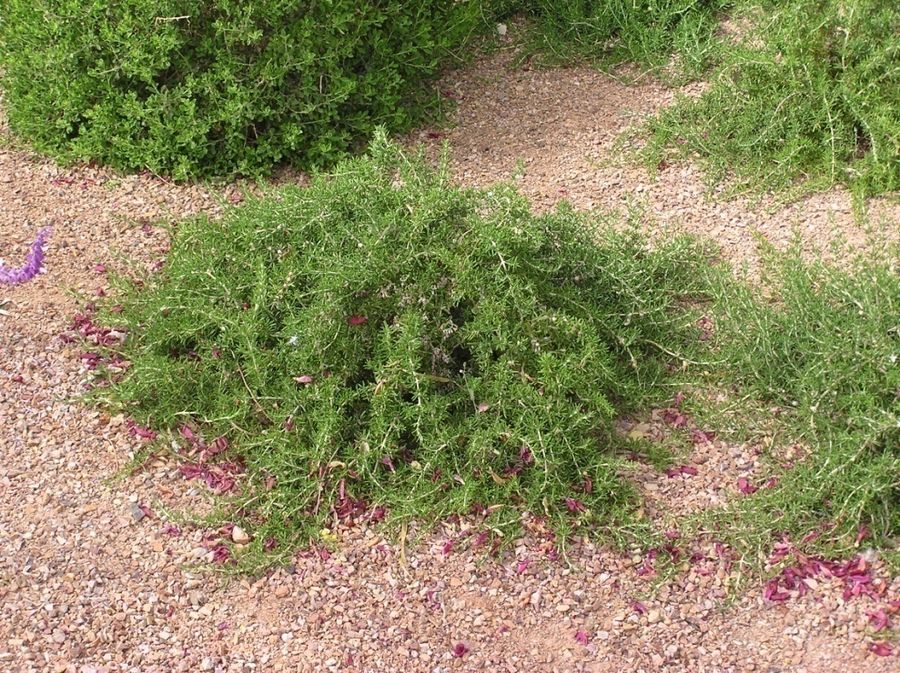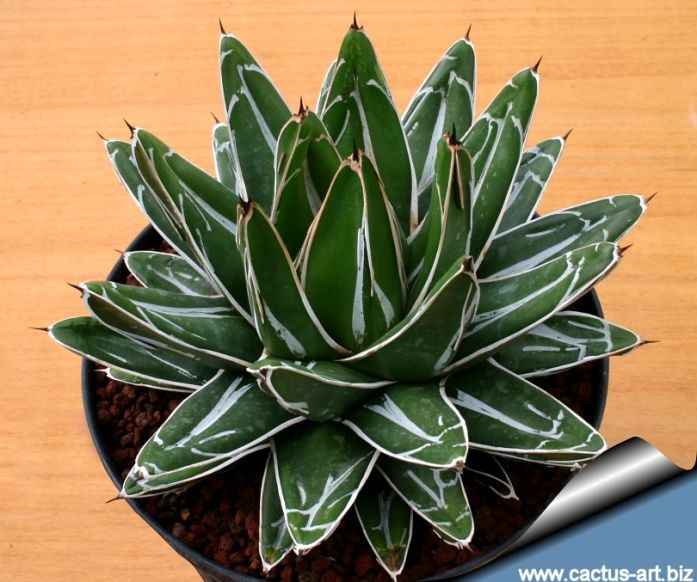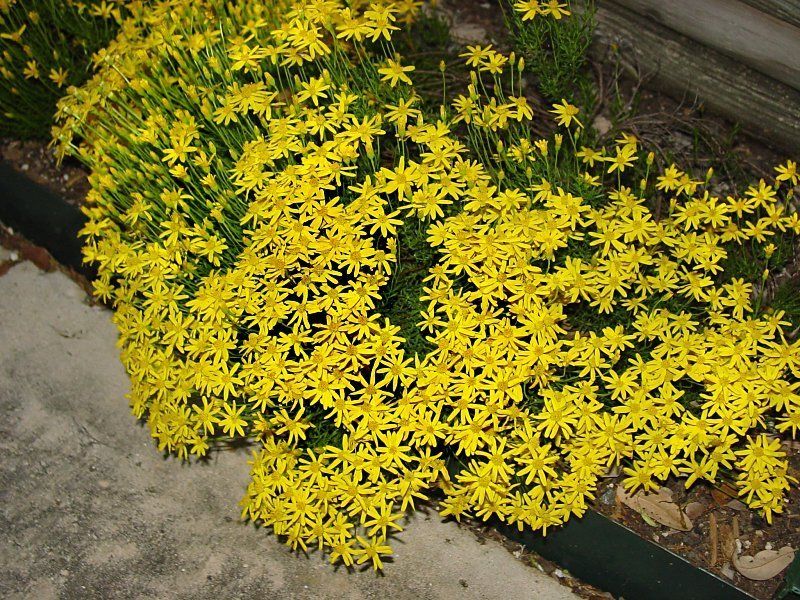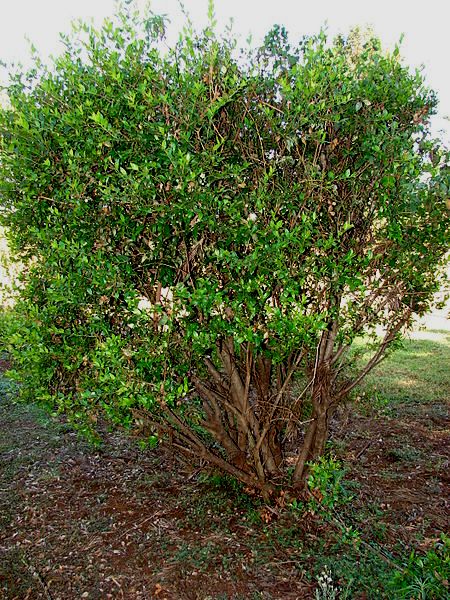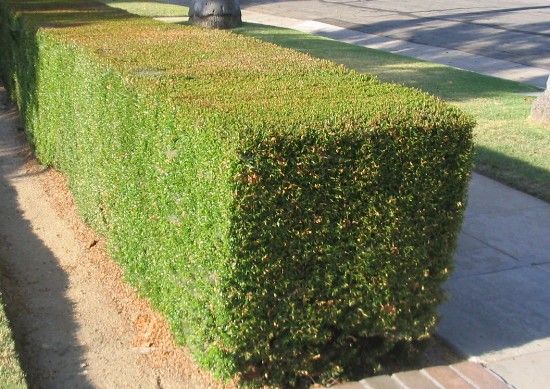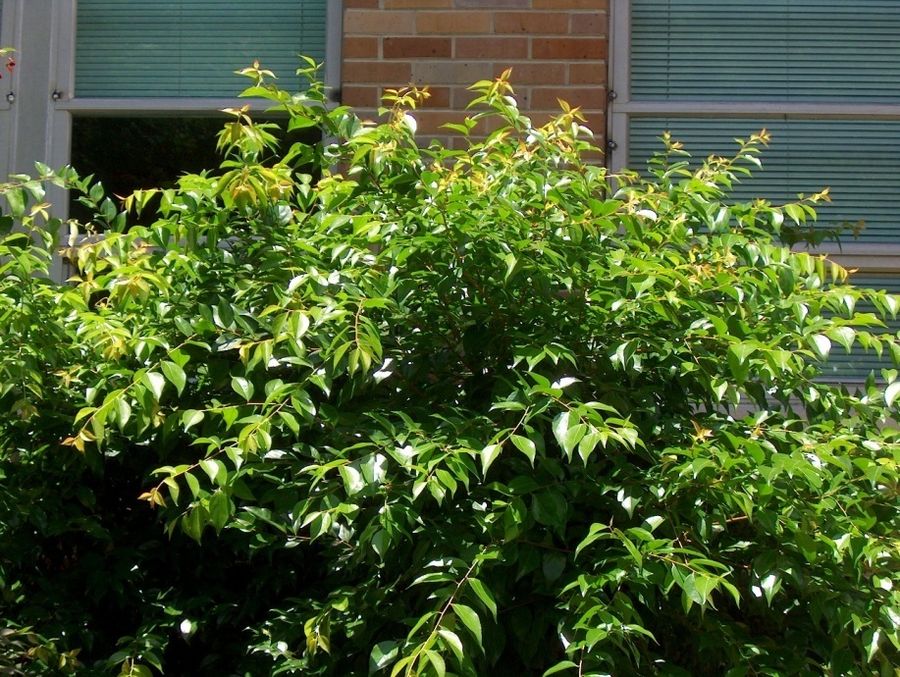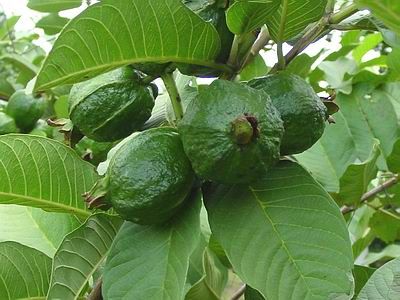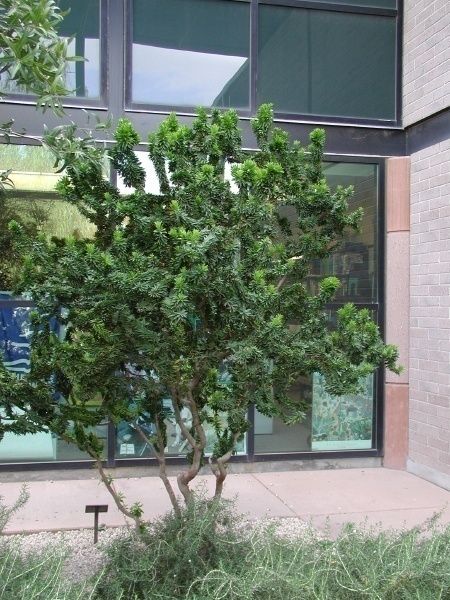
A slow-growing myrtle with gnarled, twisting branches and stiff, dark green aromatic leaves. Its sculptural form makes it a natural focal point, whether kept as a large shrub or pruned up as a small character tree.
Living with it in the Phoenix Valley
Watering
Follow the shrub schedule in our Landscape Care guide. It is surprisingly drought tolerant once established and prefers deep, infrequent watering. Constantly wet soil leads to yellowing leaves.
Pruning
Prune lightly in late winter to open up the interior and show off the twisting branches. Thinning, not shearing, brings out its character.
Chlorosis
Yellow leaves with green veins usually mean iron chlorosis from wet, alkaline soil. Good drainage and less frequent watering are the best prevention.
Pests
Generally trouble-free. Spider mites can show up in summer; a strong rinse of water usually handles them.
How our designers use it
Sculptural focal point
Our designers place it where its branching can be seen up close: at an entry, in a courtyard or against a plain wall.
Character tree
Pruned up on a few trunks, it becomes a small, slow tree with an aged look for tight spaces.
Large containers
Its slow growth makes it a long-lived specimen in a big pot on a patio.
Good to know
Around the pool
Light flower and berry drop; fallen berries can mark pale paving. Its slow growth and modest size make it easy to place near a pool with a little setback.