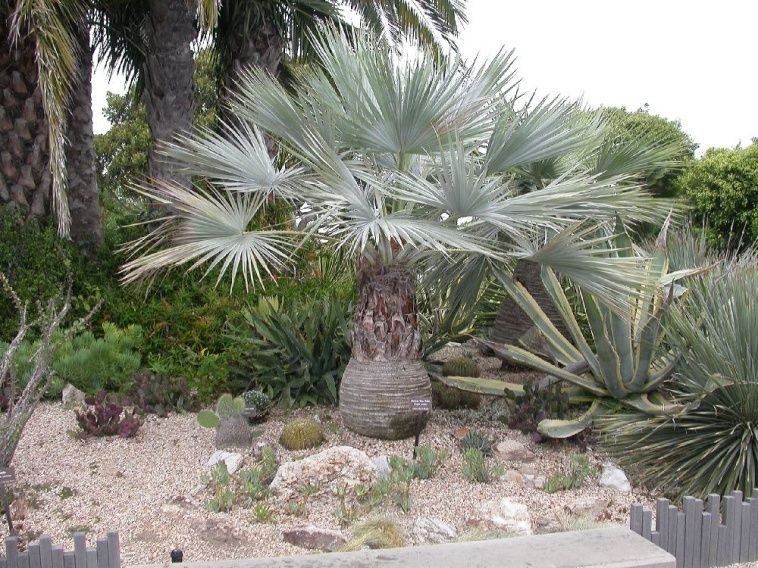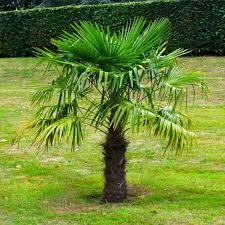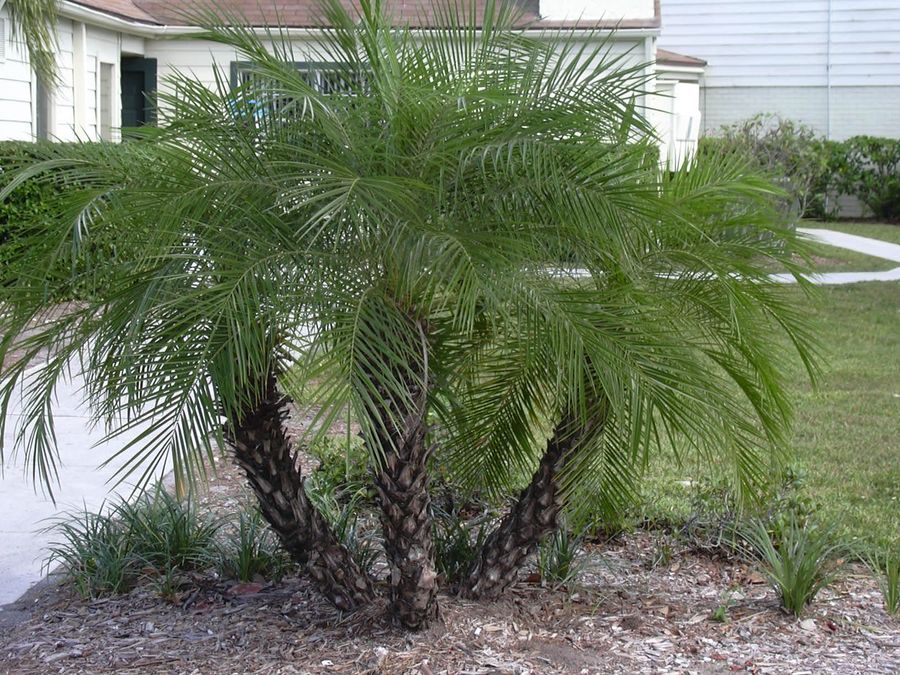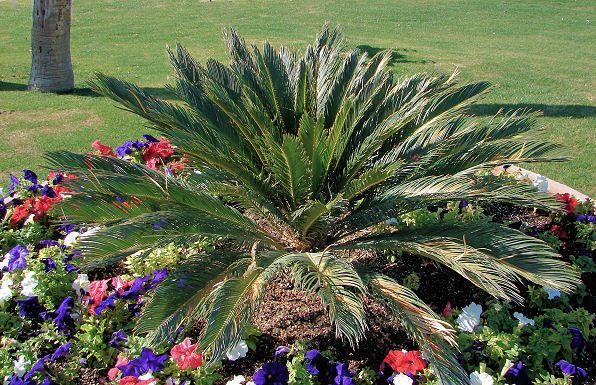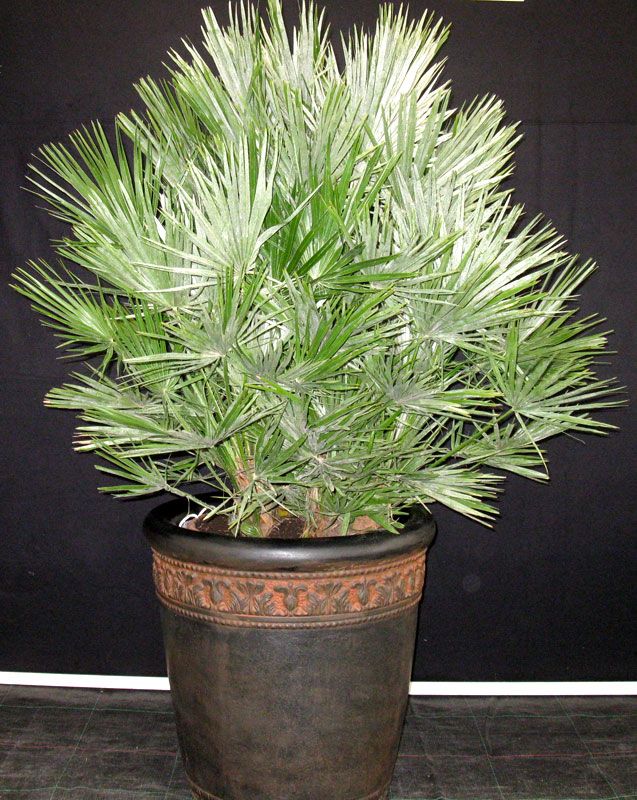
A slow, clumping palm with stiff, fan-shaped fronds in green to blue-green, forming a sculptural multi-trunk mass. It is one of the most cold-hardy palms, takes Phoenix heat in stride, and stays in scale for courtyards and smaller yards.
Living with it in the Phoenix Valley
Watering
Follow the tree schedule in our Landscape Care guide while it establishes. Once settled it gets by on modest water, and a bit more in summer speeds its slow growth. Overwatering in heavy soil can lead to root and stem rot.
Pruning
Remove dead fronds and old flower stalks at the base, and wear gloves and long sleeves for the spiny stems. Clear out some suckers if you want trunks to show; leave them for a fuller, shrub-like clump.
Cold
It handles any typical Phoenix winter without damage.
Pests and disease
Generally trouble-free outdoors. Heart rot can occur where water sits in the crown or the soil stays wet.
How our designers use it
Sculptural accent
Its clumping trunks and rounded crown give the look of a palm grove in the footprint of a large shrub.
Courtyards and narrow spaces
Because it stays relatively low and grows slowly, it fits side yards, entries and courtyards where tall palms would overwhelm.
Containers
It holds up well in large pots on patios and around outdoor rooms.
Good to know
Around the pool
Litter is light, but the frond stems carry sharp, needle-like spines. Place it where swimmers and walkways will not brush against it.