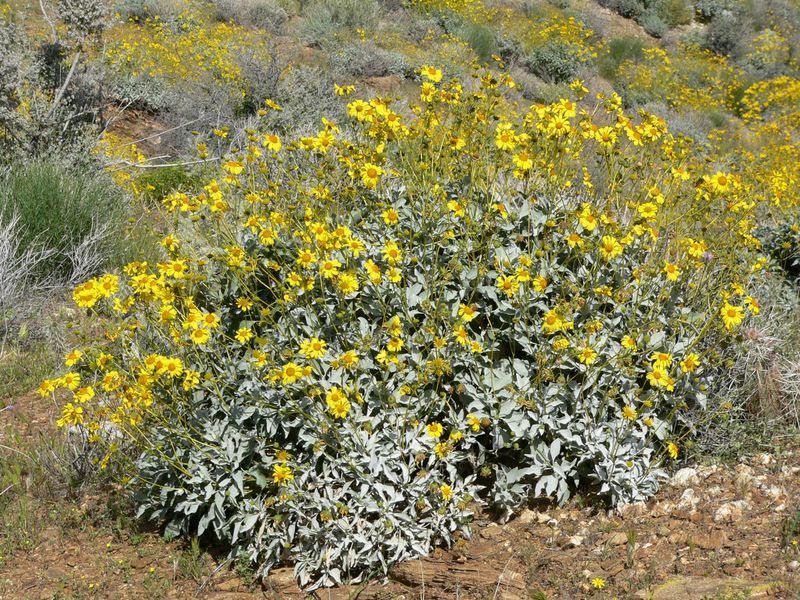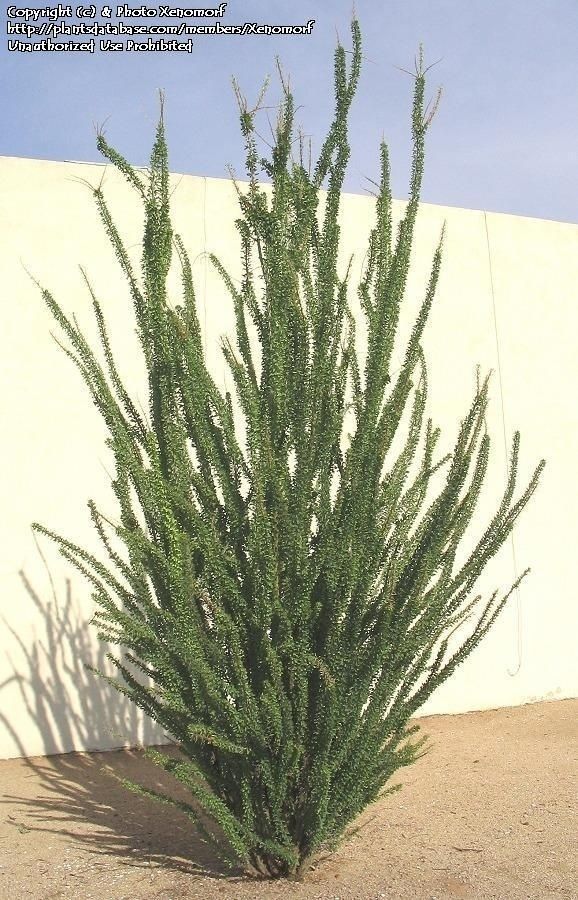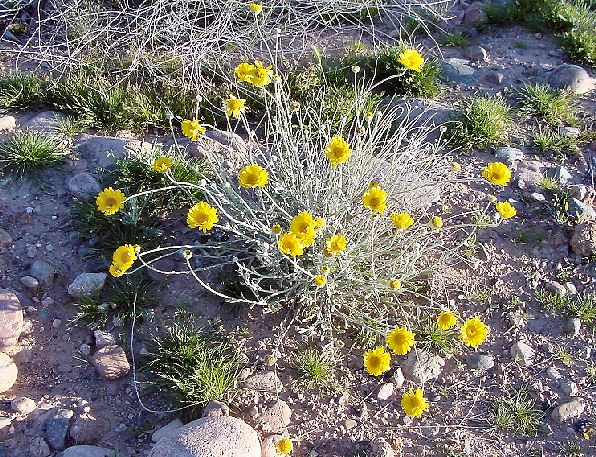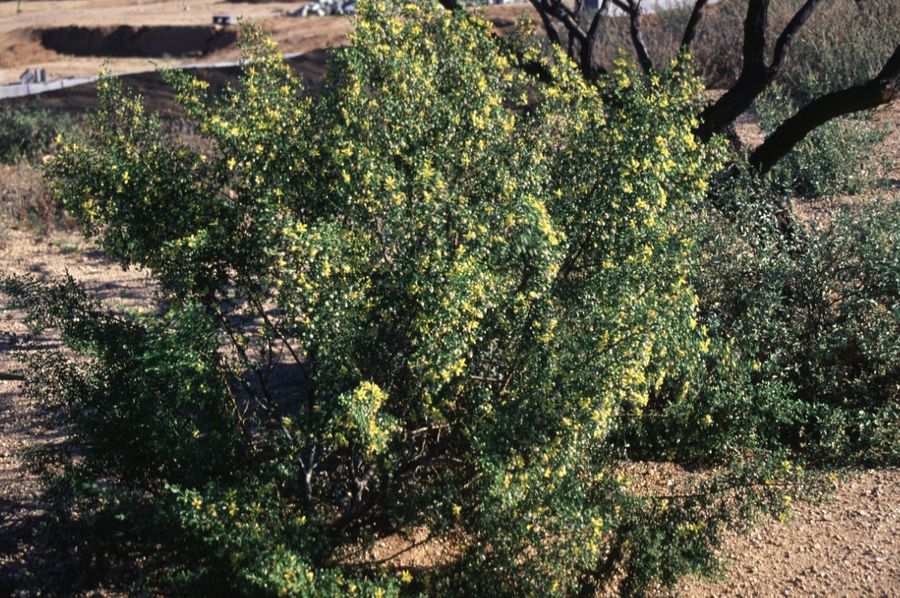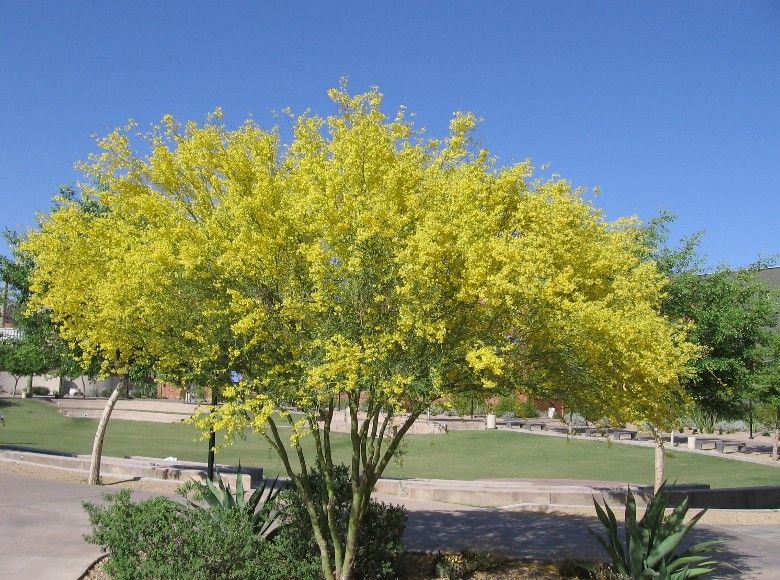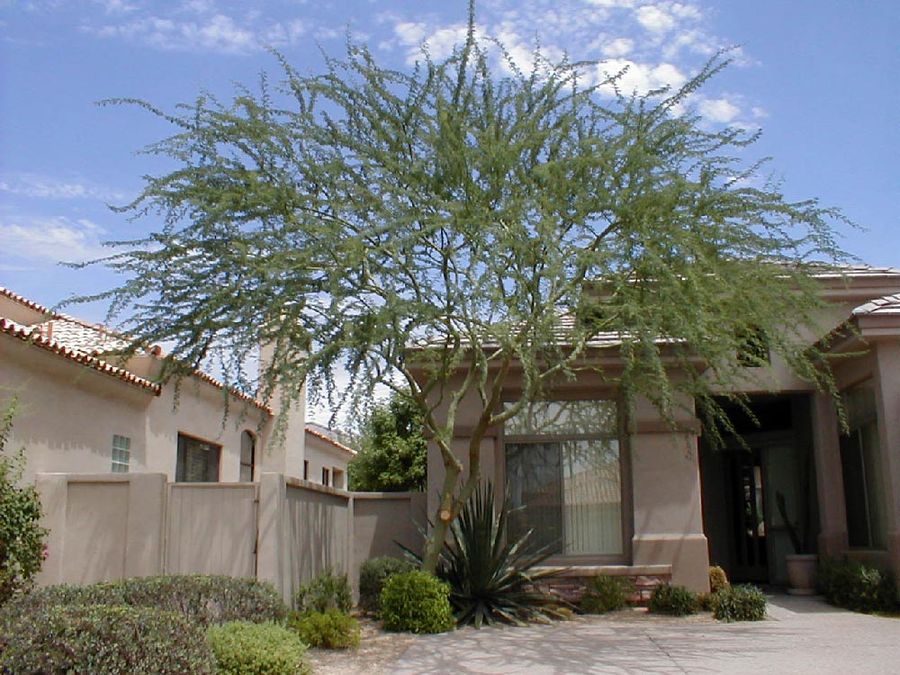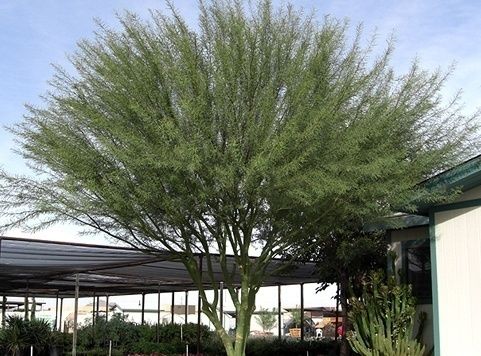
A native Sonoran Desert tree with blue-green bark and a spring bloom so heavy the whole canopy turns gold. It is the first palo verde to flower each year and one of the two native species behind Arizona’s state tree. People choose it for that bloom, its native character and its very low water use.
Living with it in the Phoenix Valley
Watering
Follow the tree schedule in our Landscape Care guide while it establishes. Mature trees need very little, though an occasional deep soak in the hottest, driest stretch helps. Avoid shallow, frequent watering, such as lawn sprinklers, which grows shallow roots and invites blow-over.
Pruning
It spreads wide and branches heavily, so it needs more thinning than most palo verdes. Thin rather than shear, and keep low limbs off the ground and walkways. Avoid removing more than about 30% of the canopy in summer, which can sunburn the bark.
Pests
It is the palo verde most prone to witches’ broom, dense twiggy clusters that can only be cut out. It can also host desert mistletoe and the palo verde root borer. A healthy, lightly watered tree is the best defense.
How our designers use it
Early spring color
Its bloom arrives a few weeks ahead of other palo verdes, so mixing it with them stretches the yellow season.
Native and transition areas
It blends a finished landscape into open desert at the edge of a lot or a wash.
A large specimen
Given room, it makes a broad, sculptural focal point with green bark that stands out all year.
Good to know
Around the pool
The spring bloom drops a heavy carpet of yellow petals, and fine leaflets and twigs follow through the year. Of the common palo verdes, it is among the messiest, so we keep it well away from the water.
Thorns
Short thorns on the twigs make it a poor choice right beside paths, play areas or seating.