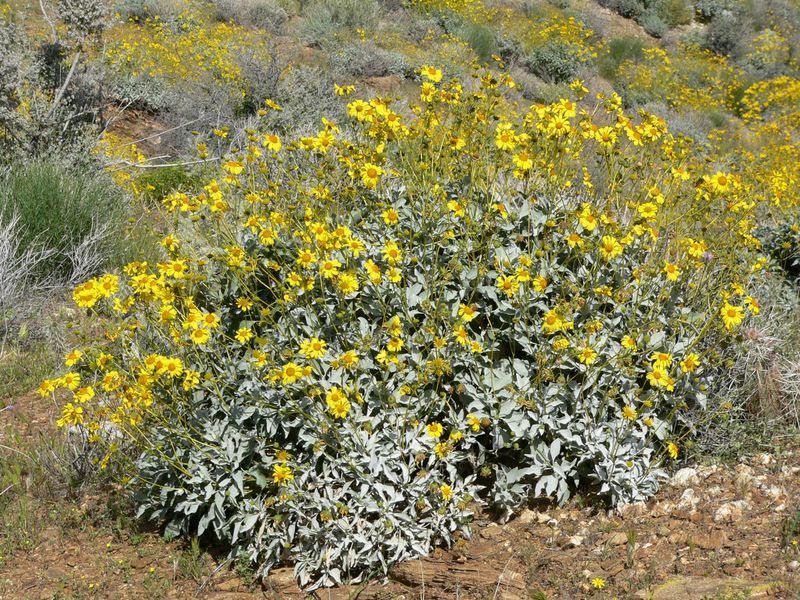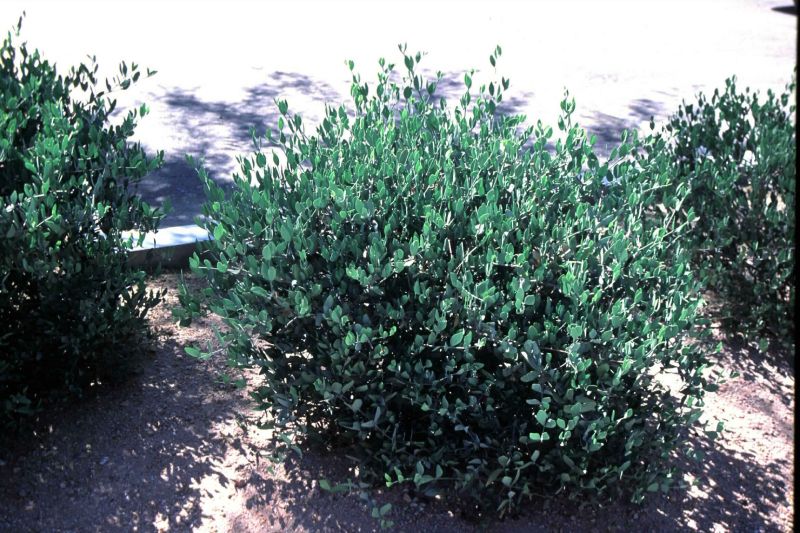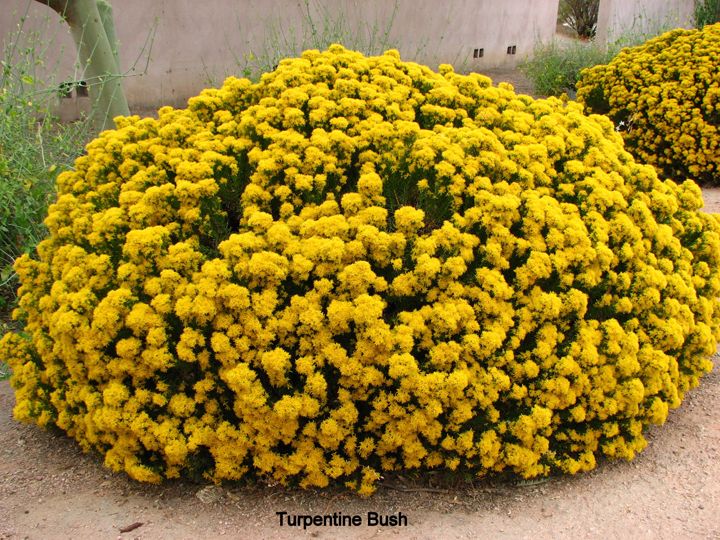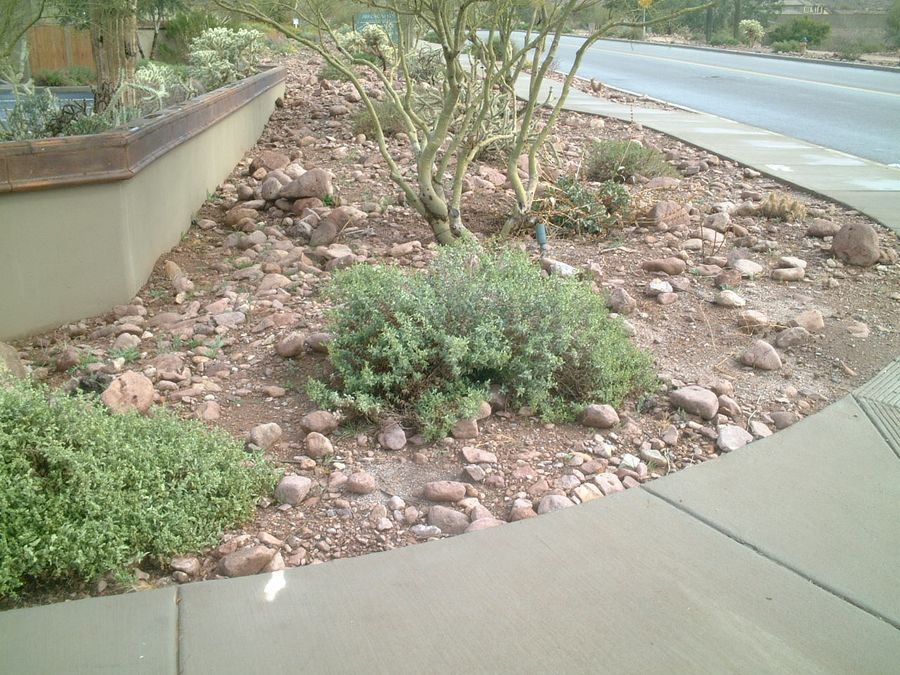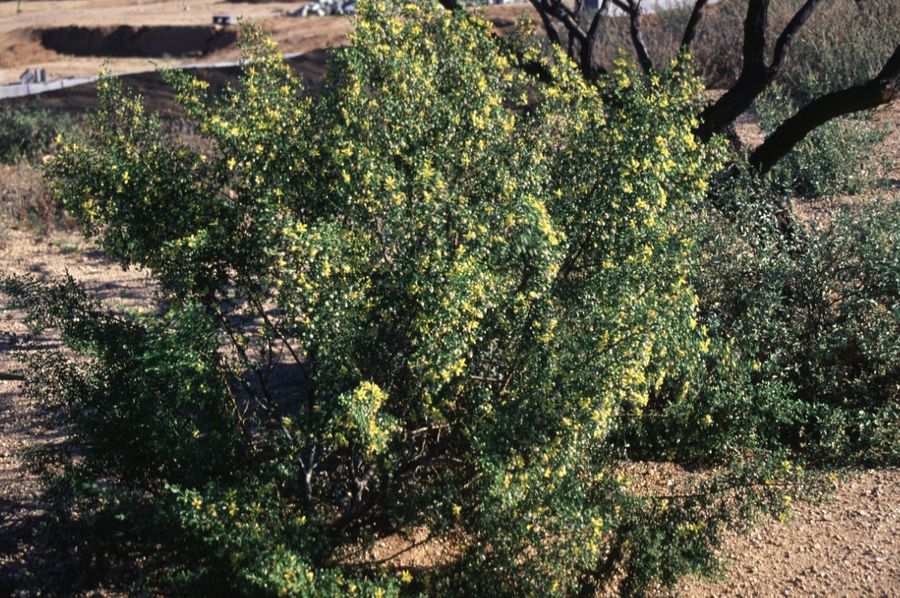
The defining shrub of the Sonoran Desert, with small resinous leaves, yellow spring flowers and fuzzy silver seed balls. Its foliage gives off the familiar smell of desert rain. Once established, it lives on rainfall alone.
Living with it in the Phoenix Valley
Watering
Follow the shrub schedule in our Landscape Care guide while it establishes, then keep it lean. Once rooted, it needs little or no irrigation. Regular water makes it grow fast, tall and gangly, and it loses the twisted, open form that makes it attractive.
Pruning
Prune mainly to remove dead wood. A light heading back keeps a natural, rounded shape. Avoid shearing it into a tight ball or “keg,” which hides its branching. An old, overgrown plant can be cut low to renew it, though this is rarely needed.
Pests
Small galls caused by a tiny fly sometimes form on stems, mostly on stressed plants. They rarely do real harm; clip off affected stems if they bother you.
How our designers use it
Natural desert settings
It anchors native plantings and revegetated areas, tying a new landscape to the open desert beyond.
Screening
Massed, it forms a loose, evergreen screen that asks for almost no water.
Backdrop for sculptural plants
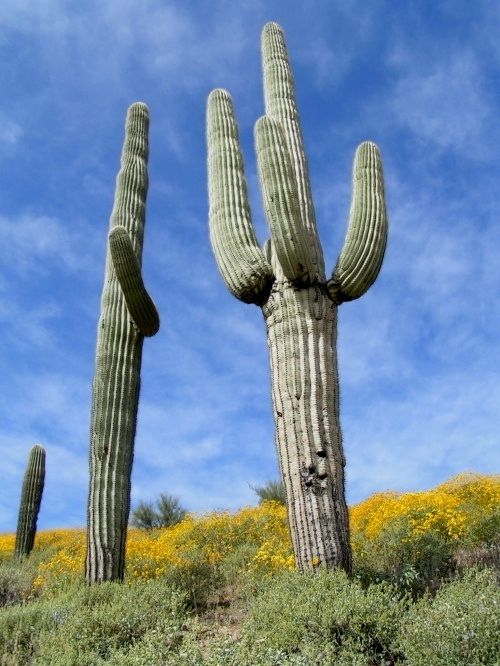
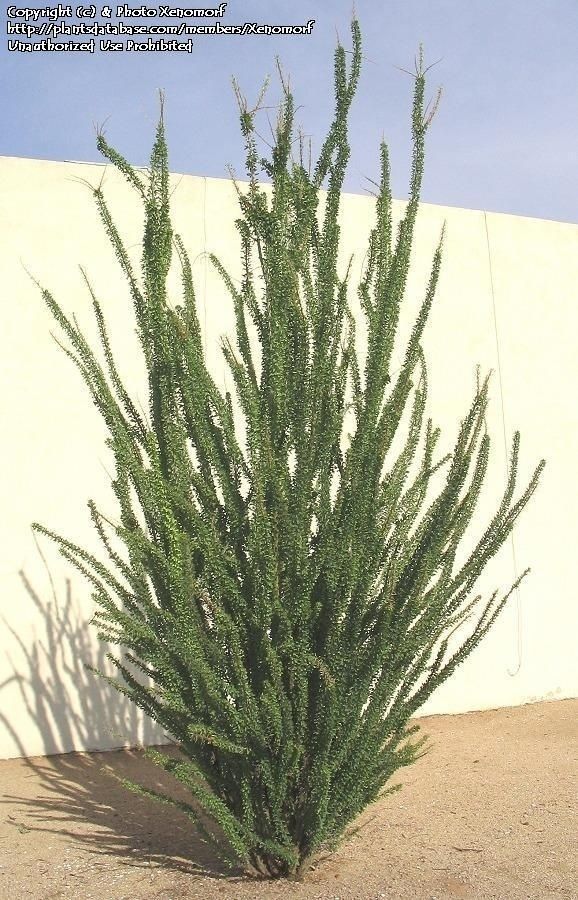
Its fine texture contrasts with saguaros, agaves and ocotillo, and a single plant against a plain wall shows off its twisting branches.
Good to know
Around the pool
Litter is light, but small leaves and fuzzy seed balls do drop, and the resinous scent is strong up close. A little setback from the water is all it needs.
Existing plants
On lots at the desert edge, mature creosote is often worth protecting during construction. It grows slowly and takes years to replace.