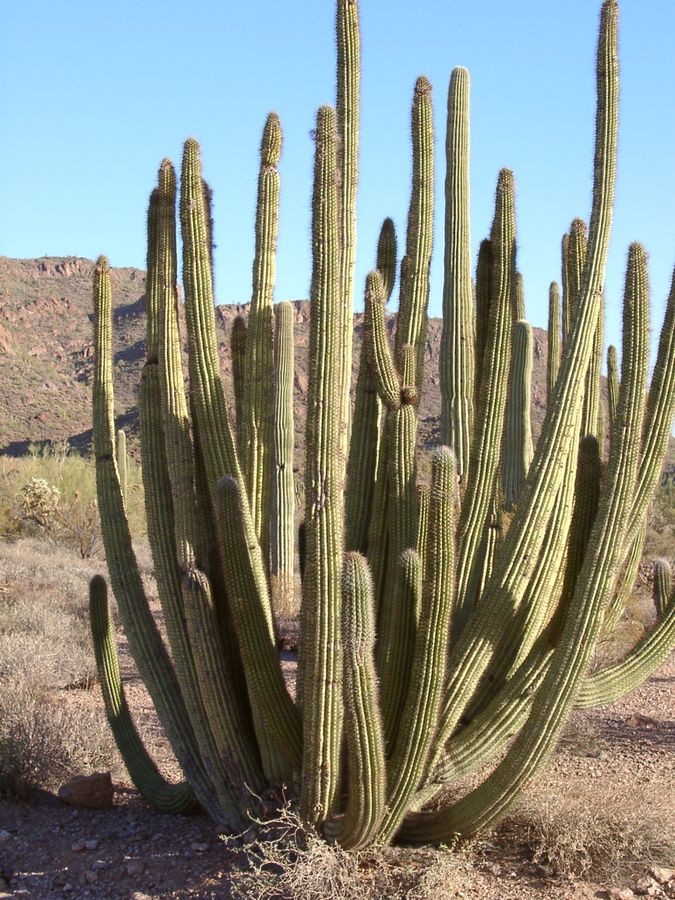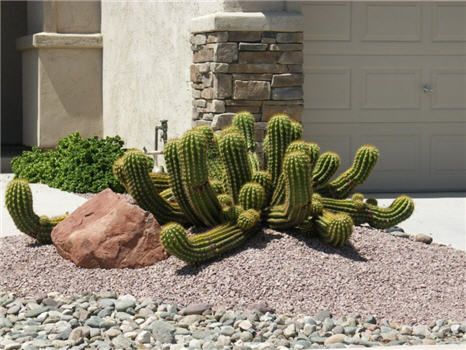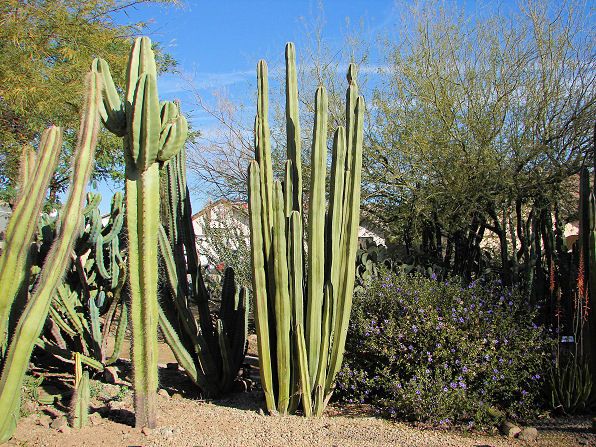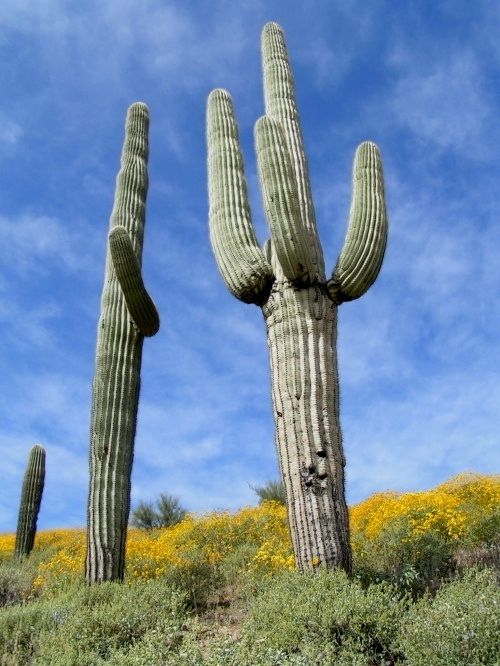
The towering symbol of the Sonoran Desert, and its white blossom is Arizona’s state flower. Saguaros grow very slowly and can live for well over a century, so a mature specimen gives a landscape instant, unmistakable Arizona character.
Living with it in the Phoenix Valley
Watering
Follow the cactus guidance in our Landscape Care guide, which means watering by hand only when the plant needs it. A newly planted saguaro needs careful attention while its roots re-establish. After that it lives largely on rainfall. Soggy soil is far more dangerous than drought.
Pruning
None. Never cut the column or arms.
Planting
Transplanted saguaros do best when set in the same orientation they grew in, so the side that faced south keeps facing south. This avoids sunburn on skin that grew in shade.
Cold
Hard freezes can damage the growing tip, where the plant stores much of its water. Cover the top of young or newly planted saguaros on the coldest nights.
How our designers use it
A signature specimen
One well-placed saguaro can define a whole landscape. Our designers often position it where it will be lit at night and seen from inside the home.
Natural groupings
Several saguaros of different heights, set among palo verdes, ironwoods and native shrubs, recreate the look of the open desert.
Under a nurse tree
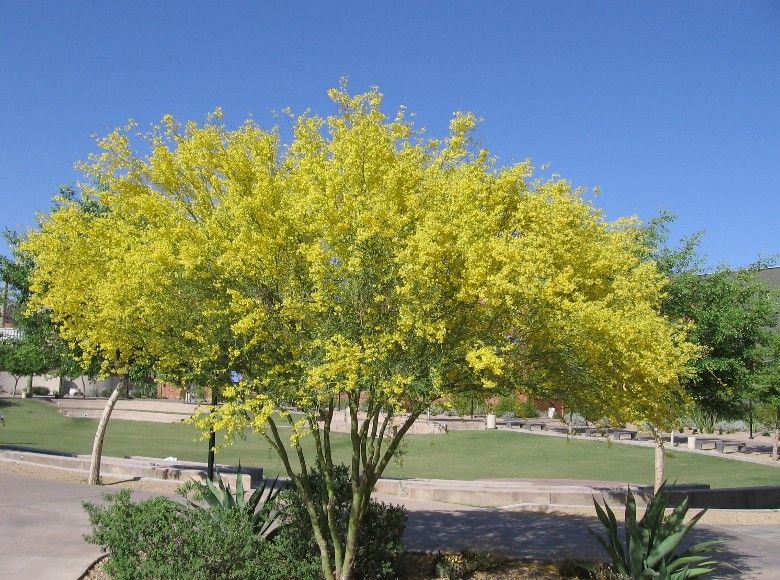
Young saguaros grow naturally beneath palo verdes and ironwoods, and a light canopy shelters small plants from the harshest sun.
Good to know
Around the pool
The spines are stiff and sharp, and a mature saguaro is extremely heavy. We keep it clear of pool decks and walkways, and well away from where it could ever lean toward the water.
Permits
Saguaros are protected under Arizona’s native plant law. Buy only properly tagged plants, and moving one requires the right permits.