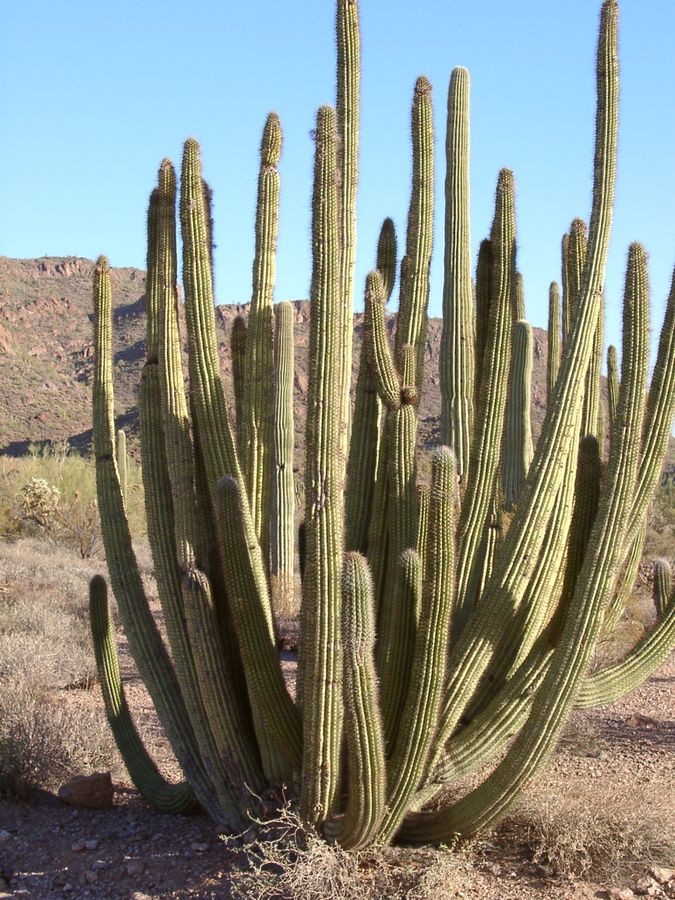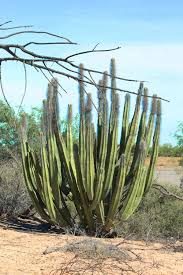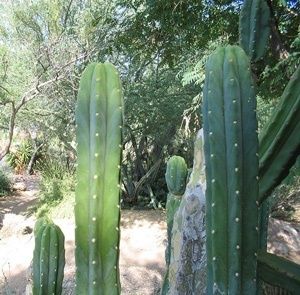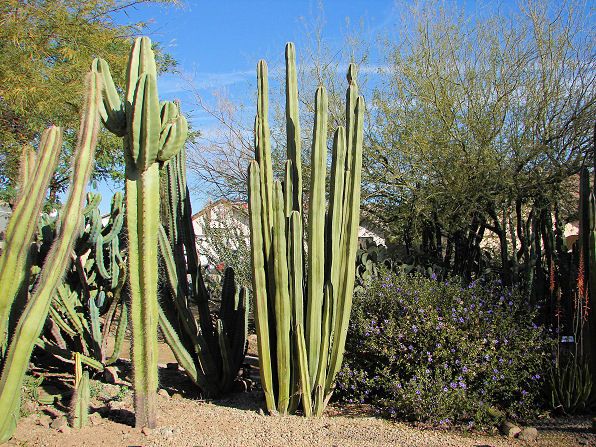
A tall, clean column of dark green, ribbed stems, each rib lined with neat white spine clusters. It branches mostly from the base and has a sleek, architectural look that suits modern desert landscapes.
Living with it in the Phoenix Valley
Watering
Follow the cactus guidance in our Landscape Care guide. It needs little to no extra water once established. Good drainage matters most, especially in irrigated beds, since soggy soil leads to root rot.
Pruning
None needed. Remove a damaged or leaning column at its base if needed.
Cold
It is one of the more frost-tender columnar cacti. Most Phoenix winters are fine, but in a hard freeze cover the growing tips, especially on young plants and in low spots where cold air settles.
How our designers use it
Vertical accent
A cluster of columns adds height and structure against a plain wall or at a corner of the house without casting much shade.
Living screen
Planted in a row, the columns form a narrow, upright screen, the way it is used as a fence in Mexico.
Large containers
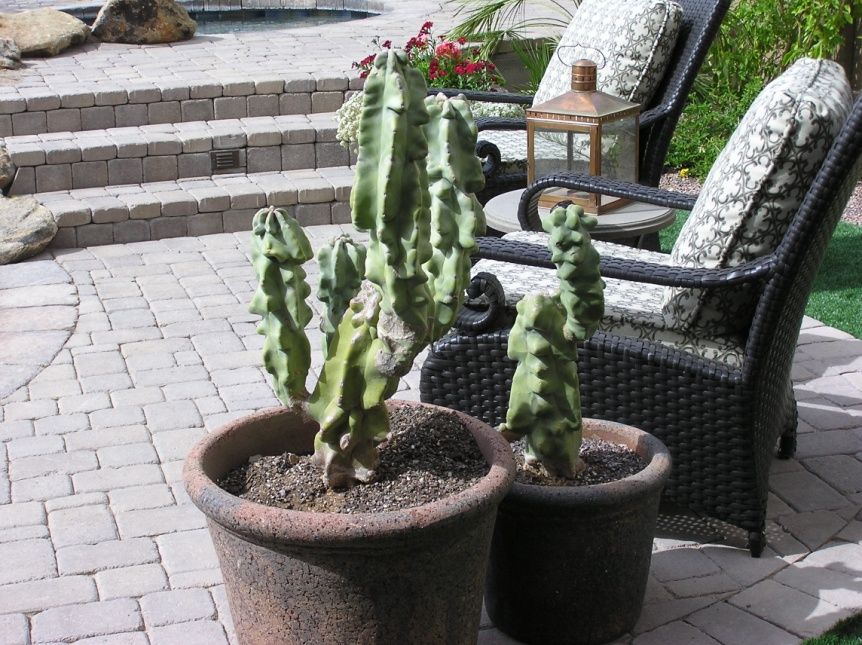
It holds up well in big pots on patios and courtyards.
Good to know
Around the pool
The spines are short but sharp. We generally keep it a few feet back from the pool edge, walks and play areas, where it works well as a backdrop rather than an edge plant.
Frost
Freeze damage shows as scarred, discolored tips. Covering the tops on the coldest nights is easy insurance.