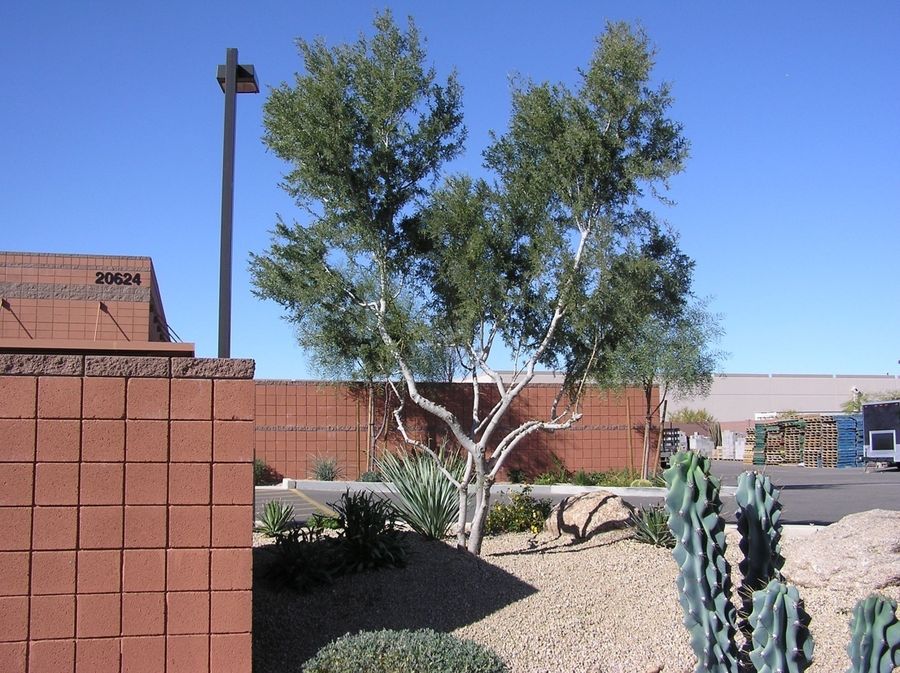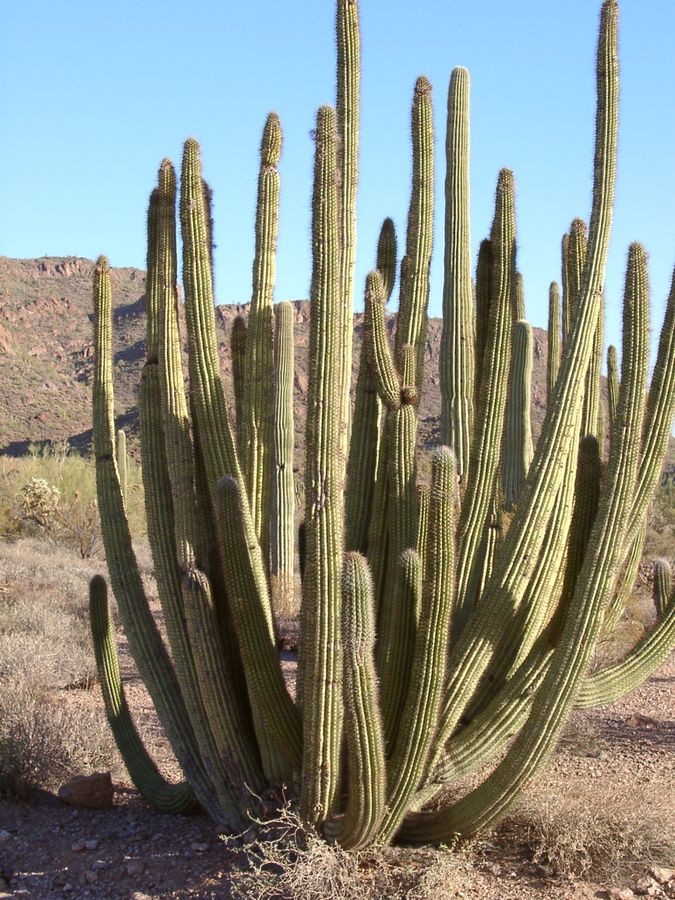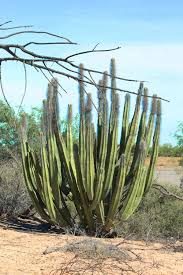
A clumping columnar cactus from the Sonoran Desert, branching from the base into a cluster of ribbed, light green stems. With age the stem tips grow long gray spines that look like whiskers, which is where its other name, whisker cactus, comes from. It is slow, very long lived and needs almost nothing once established.
Living with it in the Phoenix Valley
Watering
Follow the cactus guidance in our Landscape Care guide, which means hand-watering only when needed. Once established it lives on rainfall, though occasional summer water speeds its growth. Poorly drained, damp soil leads to root rot.
Pruning
None needed. At most, remove an awkward or crossing stem to control width.
Cold
A typical Phoenix winter is no problem. If a hard freeze is forecast, cover the newest growth at the stem tips, which is the most tender.
Planting
Plants grown in a nursery need to adjust to full sun gradually. Keep the side that faced south in the nursery facing south in the ground to avoid sunburn.
How our designers use it
Sculptural focal point
Its clustered, irregular stems make a strong vertical accent in a desert garden or courtyard.
Background structure
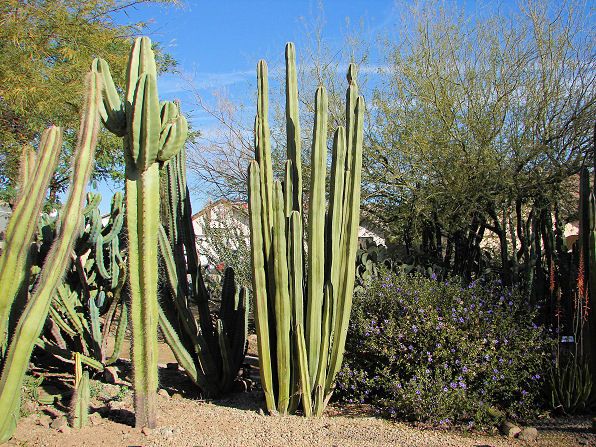
Planted toward the back of a bed, it gives height and mass behind lower shrubs and groundcovers.
Large containers
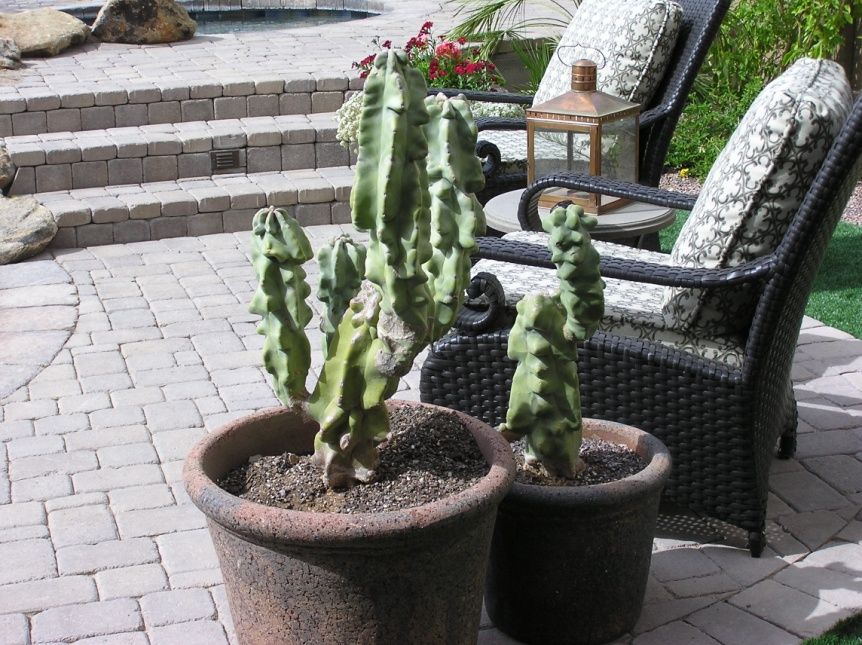
It does well in big pots on a patio, where its form can be seen up close.
Good to know
Around the pool
Lower stems carry short spines, but the upper stems grow long, bristly ones. Give it room away from walkways and pool edges, and allow for its slow spread over the years.