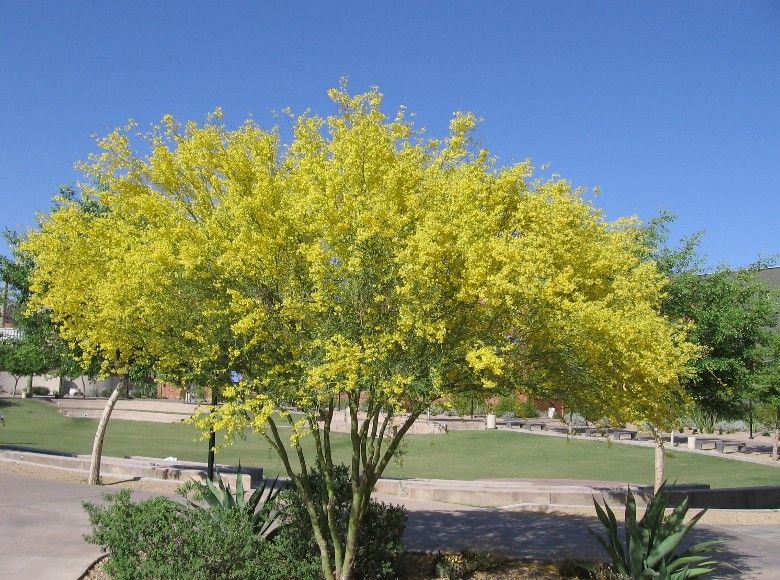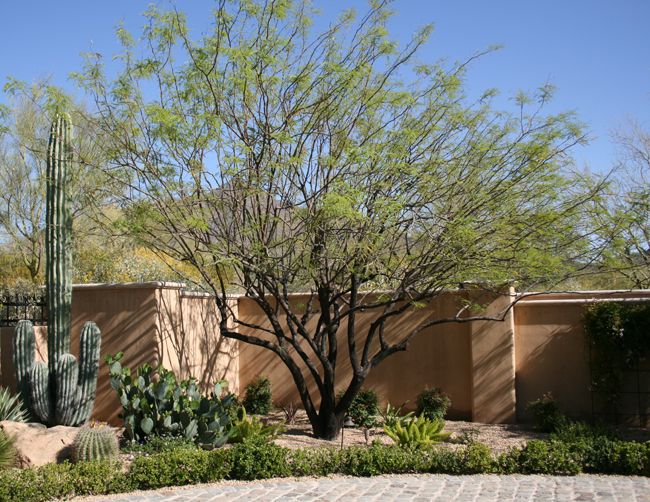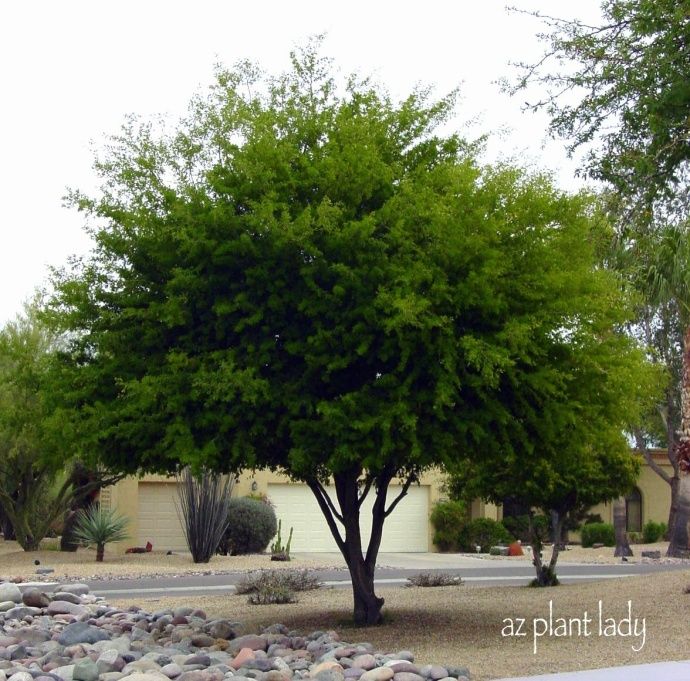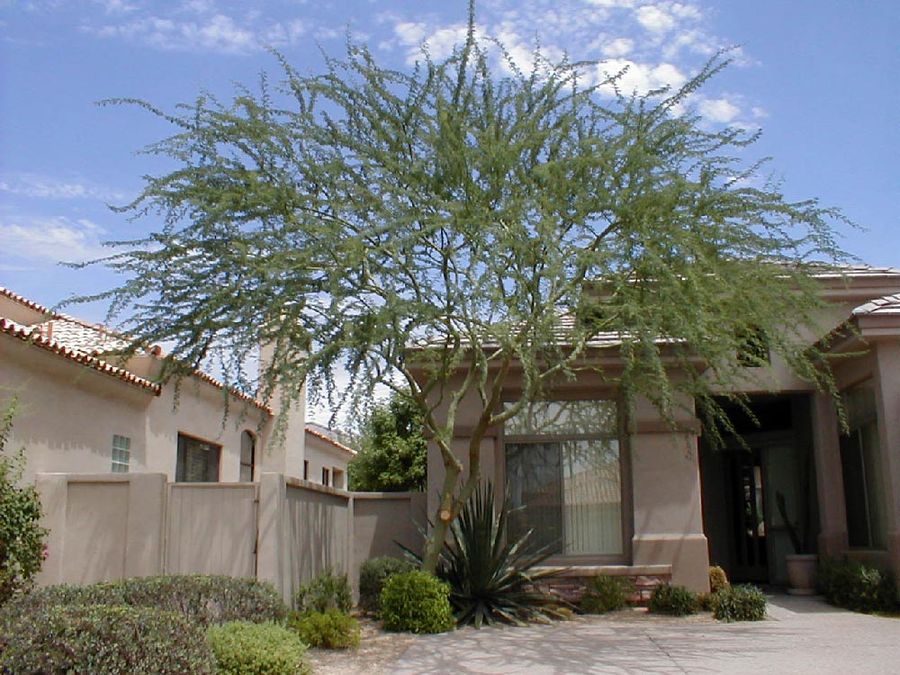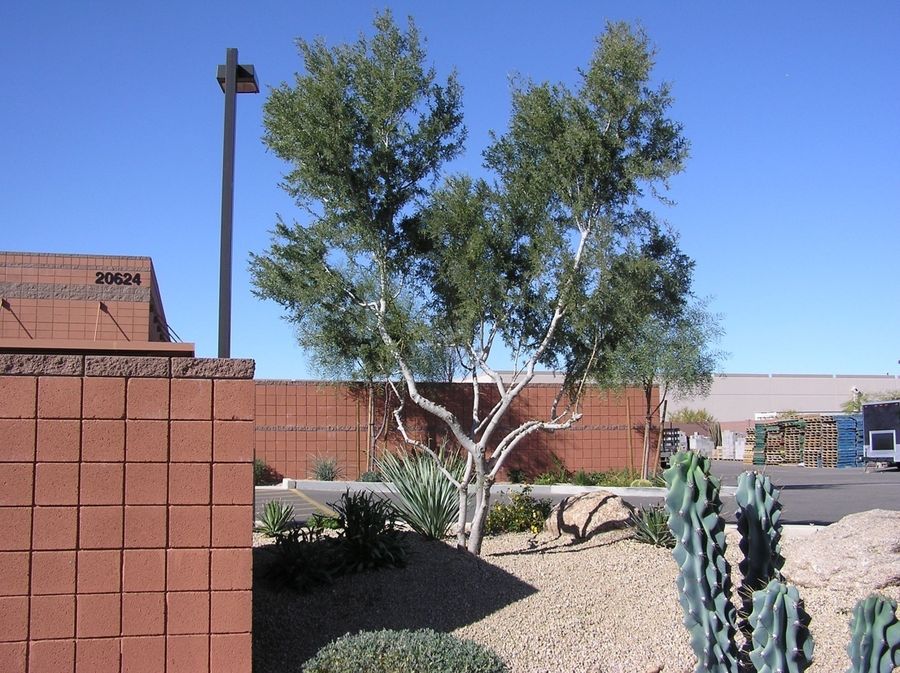
A native Sonoran Desert tree with gray-green leaves, a dense, rounded canopy and a late-spring flush of lavender-pink flowers. It grows slowly, asks for very little water and is among the longest-lived trees in the desert, with wild trees known to persist for centuries.
Living with it in the Phoenix Valley
Watering
Follow the tree schedule in our Landscape Care guide while it establishes. After that, it needs very little. Overwatering is the most common way these trees fail, so keep it away from lawns, heavily watered beds and low spots where runoff collects.
Pruning
Shape young trees gradually to set good structure, and thin mature trees a little at a time. Avoid heading back or hedging, and take no more than about a fifth of the canopy in summer, since heavy cuts expose bark to sunburn.
Pests
Generally trouble-free. Spider mites can appear in the dusty months of May and June, and aphids, thrips or psyllids occasionally slow young trees.
Leaf drop
It sheds leaves before it flowers and again in long dry spells or hard freezes. This is normal, and new leaves return with warmth and rain.
How our designers use it
A specimen at the entry
Its dark, sculptural trunks and dense, gray-green canopy make a strong focal point that reads as genuinely Sonoran.
Native and transitional landscapes
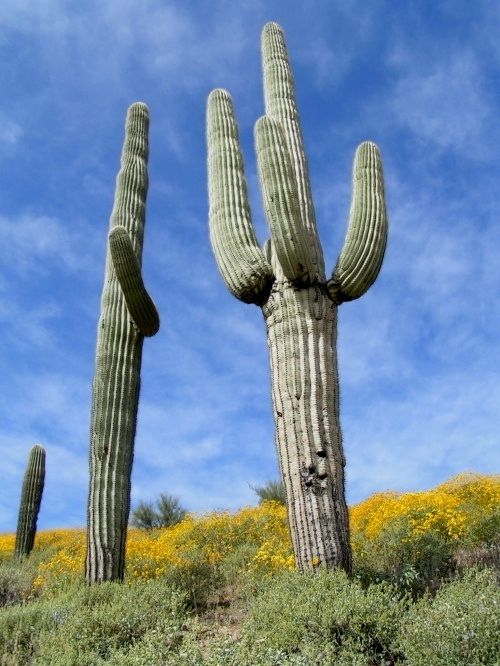
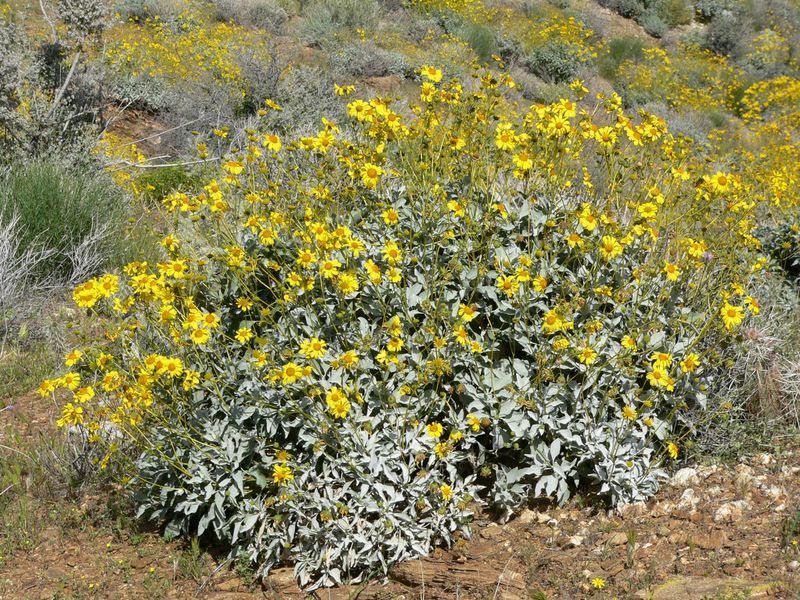
We use it where a yard blends back into natural desert, alongside saguaros, brittlebush and other natives that grow with it in the wild.
A living barrier
The spiny branches suit a property edge or any spot where you’d rather people not cut through.
Good to know
Around the pool
Litter is light: small leaves, flowers and pods. The thorns are the bigger concern, so we keep it back from the pool deck, paths and seating where people brush past.
Shade beneath it
The canopy grows dense with age and can slow the growth and bloom of plants right beneath it. Leave room under and around it for tough, low-water plants.