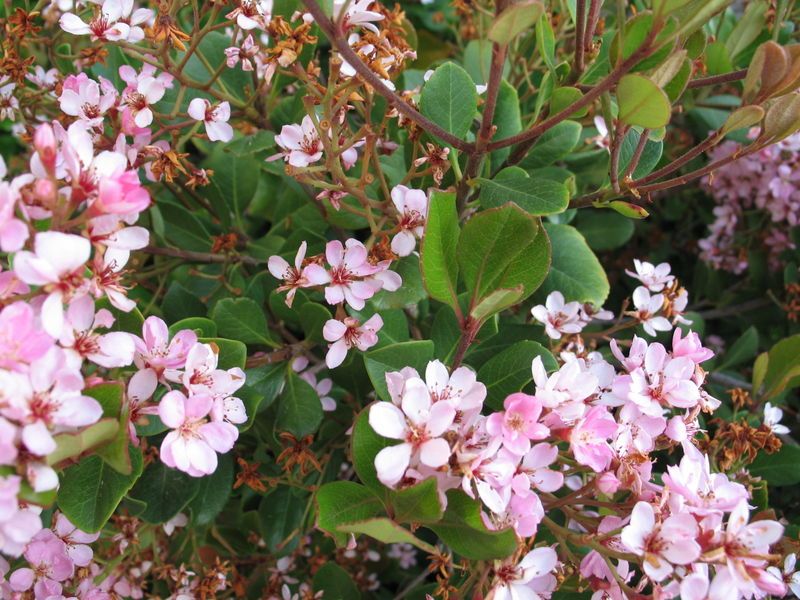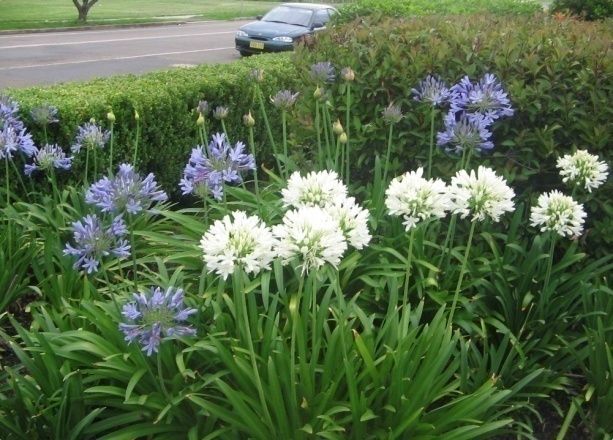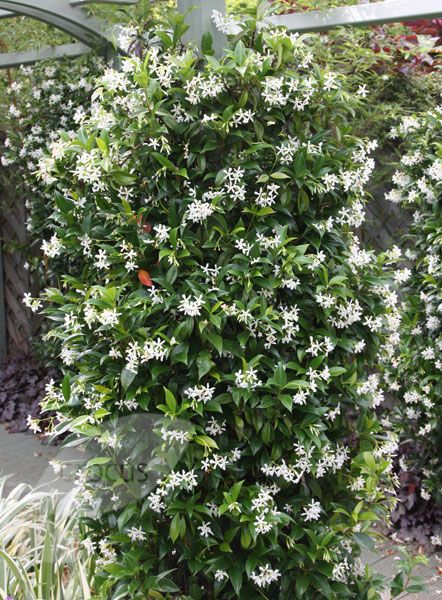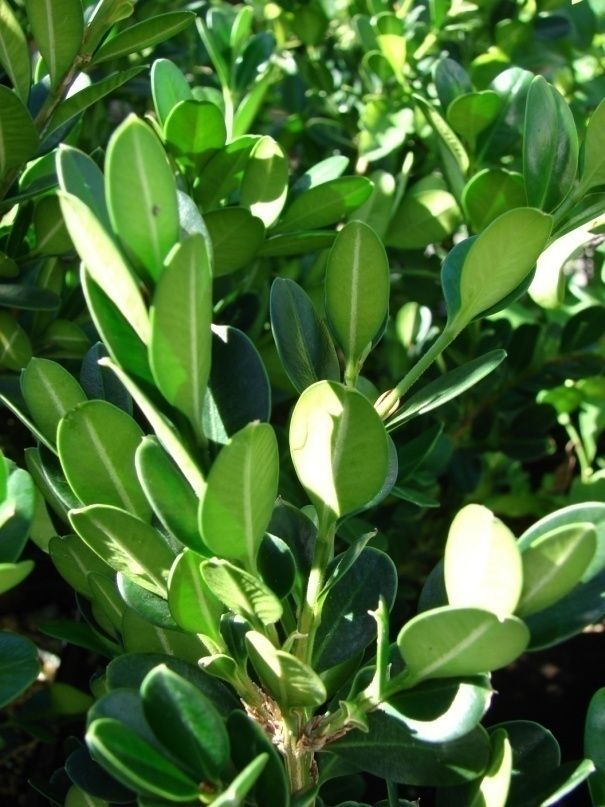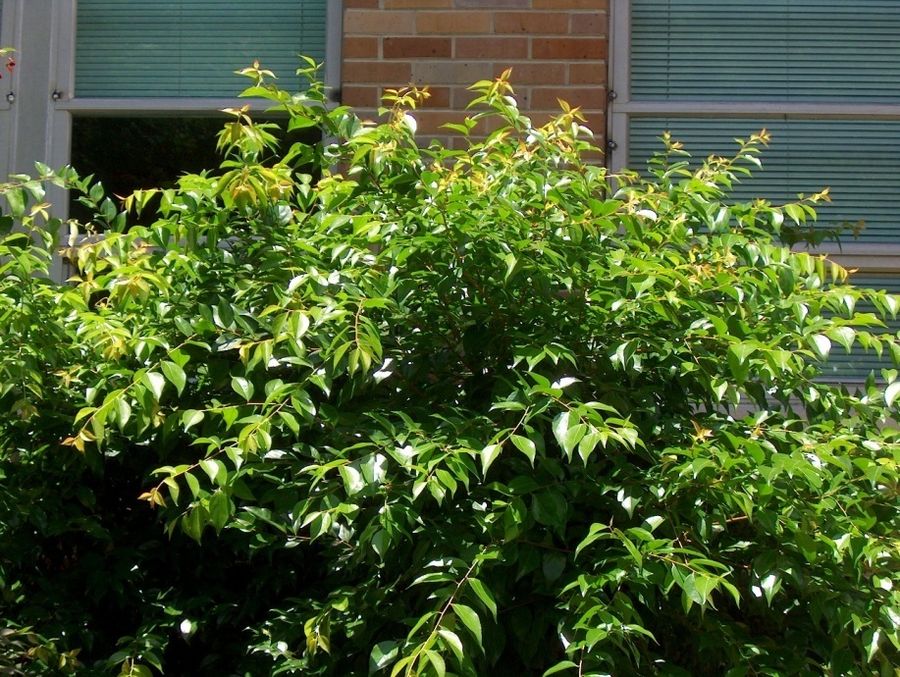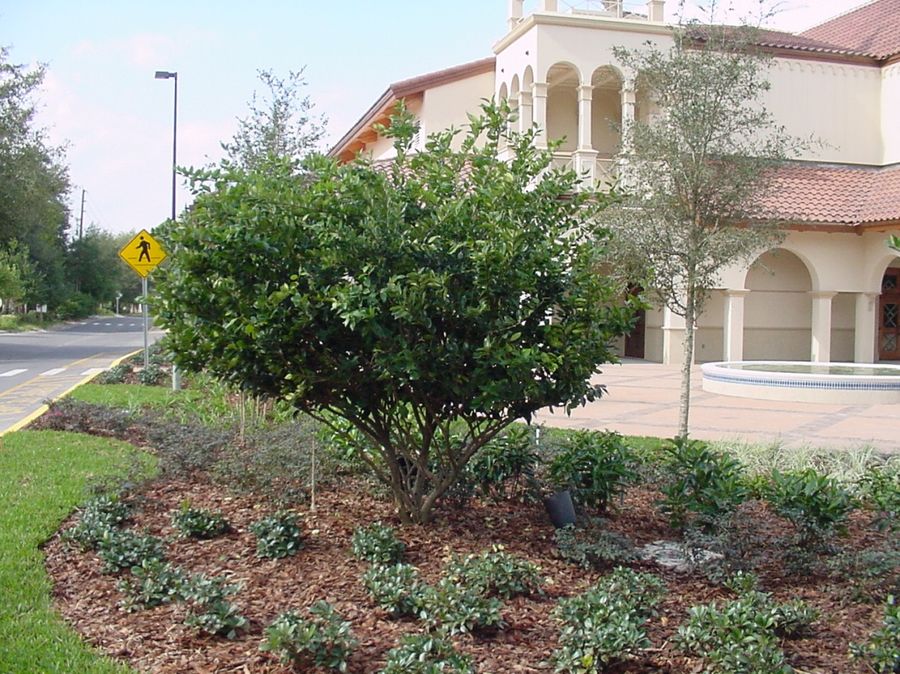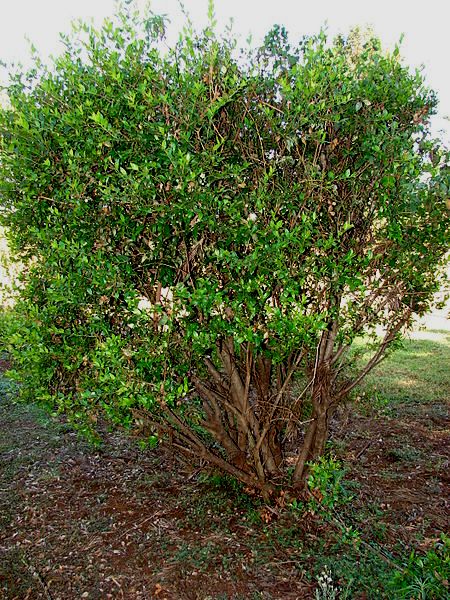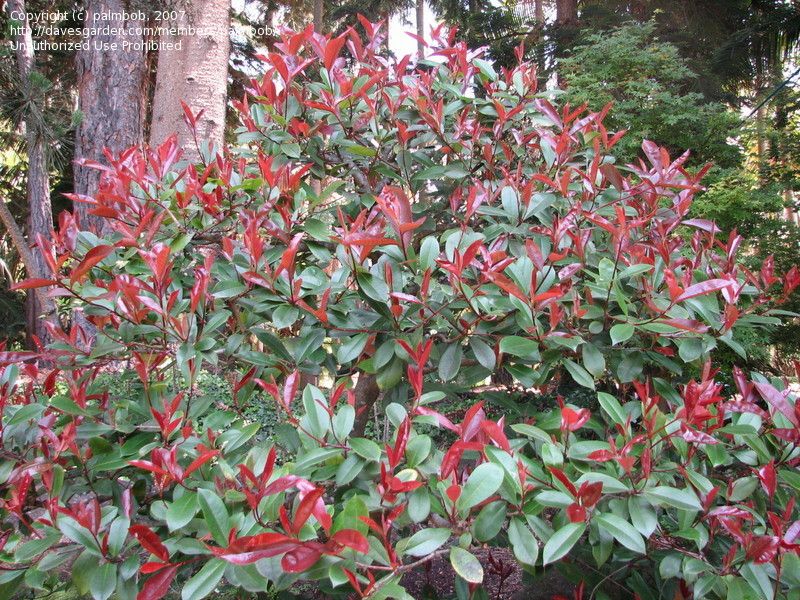
A dense evergreen shrub whose new leaves emerge bright red before turning deep, glossy green. It makes a full, formal-looking hedge or screen in protected parts of a Phoenix garden.
Living with it in the Phoenix Valley
Watering
Follow the shrub schedule in our Landscape Care guide. It is not a desert plant and needs regular water through the summer, along with good drainage. A layer of organic mulch helps keep the roots cooler and moister.
Pruning
Shearing during the growing season brings out more of the red new growth. Clean pruning tools between plants to avoid spreading leaf spot.
Soil and yellowing
It prefers neutral to acidic soil, so Phoenix’s alkaline ground often causes yellow leaves with green veins. Amending the soil at planting and an iron treatment when yellowing appears both help.
Heat
Hot afternoon sun and dry summer wind scorch the leaves. It does best with morning sun or bright, filtered shade.
How our designers use it
Green hedges in protected spots
It forms a dense, uniform screen along east-facing walls and in courtyards sheltered from the afternoon sun.
Lush, traditional gardens
Its glossy leaves and red flush suit oasis-style and traditional landscapes rather than desert plantings.
Small standard tree
It can be trained to a single trunk as a small accent tree for an entry.
Good to know
Around the pool
No thorns. Spring flowers and fall berries drop a little litter, so keep it back from the water’s edge.