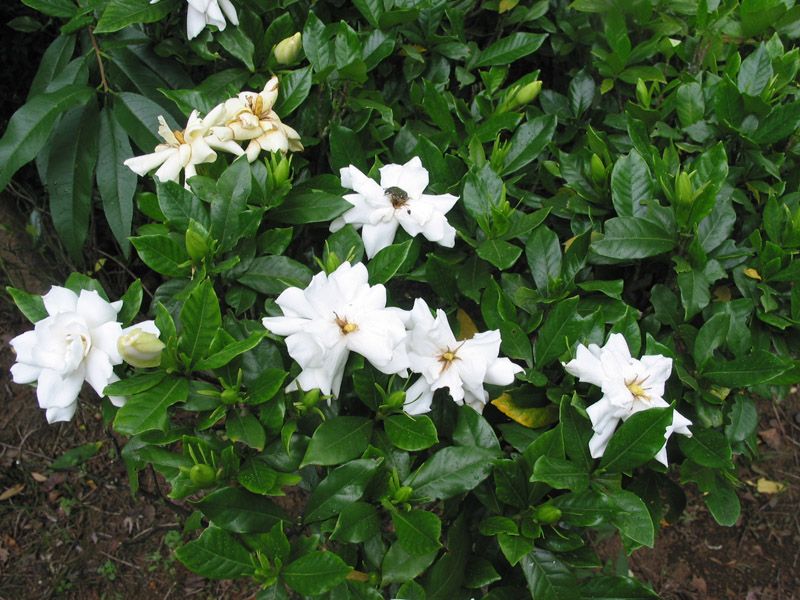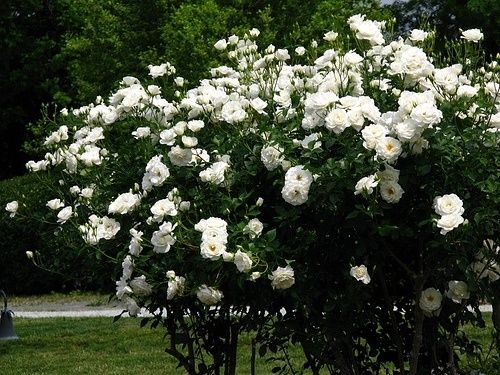
A floribunda rose with clusters of pure white flowers. It repeats its bloom more freely than most roses, from spring into late fall, and its clean look suits both traditional and modern gardens.
Living with it in the Phoenix Valley
Watering
Follow the shrub schedule in our Landscape Care guide. Like all roses, it needs more water than most landscape shrubs, and the need climbs through summer. Deep, thorough watering and a layer of mulch keep it blooming.
Pruning
Prune in winter, from about mid-January into February. Remove dead and crossing canes and shorten the rest by a third to a half. Deadhead through the season to keep new flower clusters coming.
Feeding
It is a heavy feeder. A well-amended bed and a rose fertilizer during the growing season keep the flowers coming.
Heat
White petals can brown at the edges in the hottest weeks, and blooms get smaller. Morning sun with some afternoon shade keeps it looking fresh until the fall flush.
How our designers use it
A white garden
Its white flowers glow in evening light and pair easily with silver and deep green foliage.
Low flowering hedge
Planted in a row, it makes a flowering low hedge along a walk or the edge of a patio.
Good to know
Around the pool
It drops petals through its long bloom season, so we keep it a few feet back from the water. Its few thorns make it friendlier than most roses near seating.