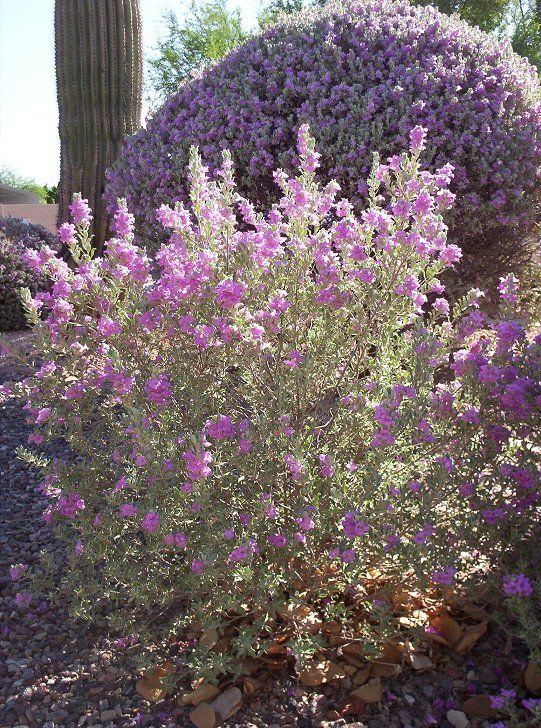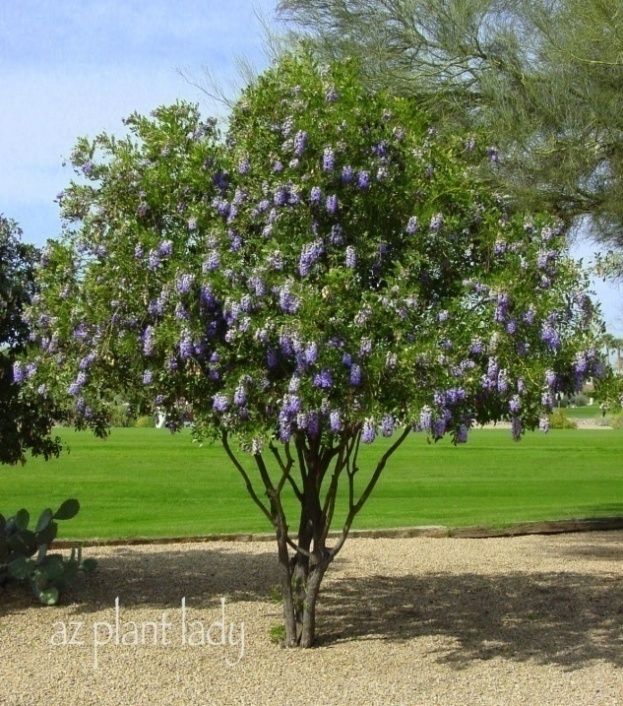
A slow-growing evergreen shrub-tree with glossy dark leaves and hanging clusters of purple flowers that smell like grape candy. It blooms in late winter, when little else is flowering, and stays compact enough for courtyards and small yards.
Living with it in the Phoenix Valley
Watering
Follow the tree schedule in our Landscape Care guide while it establishes. Once mature it needs little water, and it must have soil that drains well. Too much water and fertilizer push soft growth that draws caterpillars.
Pruning
Prune lightly in late April or early May, after bloom. It recovers very slowly from hard cuts, and the next year’s flower buds form in late summer, so late-season pruning removes the bloom. Never shear it.
Pests
Genista caterpillars can strip leaves in late summer and fall. Pick them off on small plants or use a Bt spray if damage is heavy. Silver-leaved forms are more resistant.
Heat
It enjoys summer heat, but it can struggle in reflected heat against hot walls or in stretches above about 115°F.
How our designers use it
A small patio tree
Trained to a few trunks, it gives evergreen structure beside a courtyard or seating area without outgrowing the space.
Late-winter color
Its bloom fills the gap before spring wildflowers and palo verdes, and the scent carries on a warm afternoon.
Informal screen
Left as a large shrub, it makes a dense evergreen backdrop for lower desert plantings.
Good to know
Around the pool
Litter is light and it has no thorns, so it works near a pool deck. Pick up the seed pods in summer so they don’t end up in the water.
Toxic seeds
The bright red seeds are poisonous if chewed. Where small children play, remove pods as they form.