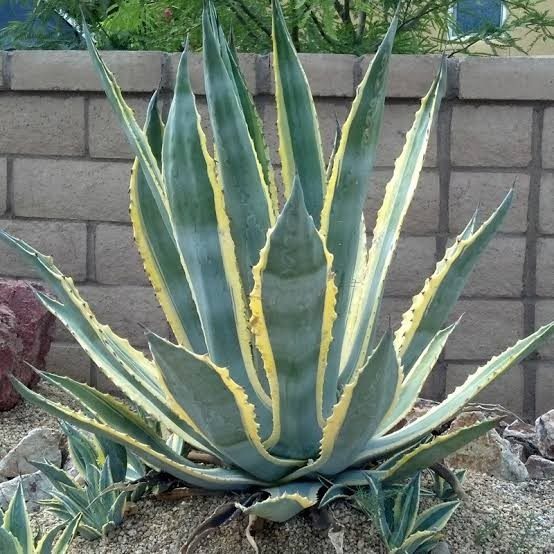
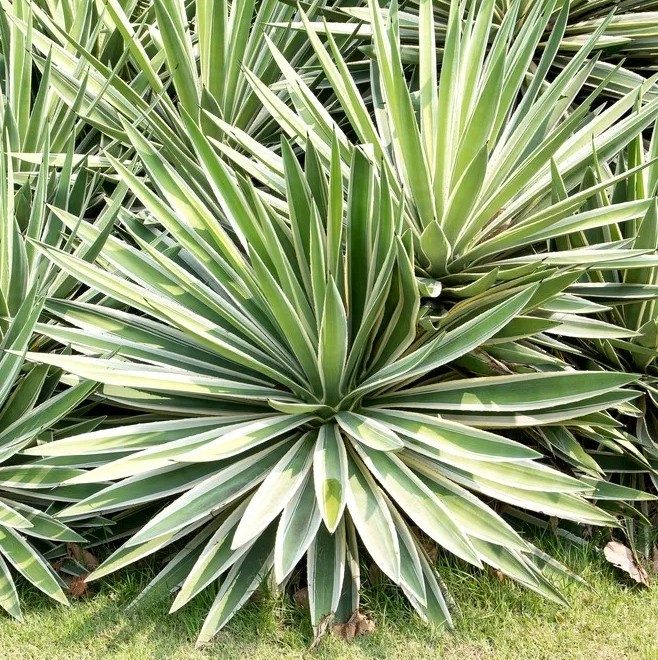
The big, classic agave: broad blue-gray leaves in a rosette that can spread 8–10′ across. It thrives in Phoenix heat with very little water and makes a strong sculptural statement in open spaces. Its size and spines mean it needs room, and planning.
Living with it in the Phoenix Valley
Watering
Follow the shrub, groundcover and succulent schedule in our Landscape Care guide. Established plants need little in winter and only occasional summer water. Excellent drainage is essential, and extra water mostly buys size you may not want.
Pruning
Remove dead lower leaves at the base with long-handled tools and heavy gloves. Pull pups each year or two if you want a single, clean rosette.
Snout weevil
The agave snout weevil is a common pest in Arizona. A plant that suddenly wilts and collapses at the center usually cannot be saved, and removing a large one is real work.
Flowering
After 10 or more years it sends up an asparagus-like stalk that keeps growing to 15′ or taller, then the rosette dies. Pups around the base carry on.
How our designers use it
A large-scale focal point
In big open beds, on slopes and along long drives, its bold silhouette holds its own against wide desert views.
Away from traffic
We place it well back from walks, gates and play areas, and give it space to reach full width without crowding.
With native trees and grasses
It sits comfortably beneath the open shade of a mesquite, with deer grass or globe mallow to soften its base.
Good to know
Around the pool
The leaf tips are dangerously sharp and the plant grows very wide. Keep it well away from pool decks, paths and play areas.
Sap
The sap of many agaves, including this one, can irritate skin. Wear gloves and long sleeves when cutting leaves or removing pups.
After it blooms
The mother plant dies after flowering, and pups appear freely around it. Expect a large removal job at some point.