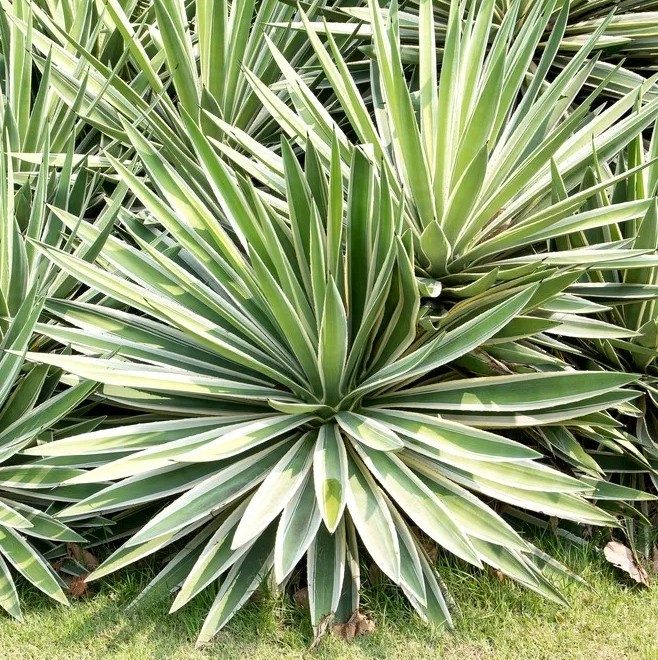
A large, upright agave with long, broad blue-green to gray-green leaves and only fine teeth along the edges. It makes a commanding focal point and tolerates cold better than many big agaves. Offsets form at the base, and the mother plant dies after it blooms.
Living with it in the Phoenix Valley
Watering
Follow the shrub, groundcover and succulent schedule in our Landscape Care guide. It is drought tolerant, but without some water in summer the leaves can yellow from heat stress. Well-drained soil keeps the roots healthy.
Pruning
Remove dead lower leaves and unwanted pups. Cut the flower stalk and spent rosette after bloom.
Snout weevil
Like most large agaves, it is susceptible to the agave snout weevil. Watch for a rosette that wilts or leans suddenly.
How our designers use it
A large focal point
Its size and upright form anchor big beds, corners and open spaces.
Near water features
Our designers like its bold, slightly tropical look beside fountains, ponds and pool landscapes, set well back from the edge.
With grasses and perennials
Deer grass, sage and angelita daisy soften its base and fill the gap between its broad leaves.
Good to know
Around the pool
The sharp terminal spines sit at waist height on a mature plant. Leave a wide margin from pool decks, walks and play areas.
After it blooms
The mother plant dies after flowering, leaving a large rosette to remove. Its pups replace it.