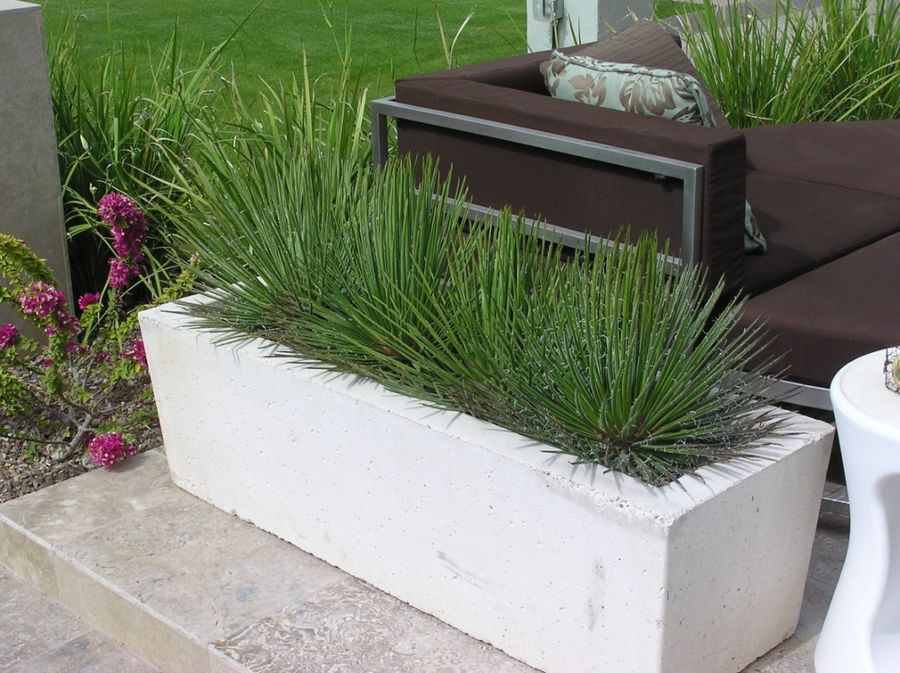
An unusual agave made of hundreds of very narrow, dark green leaves that form a dense, rounded ball. It comes from the oak zone of Nayarit, Mexico, so it is happiest here with some shade. The fine texture makes it read almost like an ornamental grass among bolder succulents.
Living with it in the Phoenix Valley
Watering
Follow the shrub, groundcover and succulent schedule in our Landscape Care guide. It does most of its growing in spring and fall. In midsummer give only enough to keep the leaves from shriveling, and never let it sit in wet soil.
Pruning
None needed beyond pulling out an occasional dry lower leaf. Remove the flower stalk after the plant blooms and dies.
Heat and sun
Full afternoon sun and reflected heat in July can bleach and stress it. An east exposure or the light shade of a desert tree suits it better.
Cold
It handles a typical Phoenix winter, but a frost cloth helps on nights forecast in the low 20s.
How our designers use it
Containers
Its tidy, symmetrical form and single rosette make it one of the best agaves for a large pot by an entry or patio.
Texture among bold leaves
Our designers use it to soften groupings of broad-leaved aloes and agaves with something fine and airy.
Under a light canopy
It fits beneath palo verde or palo blanco, where filtered light keeps it deep green.
Good to know
Around the pool
Its narrow leaves are much softer than a century plant’s, but each still ends in a point. Give it a little room from bare legs and pool edges.
After it blooms
Because it rarely makes pups, the plant is usually gone once it flowers. Expect to replace it.