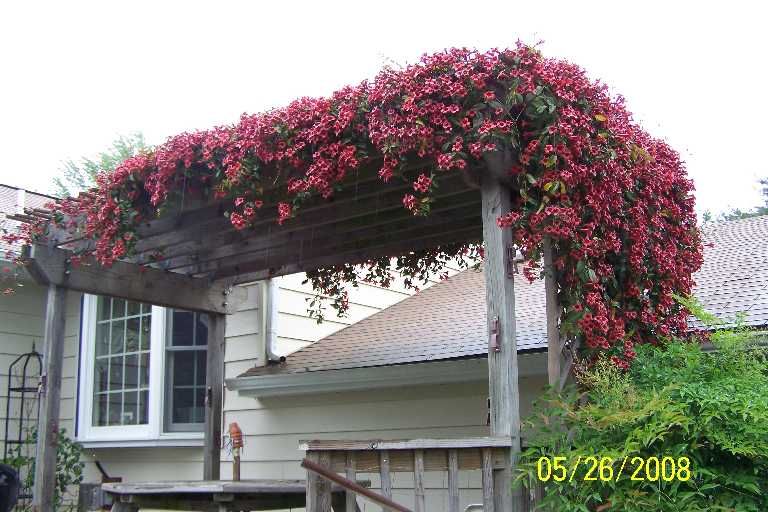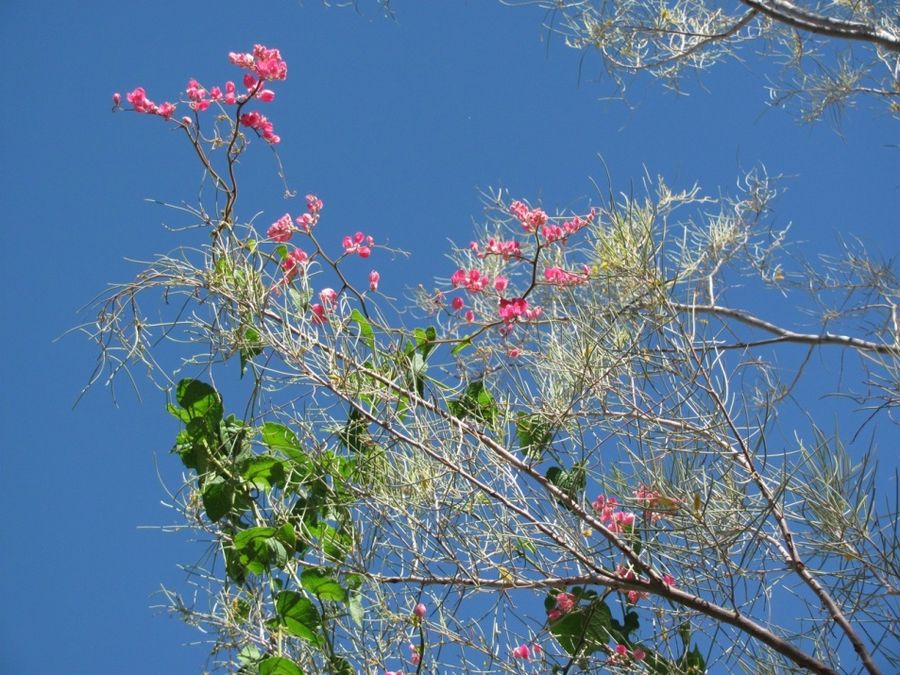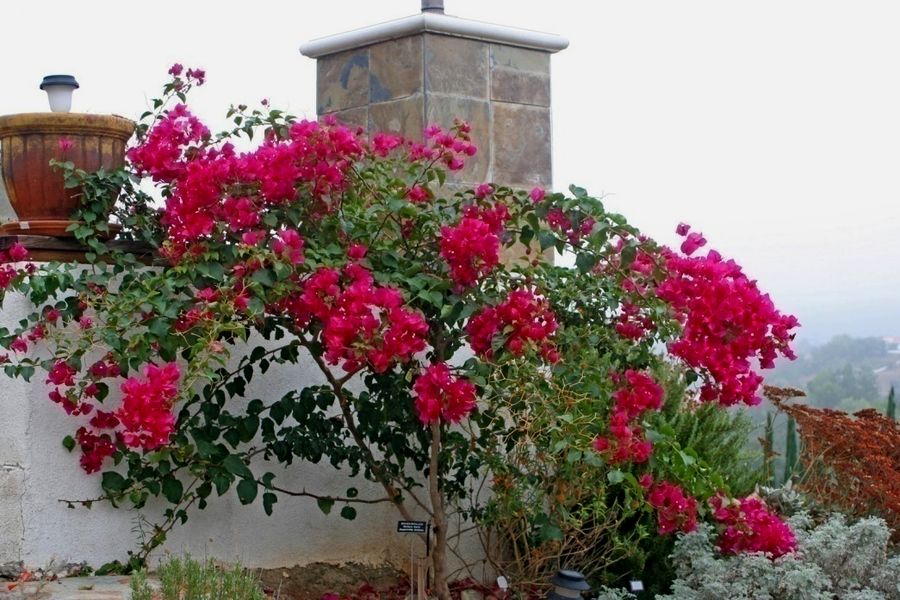
A vigorous, thorny vine with masses of bright magenta-red color through the warm months. The color comes from papery bracts around small white flowers. It thrives on heat, which is why it remains a Valley staple for walls, fences and hot, sunny corners.
Living with it in the Phoenix Valley
Watering
Follow the shrub schedule in our Landscape Care guide while it establishes. Once rooted, it blooms best when kept on the lean side. Too much water and fertilizer push leafy growth at the expense of color.
Pruning
Wait until frost danger has passed in spring, then cut out frozen wood and shape the plant. Light tip pruning after each bloom flush keeps it tidy and encourages more color. Wear gloves and long sleeves for the thorns.
Cold
A hard freeze can kill most of the top growth. Established plants regrow quickly from the base once the weather warms, so leave damaged stems in place until spring.
Planting
The roots are fragile and dislike disturbance. Handle the root ball gently and plant it without breaking it apart.
How our designers use it
Color on hot walls
It is one of the few flowering vines that welcomes full south and west sun, so our designers use it to cover block walls and fences that would scorch other plants.
Trained on a structure
It has no tendrils and does not cling, so it needs to be tied to a trellis, wire or pergola to climb.
A mounding shrub
Left untrained, it sprawls into a large mound that works as a bold color mass on a slope or along a property edge.
Good to know
Around the pool
Bracts and leaves drop steadily, especially after bloom flushes and frost, and the stems are thorny. We generally keep it back from the water’s edge, walkways and seating.
Frost
Expect a ragged look after a cold winter. It recovers, but plan for a few weeks of bare stems in early spring.