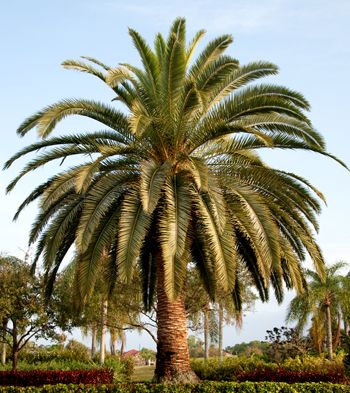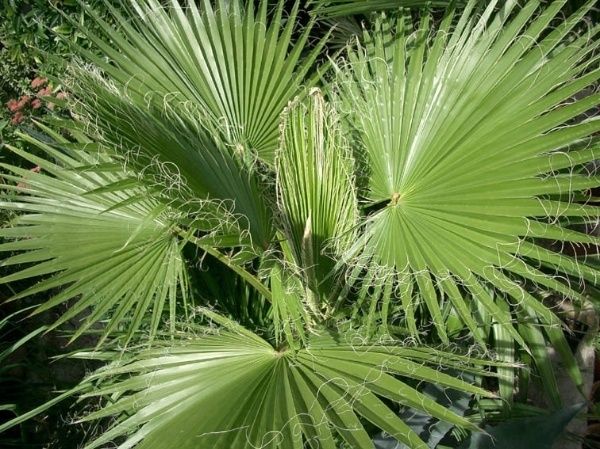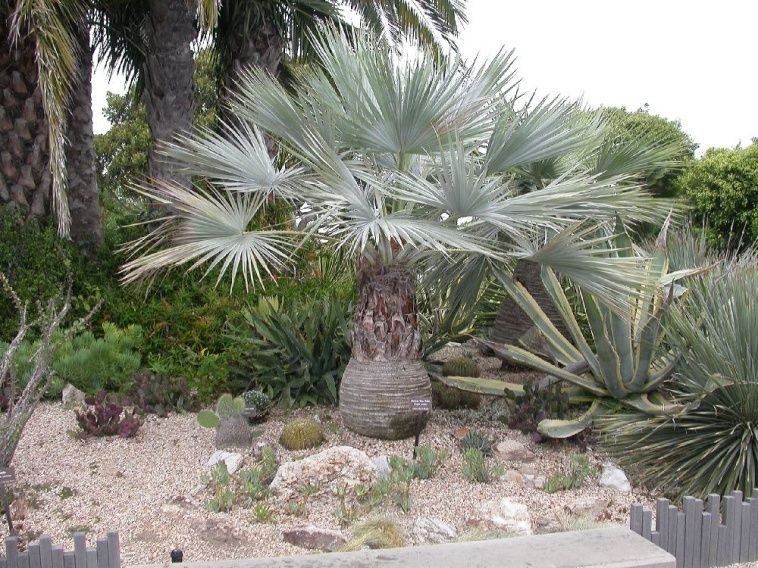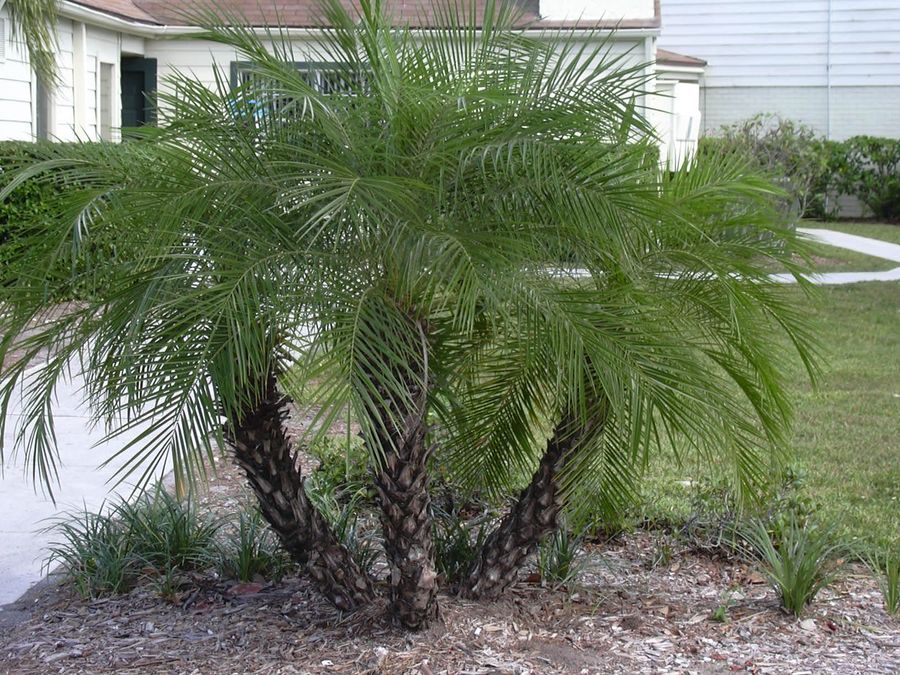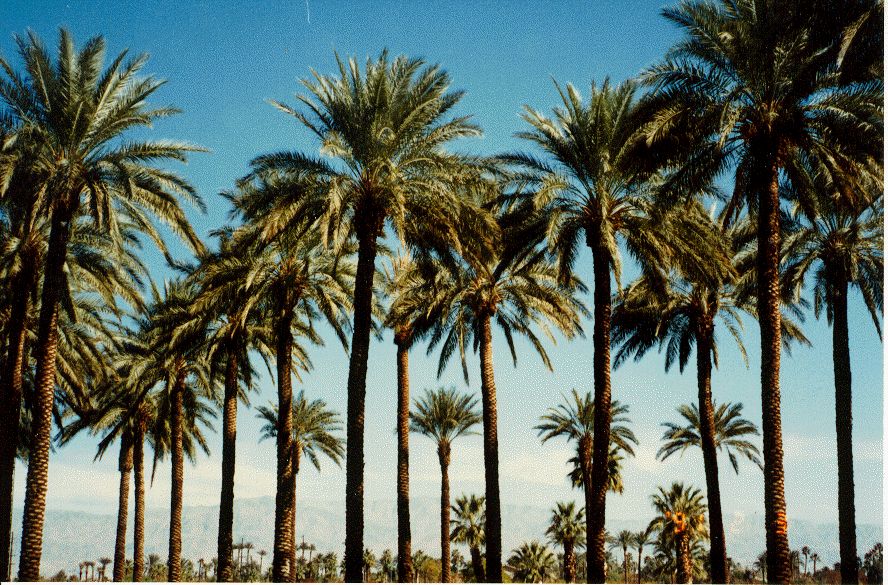
The palm behind the dates sold in stores, with a tall, rugged trunk and a crown of gray-green feather fronds. It handles Phoenix heat with ease, lives for many decades and is often planted at large size for instant height and drama.
Living with it in the Phoenix Valley
Watering
Follow the tree schedule in our Landscape Care guide. Deep soaks that reach the whole root zone suit it far better than frequent light watering. Keep sprinklers off the trunk, which can damage it and invite rot.
Pruning
Remove dead fronds and spent fruit stalks once a year, ideally in warm weather. Only take fronds hanging below the “three o’clock and nine o’clock” line; over-pruning weakens the palm. The needle-sharp spines at the base of each frond make this work for someone with proper gear and experience.
Fruit
Female trees set heavy clusters that birds love and that drop if left on the palm. Good dates take hand pollination, thinning and bagging, so many homeowners simply have the flower stalks cut off instead.
Pests and disease
Bud rot, heart rot and borers can affect stressed palms. Avoid wounding the trunk and keep water off the crown.
How our designers use it
A focal point
A single tall date palm anchors an entry, a motor court or the far end of a pool, and reads from the street.
Rows and groves
Planted in a straight row along a drive or in a loose grove, they create an oasis feel and high, light shade.
Instant height
Because large specimens transplant well in warm weather, they bring mature scale to a new landscape from day one.
Good to know
Around the pool
Dropped fruit, flower stalks and heavy old fronds make a mess on decks and in the water. Male trees or palms with flower stalks removed are far cleaner, and we keep the crown from hanging directly over the pool.
Spines
The stiff spines at the base of each frond can puncture skin and eyes. Keep low fronds trimmed back from walkways and seating.