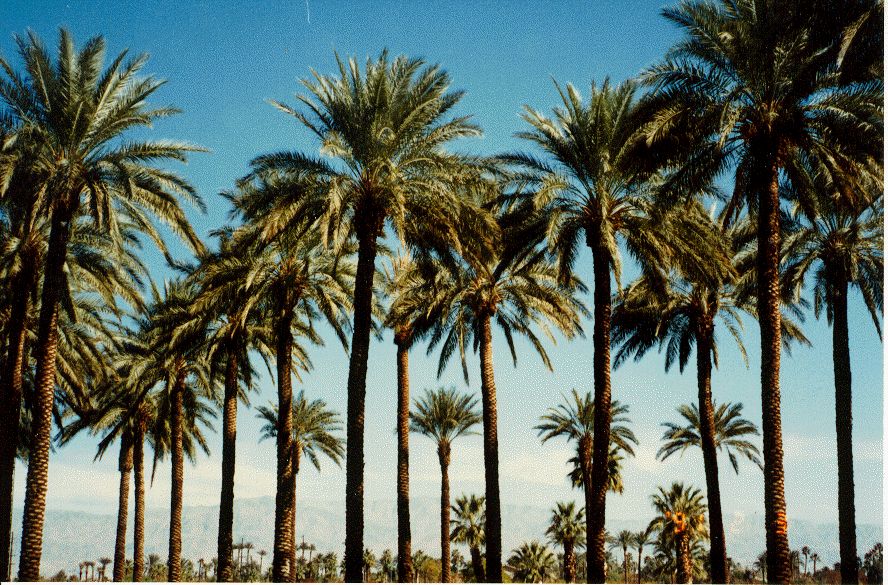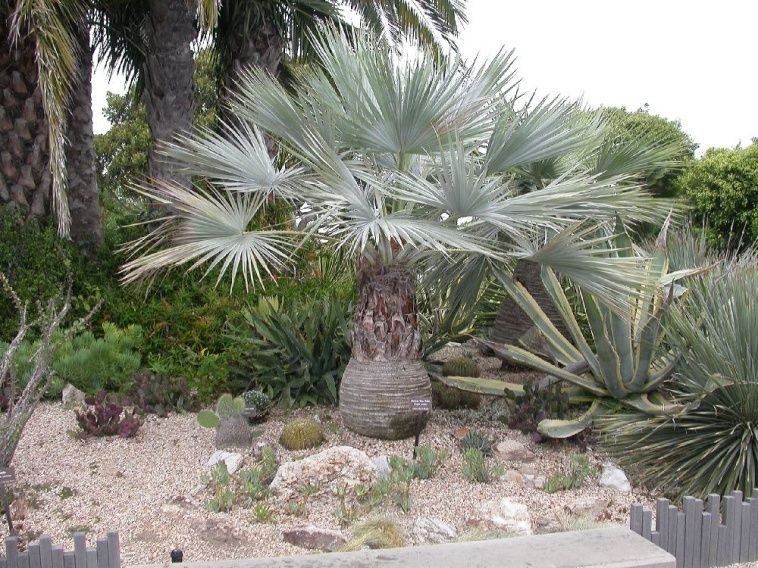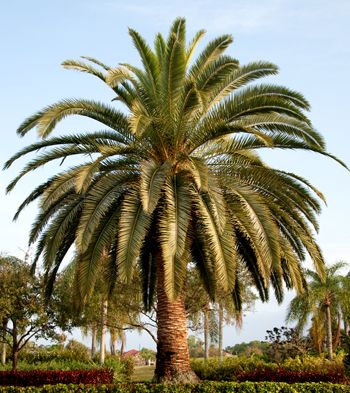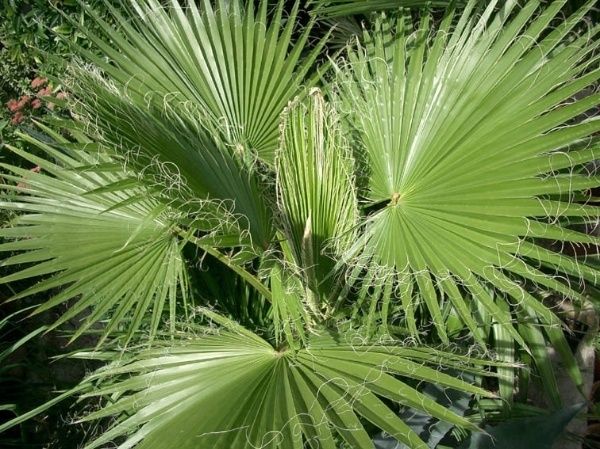
The tall, slender fan palm that lines streets across the Valley, native to the southern Sonoran Desert and Baja California. It grows quickly, takes full sun and heat, and its high crown makes a dramatic silhouette, especially with up-lighting at night.
Living with it in the Phoenix Valley
Watering
Follow the tree schedule in our Landscape Care guide. It tolerates drought but looks and grows best with deep, regular watering in summer.
Pruning
Trim once a year in early summer, right after bloom, removing dead fronds and flower stalks before seed forms. Leave at least the top third of the canopy green; over-trimming weakens it. On tall palms this is dangerous work, since a dead skirt can fall without warning, so it belongs with a trained palm trimmer.
Seedlings
Birds and gravity spread its seed, and seedlings pop up in beds, gravel and along walls. Pull them young; they become hard to remove fast.
Disease
Bud rot can kill the crown. Keep the trunk free of wounds and avoid heavy pruning cuts into green fronds.
How our designers use it
Vertical drama
Its height and slim trunk add a strong vertical line to large lots and give a home a classic Southwest silhouette.
Rows along a drive
Planted in a line, the palms frame a long entry or property edge.
Night lighting
Up-lighting the trunk and crown turns it into a striking nighttime focal point.
Good to know
Around the pool
Flower stalks, fruit and old fronds fall from high up, and the frond stems are spiny. Annual trimming before fruit sets keeps the mess down, but we generally avoid planting it where the crown will hang over the water.
Scale
It outgrows small yards. Its fibrous roots and towering height suit large properties better than tight side yards or courtyards.
Reseeding
It naturalizes readily in Arizona. Removing flower stalks before seed forms keeps it from spreading into washes and neighboring yards.