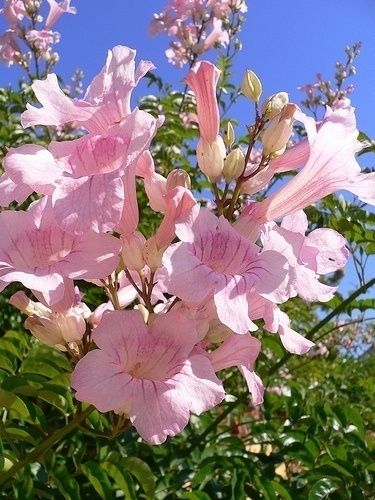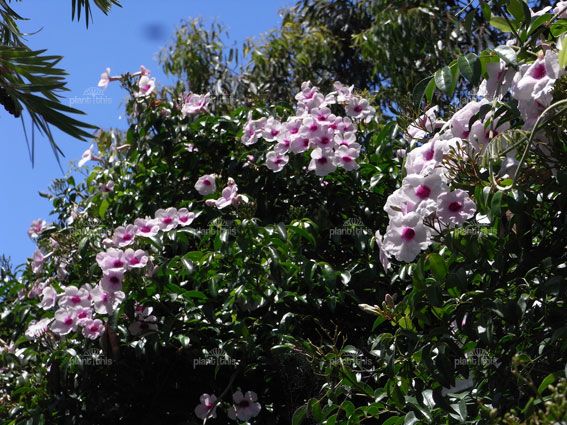
A glossy, evergreen twining vine from Australia with trumpet-shaped white to pale pink flowers marked by a rosy throat. It brings a soft, lush look to shaded patios and courtyards where the Valley’s toughest vines can feel too coarse.
Living with it in the Phoenix Valley
Watering
Follow the shrub schedule in our Landscape Care guide. It prefers evenly moist, well-drained soil and shows stress quickly in hot, dry spots.
Pruning
Trim right after the spring bloom, or in late summer, to control size and thin tangled growth. It can be shaped into a loose shrub with regular attention.
Cold
Plant it in a sheltered spot. A hard freeze can burn it back, but it usually regrows from the base.
Heat
Afternoon sun and hot reflected walls scorch the leaves. Morning sun with afternoon shade suits it best.
How our designers use it
Shaded patios
Our designers like it on an east- or north-facing trellis or pergola post, where it softens the structure without the heat stress it would face on a west wall.
Courtyards and entries
Its fine, glossy leaves and gentle color suit intimate spaces seen up close.
A lush backdrop
It pairs well with other shade-tolerant, tropical-looking plants for a greener, softer palette.
Good to know
Around the pool
It has no thorns and only light flower drop, so it is easy to place near seating. Keep it on the shaded side of the yard rather than on hot pool walls.