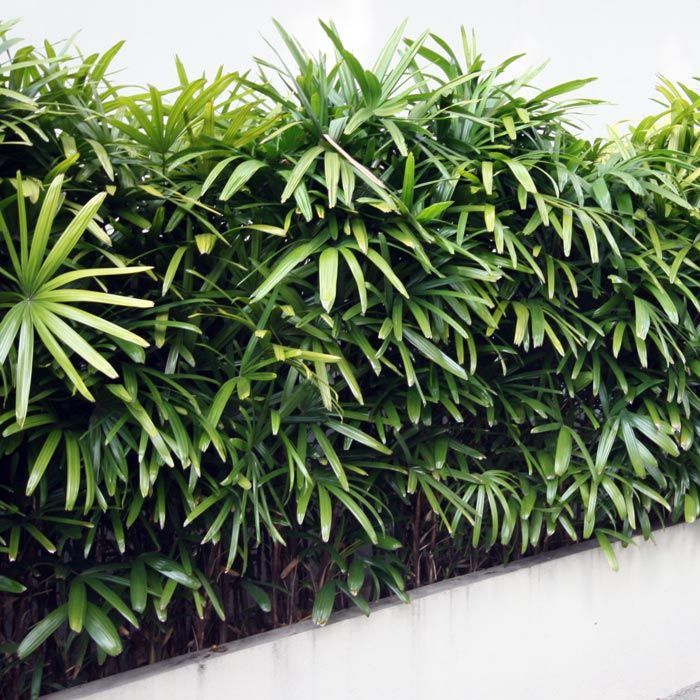
A slow, clumping palm with glossy, fan-shaped leaves on slender, bamboo-like canes. It is one of the few palms that wants shade, which makes it a natural fit for north walls, covered patios and courtyards in the Phoenix Valley.
Living with it in the Phoenix Valley
Watering
Follow the tree schedule in our Landscape Care guide, keeping the soil evenly moist but never soggy. Plants in containers dry out faster in summer and need closer attention.
Pruning
Very little. Cut out old, yellowed leaves and any dead canes at the base. Tidy the clump by removing a few canes if it gets too dense.
Sun and heat
Too much sun turns the leaves pale yellow-green with brown tips. In Phoenix it does best with full shade or bright, indirect light and protection from reflected heat.
Feeding
Our alkaline soils can cause yellowing or frizzled new leaves. A palm fertilizer with micronutrients during the warm season helps keep the color deep green.
How our designers use it
Shaded courtyards and entries
Its upright, fine-textured form fills a shady corner or north-facing entry with a soft, lush look.
Containers on covered patios
It lives happily in large pots for years, so our designers use it to add green under ramadas and loggias.
A slow screen
Planted in a row against a shaded wall, the clumps knit into a living screen over time.
Good to know
Around the pool
Thornless and tidy, with very little litter. It works beside a pool only where the spot is shaded; reflected light off water and decking will burn it.