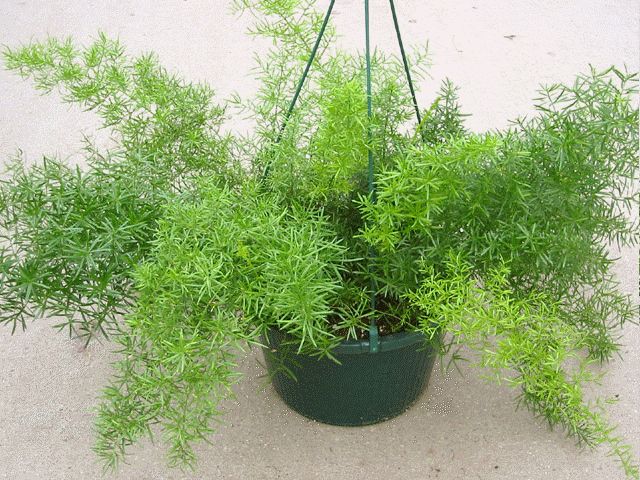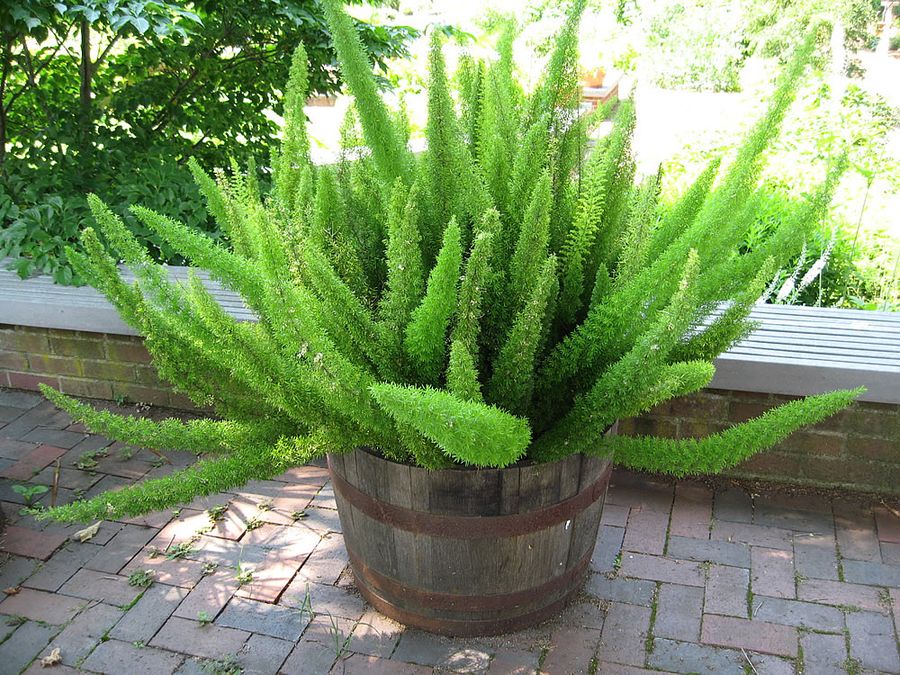
Not a true fern but a South African relative of asparagus, with upright, bottlebrush-like plumes of soft green needles. It brings a lush, fine texture to shaded corners and containers, and its water-storing roots make it tougher than it looks.
Living with it in the Phoenix Valley
Watering
Follow the shrub schedule in our Landscape Care guide. The tuberous roots carry it through a missed watering better than most lush plants, but long dry stretches turn the plumes yellow. Soggy, poorly drained soil leads to root rot, so plant it in amended soil with a layer of organic mulch.
Pruning
Cut old, yellowed or frost-browned plumes off at the base. When a clump looks tired, cut it to the ground in spring or divide it. Mature root balls are dense and tough, so dividing is real work.
Sun
Hot afternoon sun bleaches and yellows the plumes. An east-facing bed or the dappled shade of a tree keeps it a deep green.
Cold
A hard freeze can brown the foliage, but the roots usually push out fresh plumes in spring.
How our designers use it
Shaded borders and courtyards
It fills the north and east sides of a house, where many flowering shrubs struggle, with steady green texture.
Containers
The upright plumes look tidy in pots on covered patios and at entries, and the plant is happy with the confinement.
Fine texture against bold leaves
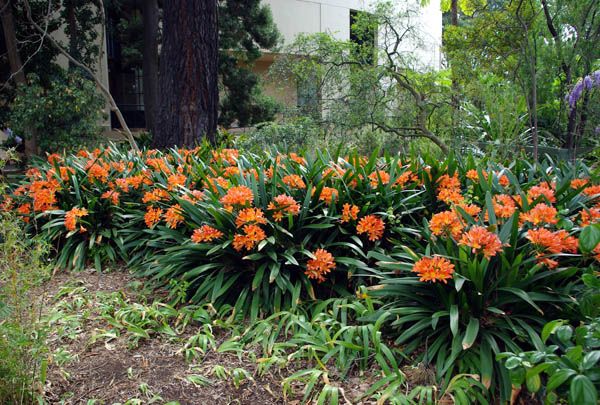
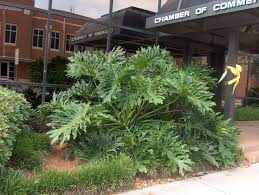
Our designers like it next to broad, strappy foliage such as clivia or philodendron, where the soft plumes set off the bigger leaves.
Good to know
Around the pool
Low litter and well behaved in a shaded pool-side bed. The stems carry small prickles, so it is better a step back from where people brush past.
Pets
The ASPCA lists asparagus fern as toxic to dogs and cats. Eating the berries can cause vomiting and diarrhea, and repeated handling can irritate skin.