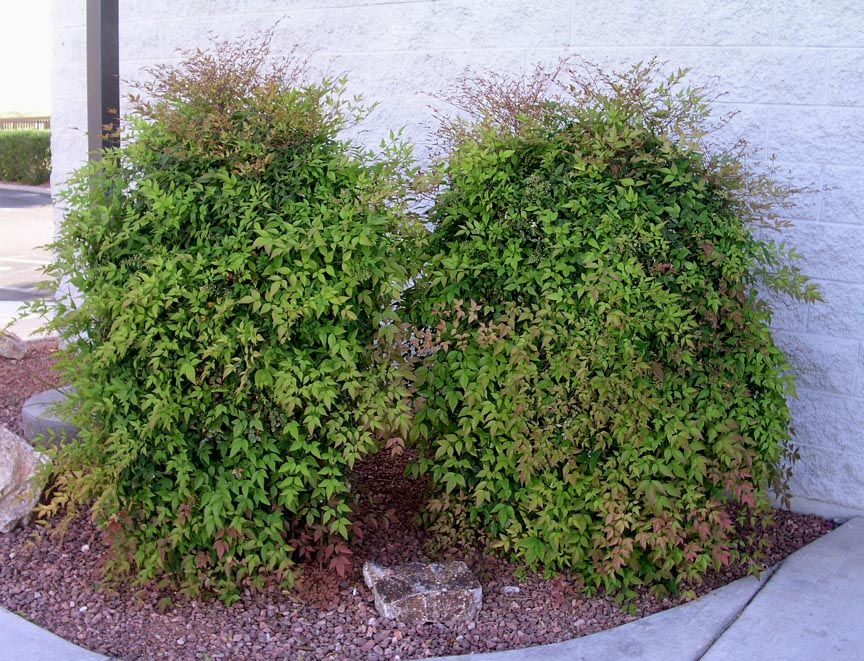
An upright, clumping evergreen shrub with lacy, bamboo-like foliage and clusters of red berries in fall and winter. It isn’t a true bamboo and spreads only slowly from the base. In the Phoenix Valley it is a shade plant, used for soft texture in courtyards, entries and north-facing beds.
Living with it in the Phoenix Valley
Watering
Follow the shrub schedule in our Landscape Care guide. This is not a desert plant, and it needs regular water through the summer to look good. Good drainage matters too: salty or soggy soil leads to leaf burn and early leaf drop.
Pruning
Never shear it. To keep tall types full, cut a few of the oldest canes back hard in late winter or early spring, and new shoots will fill in from the base. Dwarf types need almost no pruning.
Soil
Alkaline desert soil can turn the leaves yellow with green veins (iron chlorosis) and burn the tips. Amended soil, mulch and an iron supplement in spring help.
Heat/sunburn
Afternoon sun scorches it in summer. It does best on east or north sides or under a high tree canopy. The bright red winter color seen in cooler climates is less reliable here, because our nights rarely stay cold enough.
How our designers use it
Shaded courtyards
Its fine, airy foliage softens north walls, covered patios and the space under high-canopy trees, where desert shrubs struggle.
Asian and contemporary themes
The upright, bamboo-like canes suit contemporary and Asian-inspired designs, in beds or as an accent by an entry.
Low borders
Dwarf forms make a tidy, colorful edging along shaded walks and foundation beds.
Good to know
Pets
The ASPCA lists heavenly bamboo as toxic to dogs, cats and horses. If pets have access to the planting, consider another shrub.
Around the pool
Light leaf and berry drop. Keep it out of the hot, reflected sun of an open deck, which scorches the foliage.