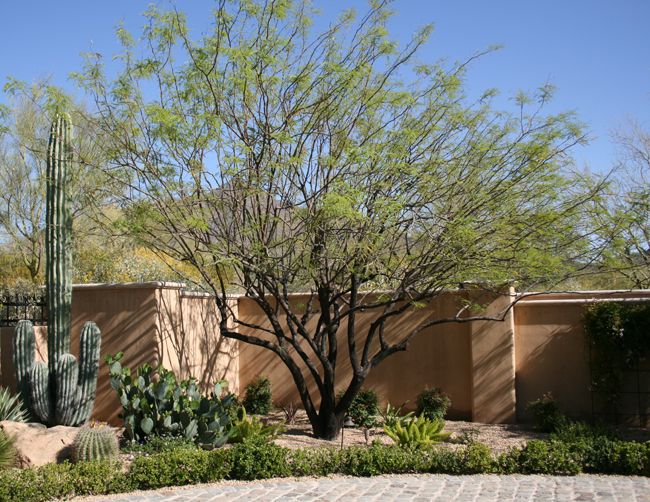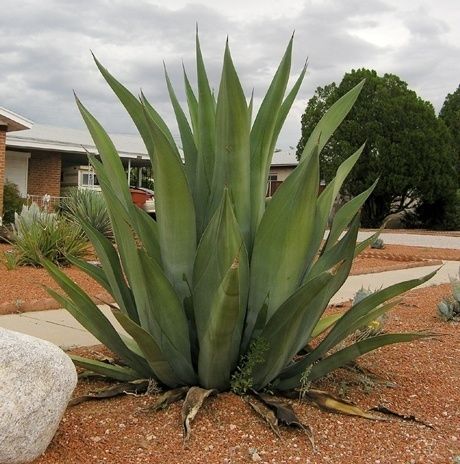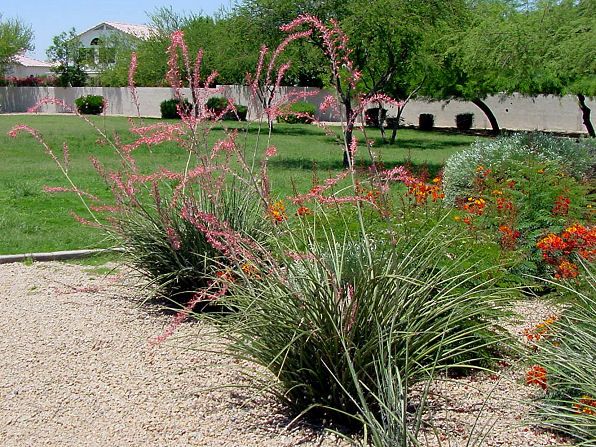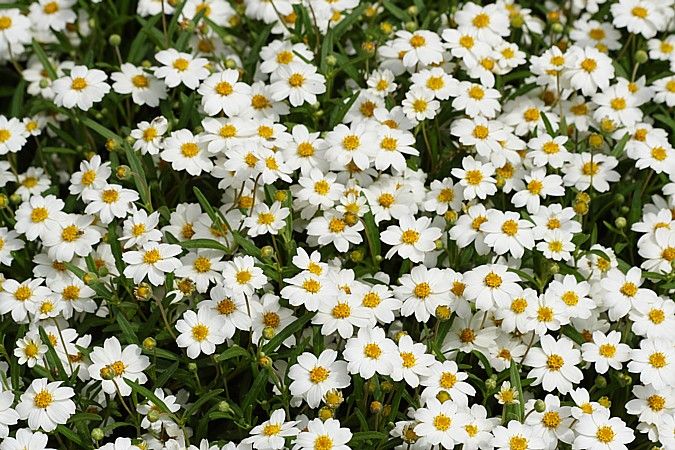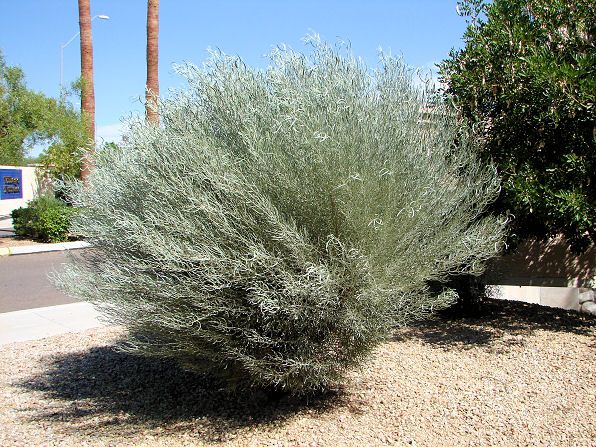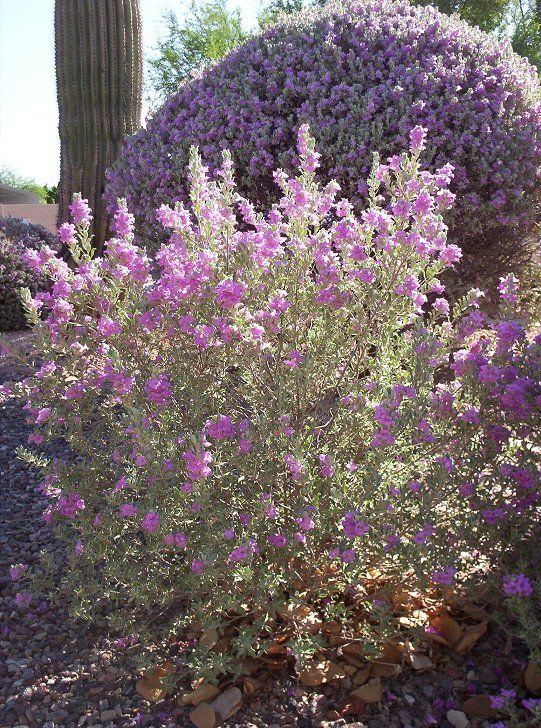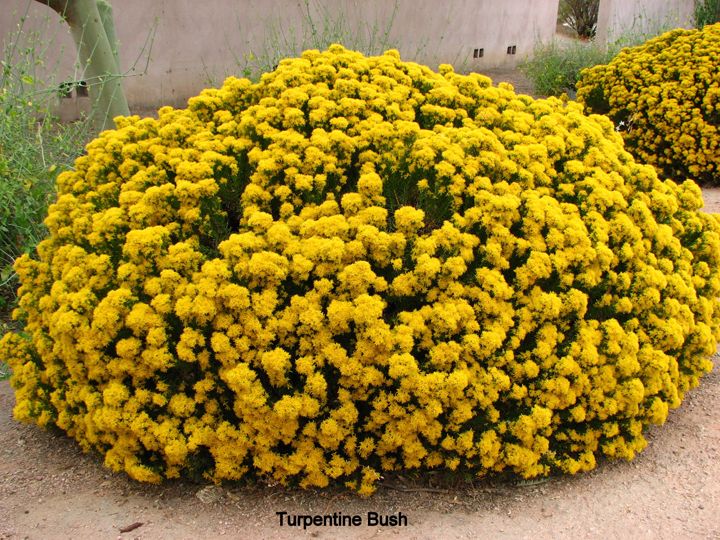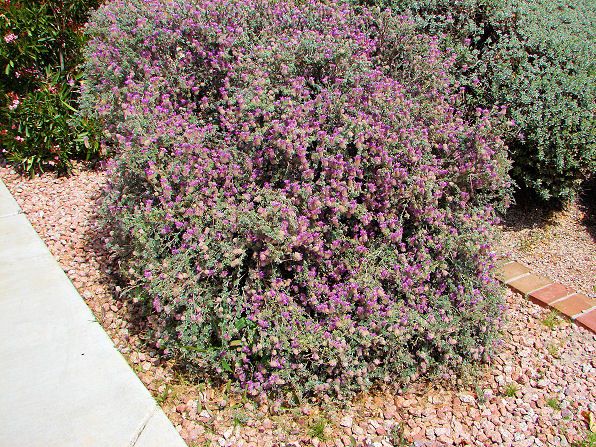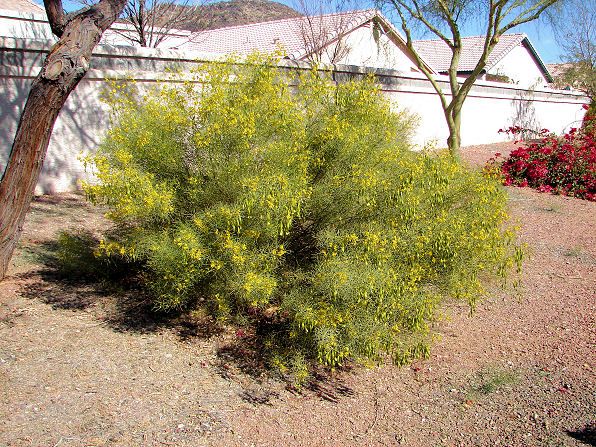
An Australian shrub with soft, needle-like gray leaves and clusters of fragrant yellow flowers from late winter into spring. It is tough, quick to fill in and drought tolerant, and its fine texture softens hard edges in a desert landscape.
Living with it in the Phoenix Valley
Watering
Follow the shrub schedule in our Landscape Care guide. Once established it needs only deep, occasional watering. Too much water produces excess growth and yellowing leaves, and poorly drained soil leads to root rot.
Pruning
Prune lightly right after bloom, which also removes most of the seed pods. Flower buds form in late summer for the next spring, so heavy shearing later in the year costs flowers. An overgrown plant can be renewed with a hard cut after bloom, as long as some foliage is left.
Seedlings
It reseeds in irrigated landscapes. Pull seedlings while they are small.
How our designers use it
Soft gray texture
Its feathery foliage contrasts with agaves, yuccas and other bold, spiky plants.
Informal screens
Planted in groups, it makes a loose hedge or background shrub along walls and property lines.
Winter and spring color
It blooms while the summer-flowering shrubs are resting.
Good to know
Around the pool
Spent flowers and seed pods drop after bloom, and bees visit in spring. We generally keep it back from the water.