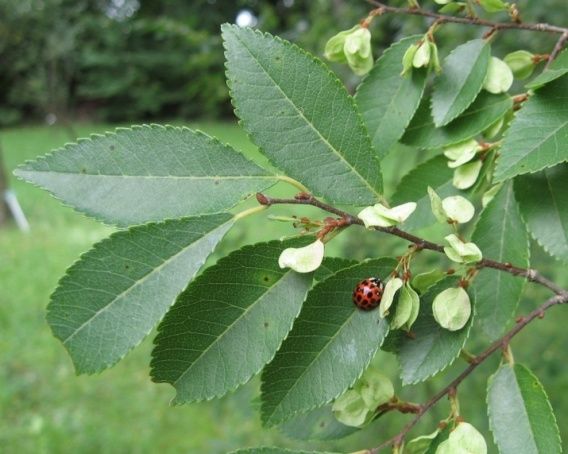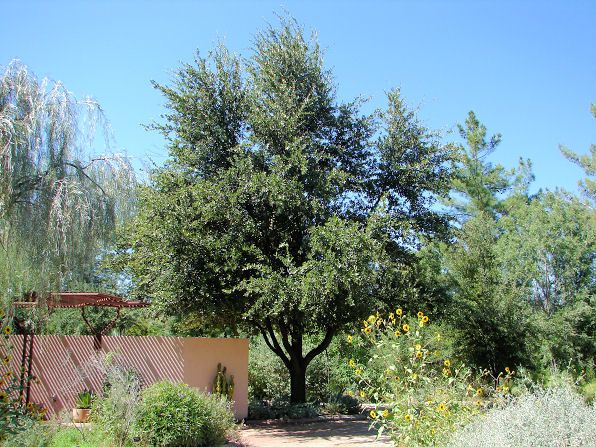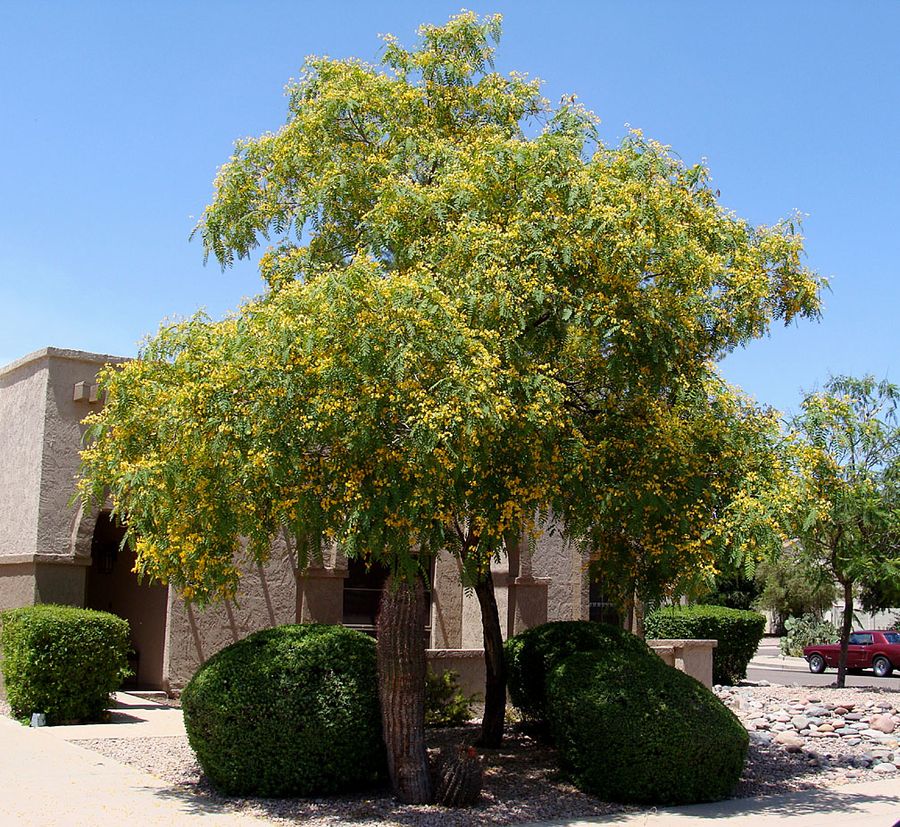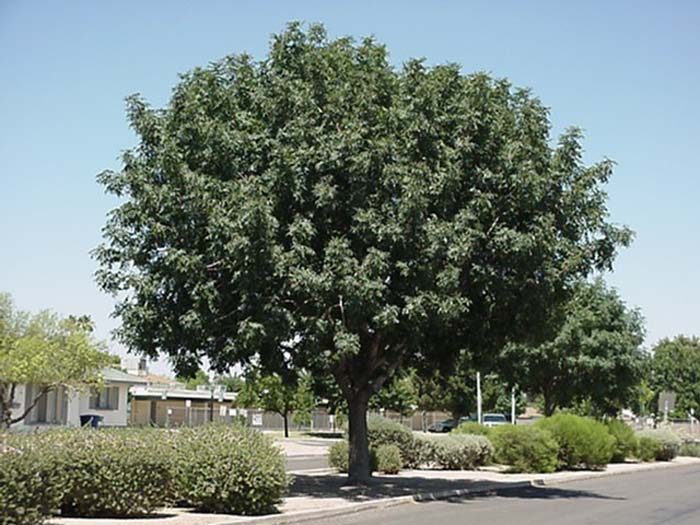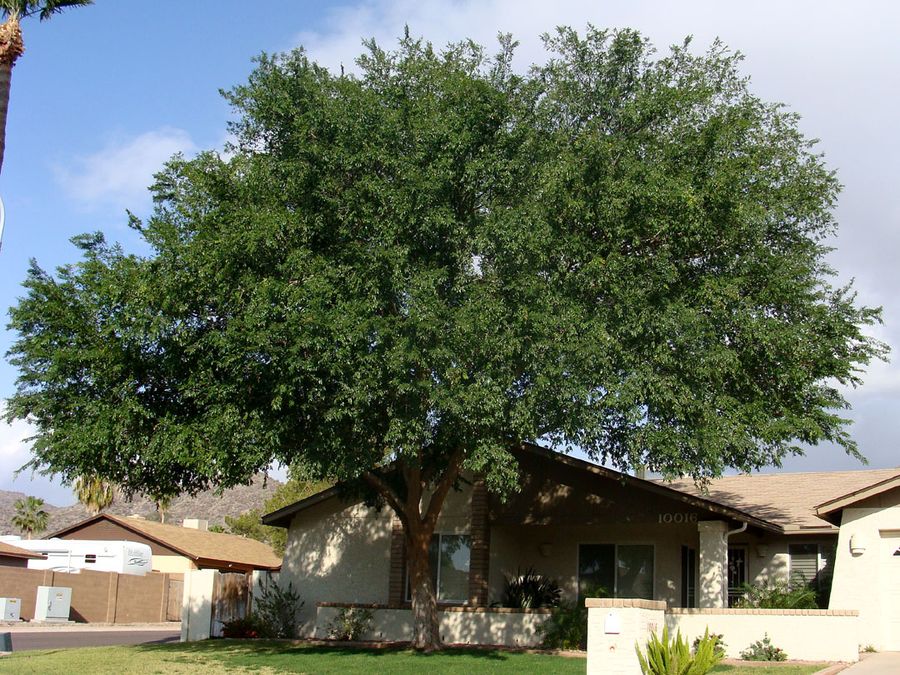
A fast, broad shade tree with small glossy leaves and bark that flakes into a mottled pattern. Also called Chinese or lacebark elm, it is a classic Valley choice for a big, cool canopy over a lawn or patio, as long as it gets regular water.
Living with it in the Phoenix Valley
Watering
Follow the tree schedule in our Landscape Care guide. It needs regular water from spring through early fall. Established elms have died after the lawn beneath them was converted to gravel, so plan for its water if turf is removed.
Pruning
Train young trees to a strong structure; nursery trees grown from cuttings often lean and need staking. The small branches tend to weep, so periodic thinning and raising the canopy keep walkways and roofs clear.
Heat
Browned leaf edges in late summer are a sign of heat stress. Consistent water reduces it.
Pests and disease
It resists Dutch elm disease, but it can be hit by Texas root rot, and some selections are prone to branch cankers.
How our designers use it
Big shade
Over a lawn, patio or play area, it gives a dense, cooling canopy within a few years.
The greener part of the yard
We place it in irrigated, oasis-style areas rather than in desert plantings, since it is not a desert tree.
Bark interest
Raised up as a single-trunk tree, the flaking, mottled bark becomes a feature of its own.
Good to know
Around the pool
Small leaves and papery seeds drop through fall and winter and collect in pools and filters. Keep the canopy back from the water.
Seedlings
It reseeds in irrigated beds. Pull volunteer seedlings while they are small.