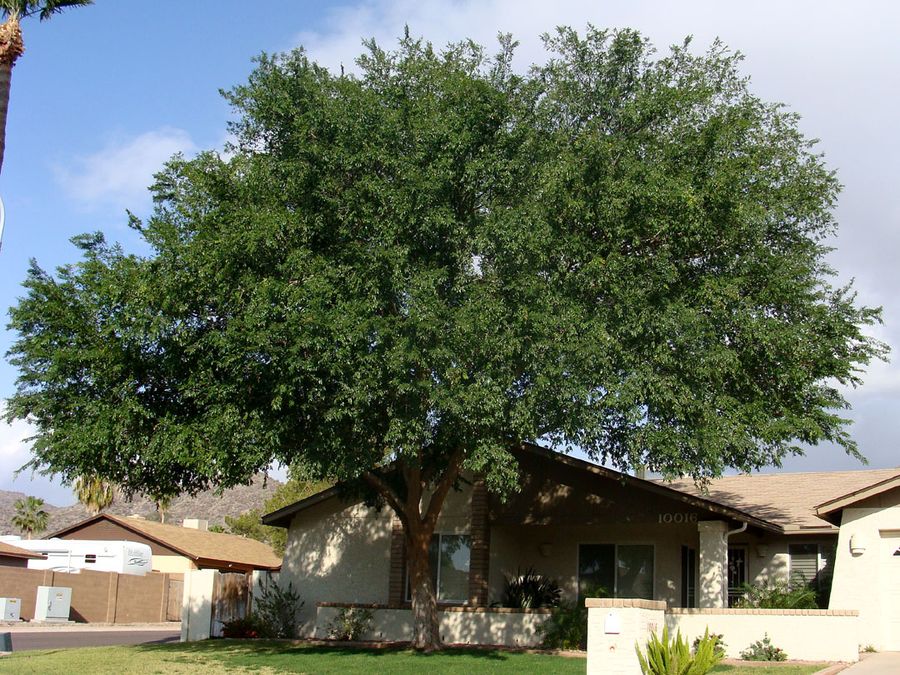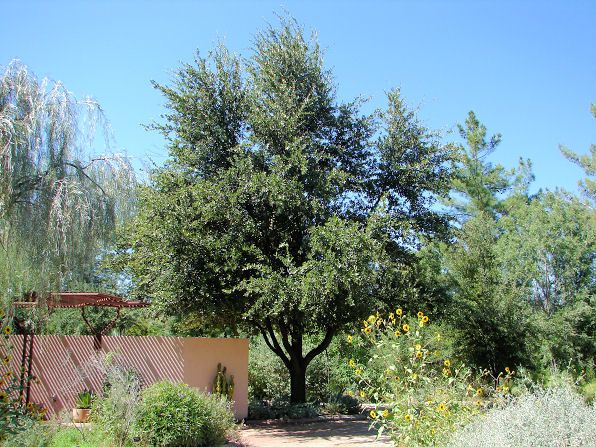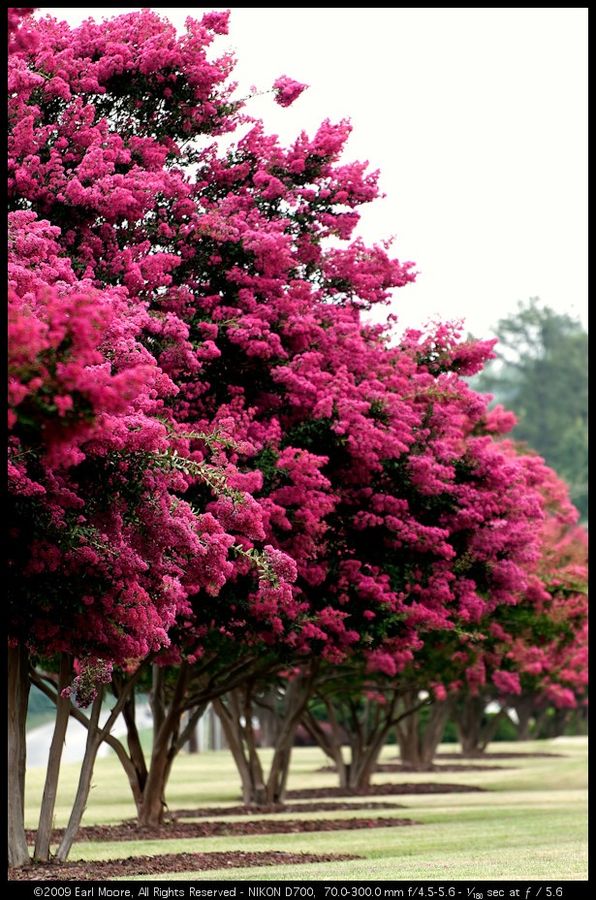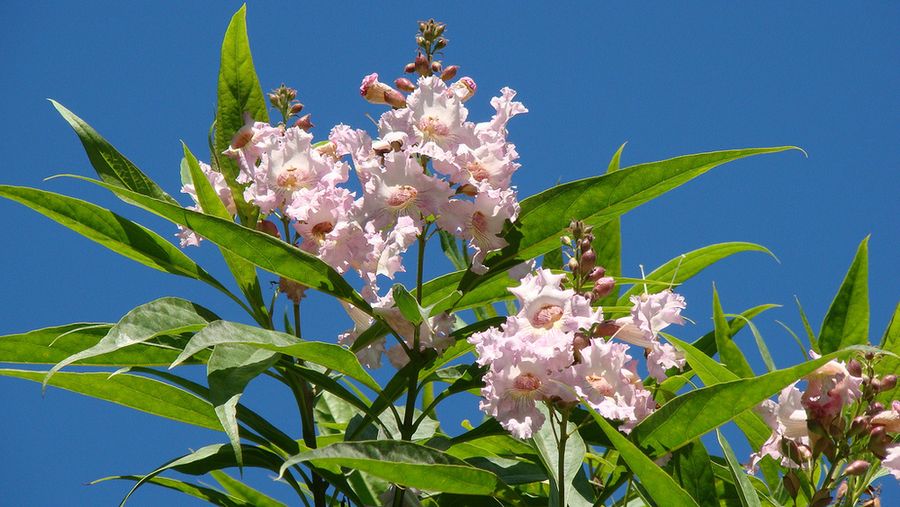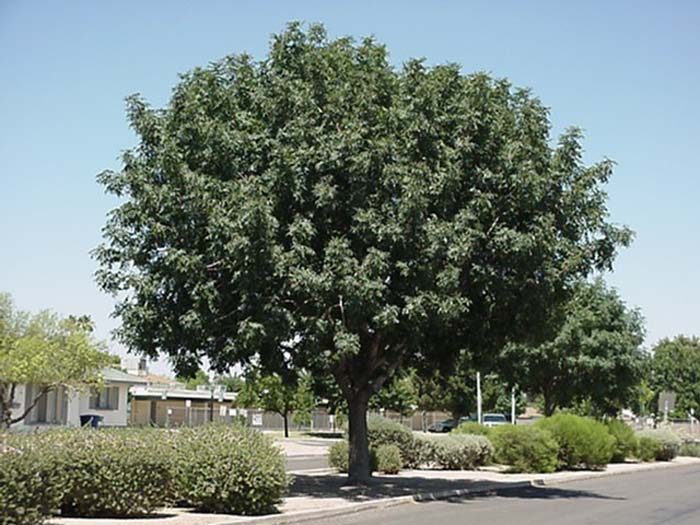
A deciduous shade tree with glossy green leaves that turn orange to scarlet in late fall. It is one of the most dependable fall-color trees for the Phoenix Valley, and it handles summer heat well.
Living with it in the Phoenix Valley
Watering
Follow the tree schedule in our Landscape Care guide. It needs more than a desert tree: regular, deep water through the root zone keeps the canopy dense and the fall color strong.
Pruning
Prune in winter while it is bare. Raise the canopy gradually over several years rather than all at once, and keep a balanced, rounded framework.
Soil
It wants deep, well-drained soil. Avoid shallow caliche or spots that stay wet, which invite root rot. Breaking through caliche at planting matters.
How our designers use it
Summer shade, winter sun
Placed to the south or west of a patio, it shades in summer and lets winter sun through after the leaves drop.
Seasonal color
Its late fall color brings a change of season that few Phoenix trees offer.
Lawns and lush gardens
It suits gardens that already get regular water, such as turf areas and planting beds near the house.
Good to know
Around the pool
All the leaves come down over a few weeks in early winter, and female trees drop small berries. Keep it back from the water so leaf fall stays on the deck rather than in the pool.
Allergies
Male trees release pollen in late winter and spring that can bother allergy sufferers. Female trees produce berries instead.