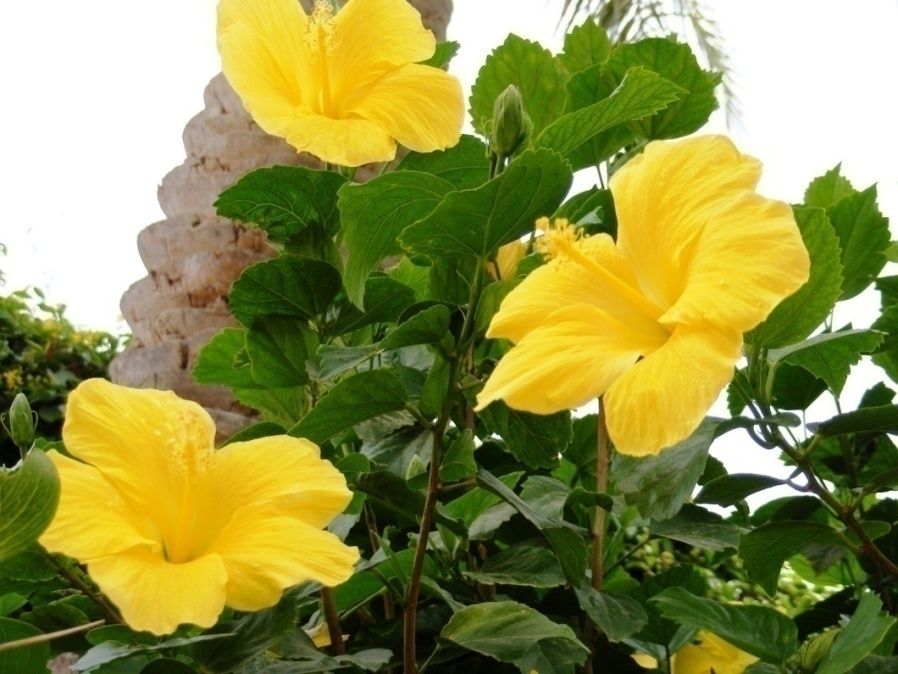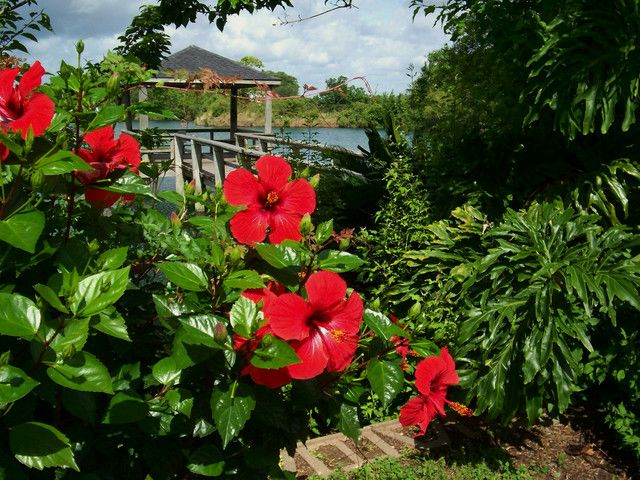
The classic tropical hibiscus, with large, glossy leaves and big red flowers that last a single day each. It brings a resort feel to courtyards and pool areas, but in Phoenix it needs more water, feeding and frost protection than most shrubs.
Living with it in the Phoenix Valley
Watering
Follow the shrub schedule in our Landscape Care guide, keeping in mind this is one of the thirstier shrubs. It wants evenly moist soil, not soggy soil; constant wetness invites root rot. Mulch helps hold moisture through summer.
Pruning
Prune in late winter or spring, once frost danger has passed. Leave frost-damaged growth in place until then, since it shields the stems below.
Cold
Most hibiscus in Phoenix take some frost damage in winter and recover in spring. Cover plants on frost nights, and plant them near warm walls when you can.
Feeding
Alkaline soil often causes yellowing between the leaf veins. Regular feeding during the warm months, with chelated iron or micronutrients, keeps leaves green.
How our designers use it
Resort-style courtyards
Our designers use it where a tropical look is the goal, usually in east-facing beds or under a patio edge with afternoon shade.
Containers
In pots it can be moved to shelter on cold nights, and the color stays close to seating areas.
Good to know
Around the pool
No thorns. Spent flowers drop daily, so expect some sweeping and skimming if it sits right at the edge.
Frost
Expect some winter damage most years. Plants usually come back from the stems once the weather warms.