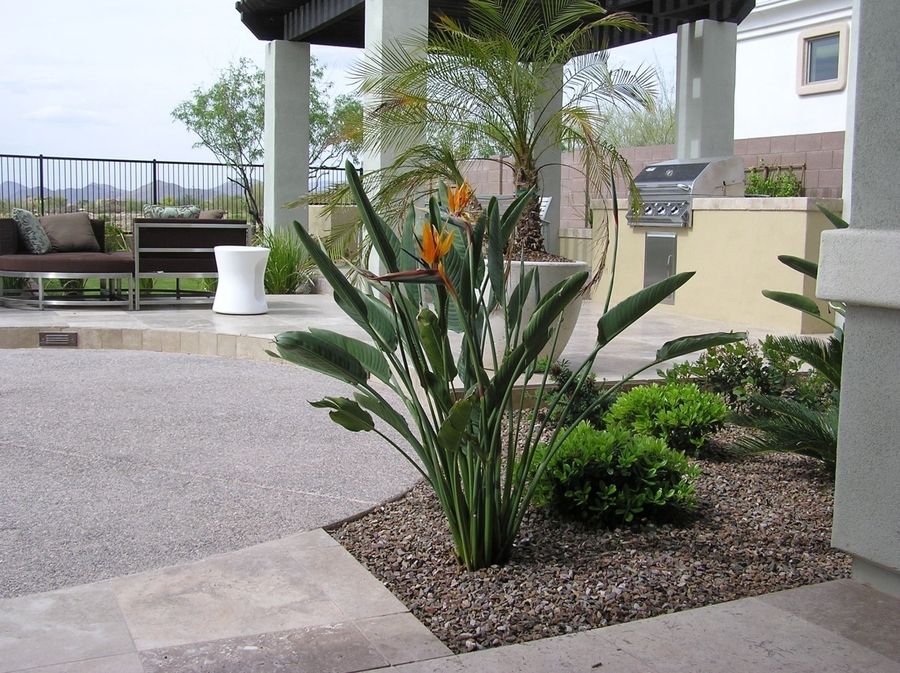
The classic florist’s bird of paradise, with paddle-shaped leaves and orange and blue flowers shaped like a crested bird’s head. It brings an unmistakable tropical look to courtyards and pool areas, as long as it has shelter from afternoon sun and frost.
Living with it in the Phoenix Valley
Watering
Follow the shrub schedule in our Landscape Care guide. This is a lush plant that wants more regular water than most of the palette, especially in summer, with lighter watering in winter. Rich, moisture-holding soil helps.
Pruning
Remove spent flower stalks and old, torn or frost-damaged leaves at the base. Otherwise leave it alone; it resents being disturbed and blooms best once the clump is crowded.
Feeding
It is a heavy feeder. Regular fertilizing through the growing season keeps leaves green and flowers coming.
Cold
Leaves are damaged in freezes around 28°F. Planting under a patio overhang or against a warm wall, and covering it on the coldest nights, protects it.
How our designers use it
Tropical courtyards and pool settings
Its bold leaves and sculptural flowers set the tone in lush, resort-style spaces, paired with palms and other big-leaved plants.
Containers on covered patios
Since it blooms best when crowded, a large pot under a roof suits it well and keeps it out of frost.
Sheltered entries
North and east exposures near the house give it the light shade and warmth it needs.
Good to know
Around the pool
No thorns and little litter beyond spent flowers and the occasional old leaf. Keep it out of hot, windy, exposed spots, where leaves scorch and tear.
Pets
The ASPCA lists Strelitzia reginae as toxic to dogs and cats. Eating the fruit or seeds can cause mild nausea, vomiting and drowsiness.