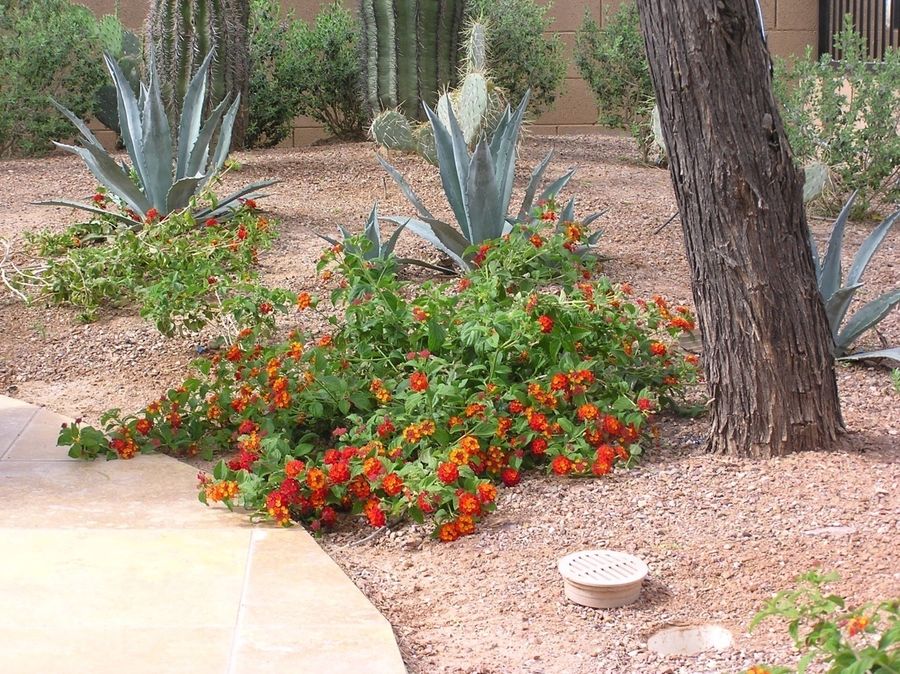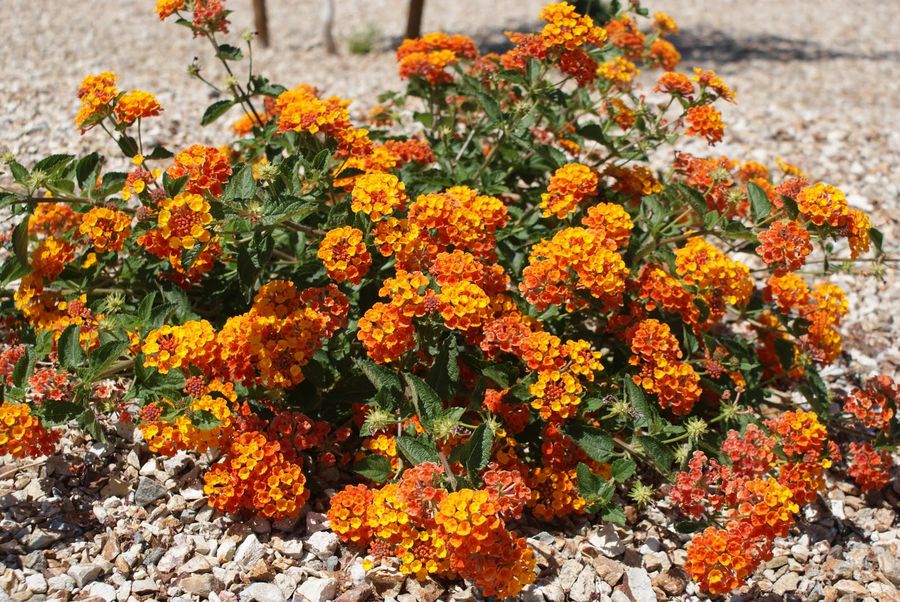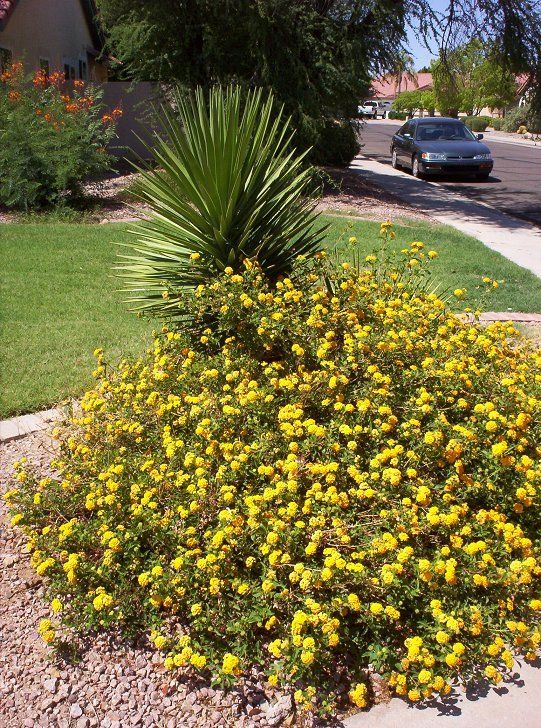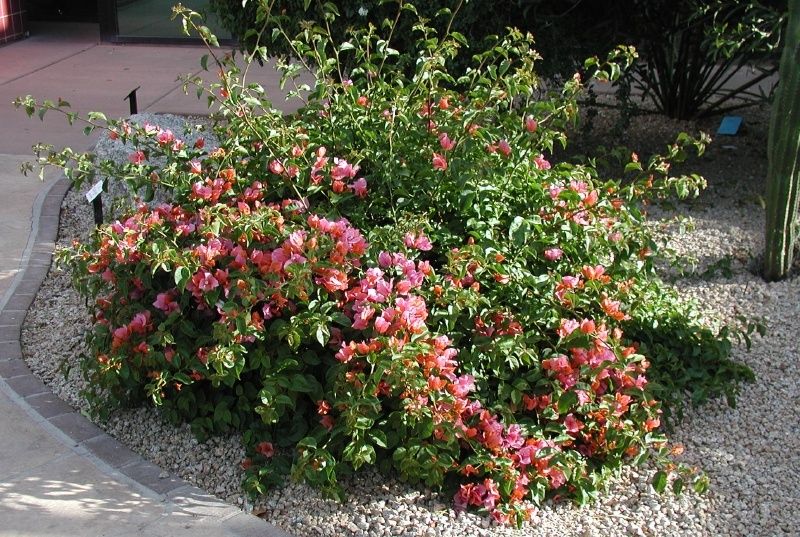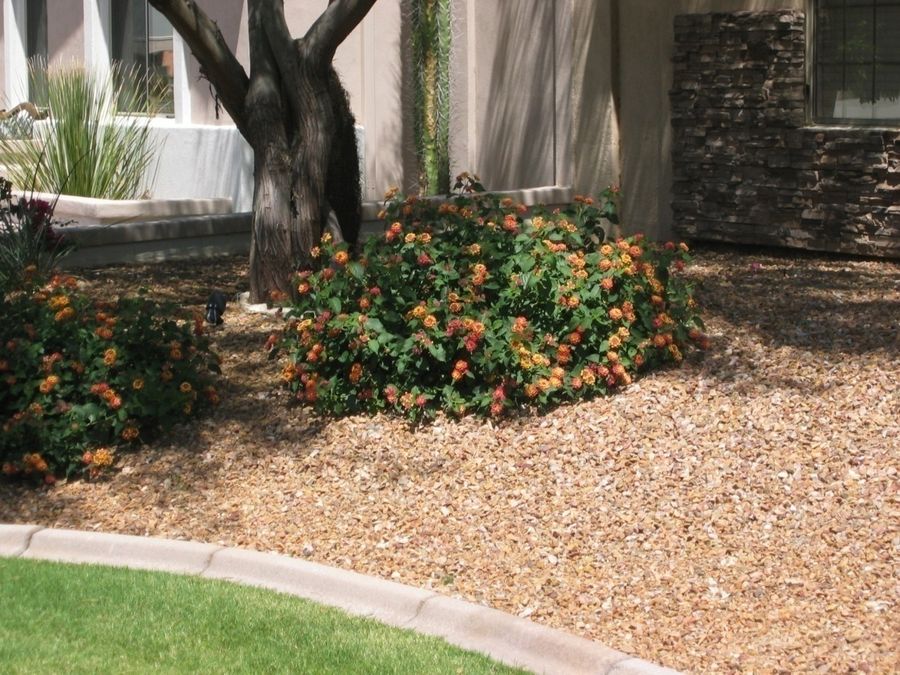
A compact lantana with clusters of bright pink and yellow flowers that deepen to magenta as they age. It takes full sun and reflected heat, and it gives months of bold color in a tidy mound.
Living with it in the Phoenix Valley
Watering
Follow the shrub schedule in our Landscape Care guide. It will survive dry spells but looks and blooms best with regular water through summer. It needs much less in winter, when growth slows.
Pruning
Leave any frost-damaged stems in place until spring. After the last frost, cut it back hard for a full, fresh mound. A light trim in summer keeps it neat.
Cold
Expect some leaf loss in a cold winter, more in exposed spots. It recovers quickly once the weather warms.
Pests
Whiteflies can show up in late summer and early fall. Rinsing the foliage with water helps.
How our designers use it
Borders and walkways
Its smaller size makes it easy to fit along paths, entries and the front edge of beds.
Containers
It fills a pot with color all summer and handles the heat of a sunny patio.
A pop of contrast
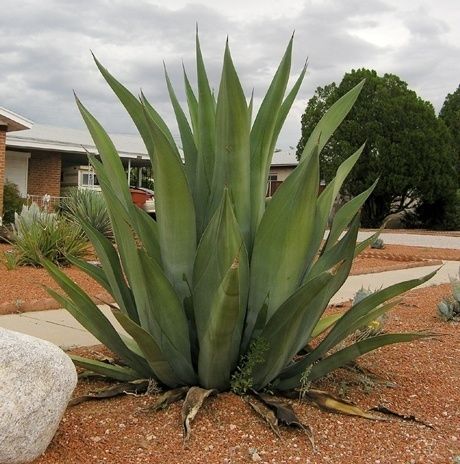
The magenta and yellow flowers stand out against gray-green desert shrubs and blue agaves.
Good to know
Around the pool
No thorns, but the flowers draw bees and butterflies, and spent blooms and berries can drop. Keep it a few feet back from the water.
Pets and children
The ASPCA lists lantana as toxic to dogs, cats and horses. The unripe berries are also poisonous if eaten.