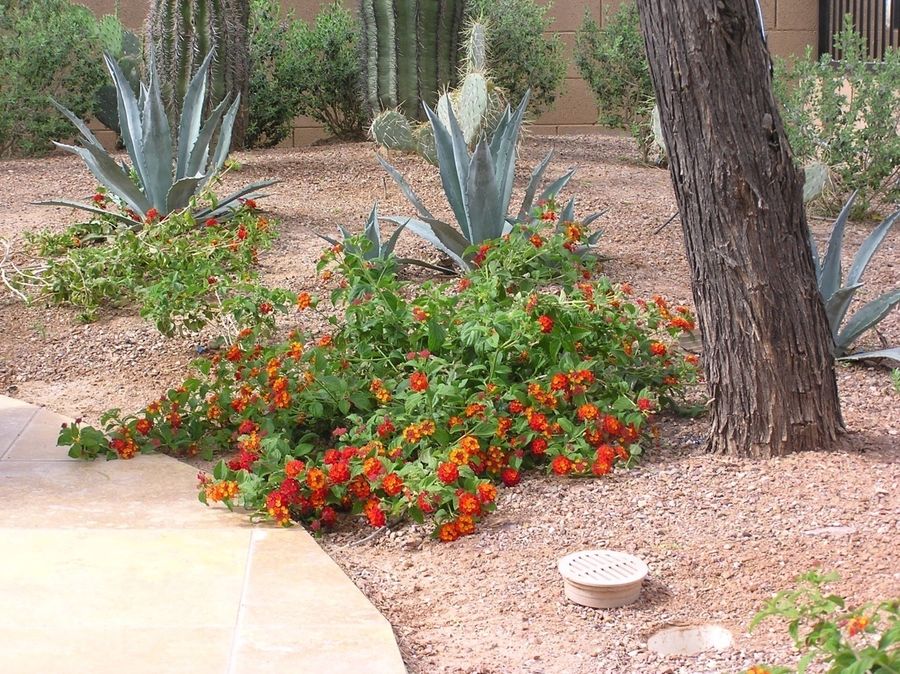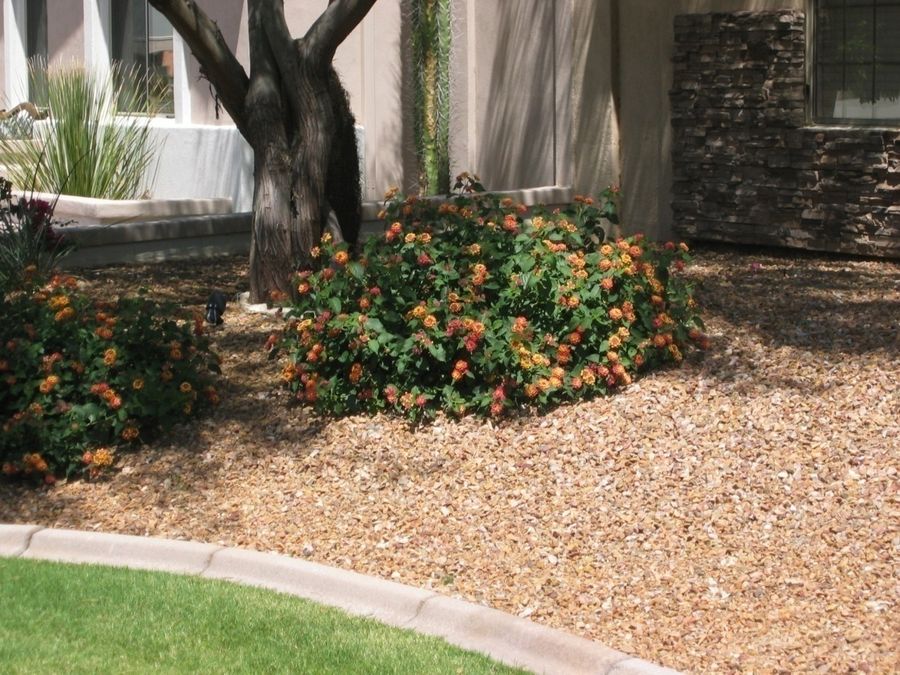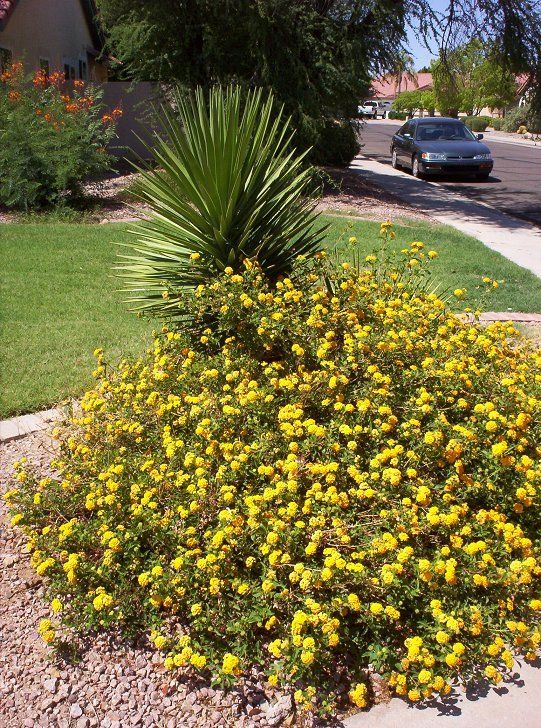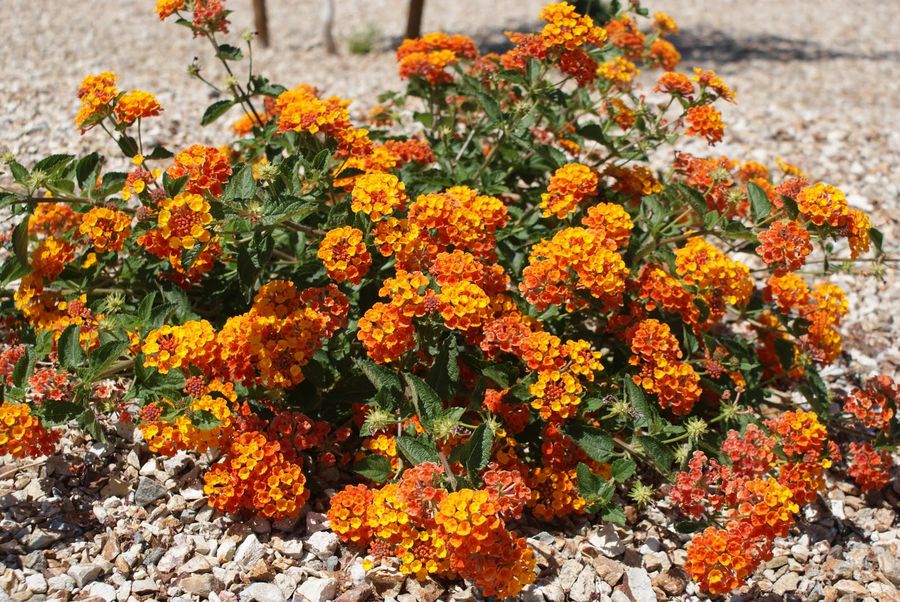
One of the larger, more upright lantanas, with bicolor clusters of orange-red and yellow flowers. It thrives in the Phoenix heat and keeps blooming through summer and into fall.
Living with it in the Phoenix Valley
Watering
Follow the shrub schedule in our Landscape Care guide. It handles dry spells once established but blooms far better with regular water in summer. It needs much less in winter.
Pruning
Leave frost-damaged stems in place through winter. After the last frost, cut it back hard to control size and bring on fresh growth. Because it grows larger than most lantanas, a light summer trim may be needed to keep it in bounds.
Cold
A mild winter leaves it mostly leafy. After a hard freeze it may look bare until spring, then regrows quickly.
Pests
Whiteflies can appear in late summer and early fall. A strong spray of water helps.
How our designers use it
Flowering hedge or backdrop
Its taller size lets it work as a low, informal flowering hedge or as a backdrop to smaller plants.
Hot, sunny beds
It handles west exposures and reflected heat from walls and paving while staying in bloom.
Warm color schemes
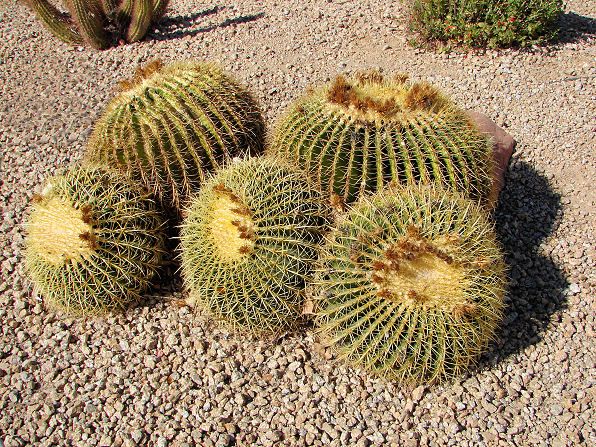
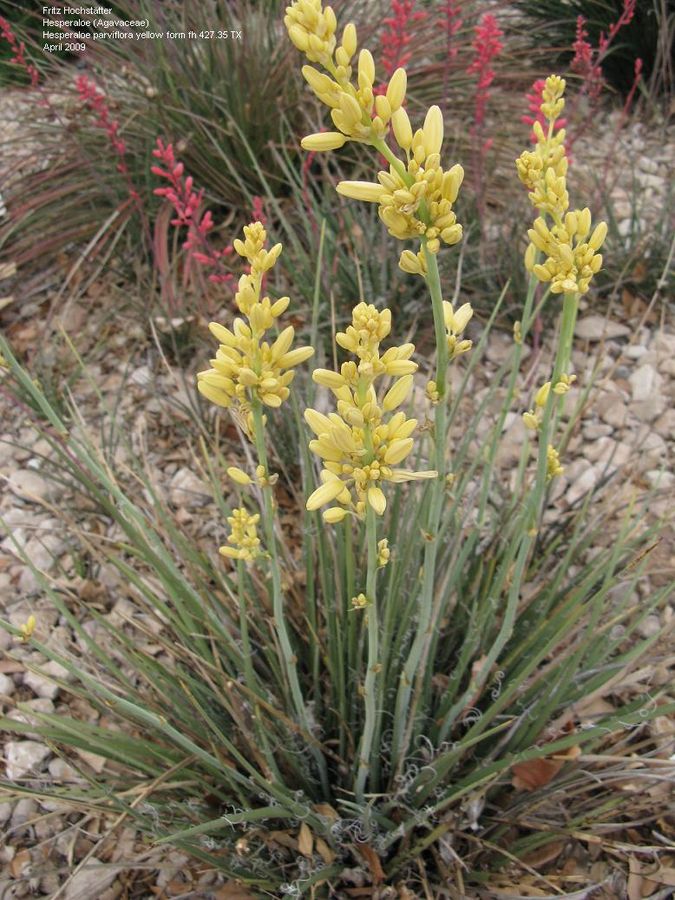
Its orange-red tones pair well with yellow hesperaloe, golden barrels and dark foliage.
Good to know
Around the pool
No thorns, but the flowers draw bees and butterflies, and the dark berries can drop and stain light paving. Keep it back from the water and decking.
Pets and children
The ASPCA lists lantana as toxic to dogs, cats and horses. The unripe berries are also poisonous if eaten.