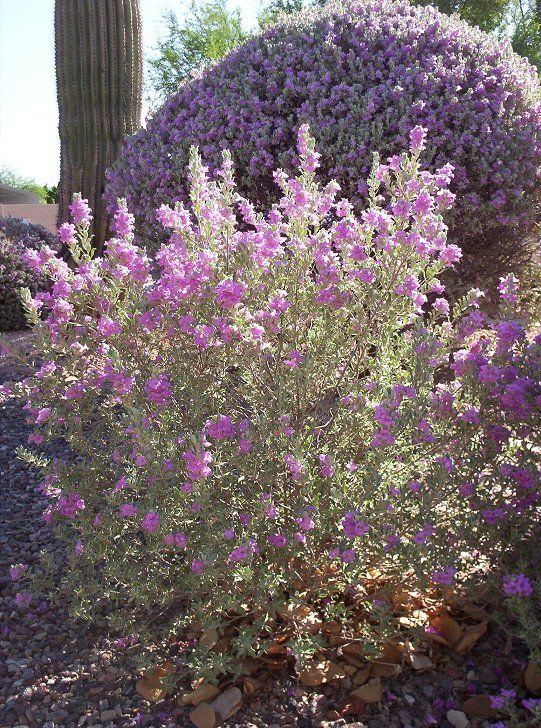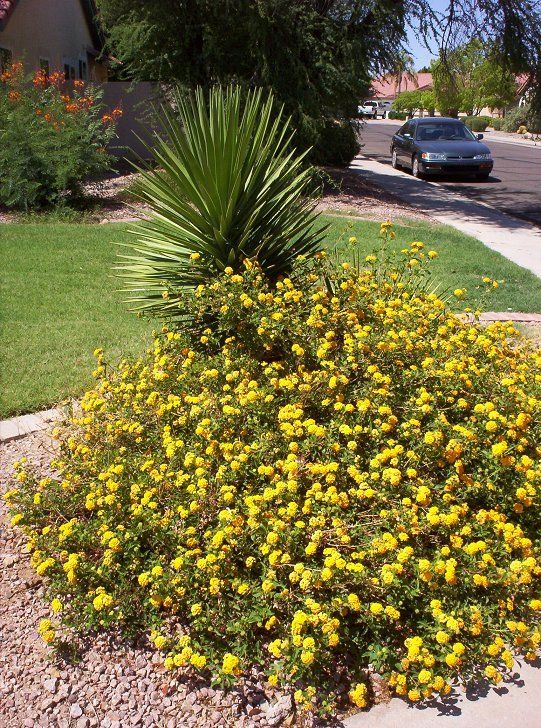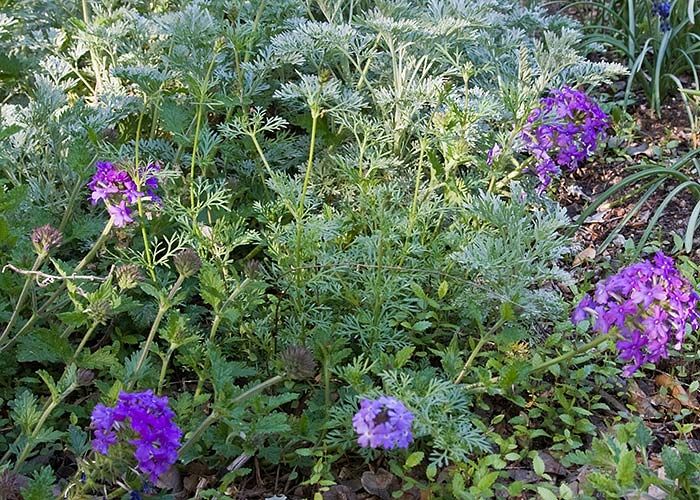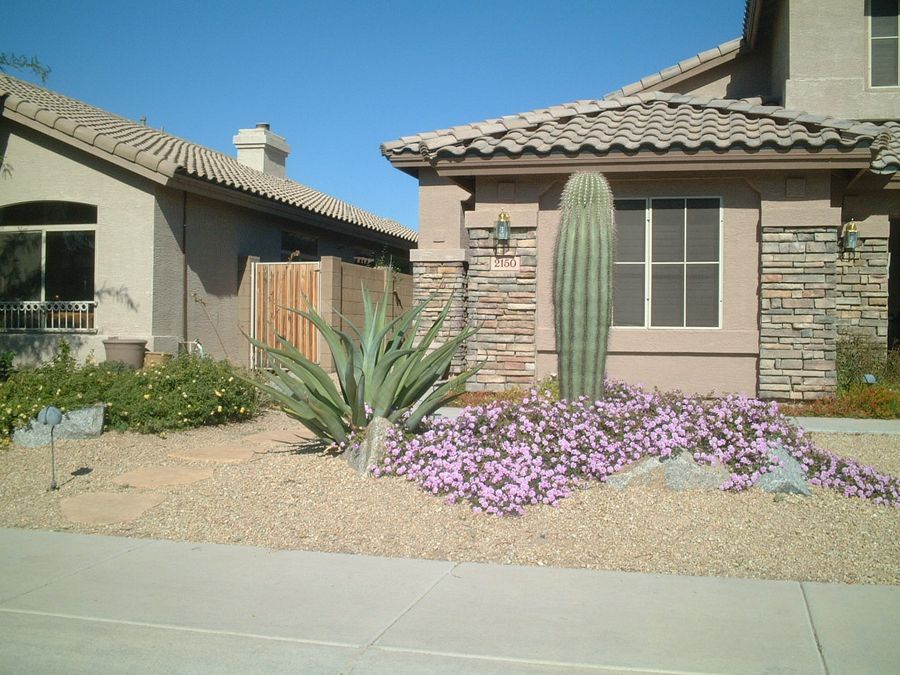
A low, fast-spreading lantana that covers the ground in small lavender-purple flowers for much of the year. It handles full sun and reflected heat, fills a bed in a single season and draws butterflies, which is why it shows up in so many Valley landscapes.
Living with it in the Phoenix Valley
Watering
Follow the shrub, groundcover and succulent schedule in our Landscape Care guide. It is thirstier than most desert groundcovers and looks best with steady summer water. Good drainage matters; soggy soil invites root problems.
Pruning
Leave frost-damaged growth in place until the danger of frost has passed, usually March, since it shelters the stems below. Then cut back hard, to about 6″, and it regrows quickly. Through the season, a light trim refreshes tired growth and brings on new bloom.
Cold
A hard freeze browns it to the ground, but it is one of the more cold-tolerant lantanas and returns from the base each spring.
Pests
Whiteflies can show up in late summer and early fall.
How our designers use it
Fast color in sun
It fills a bare bed quickly and keeps flowering through heat that stops many other groundcovers.
Spilling over edges
Its trailing stems soften the edges of raised planters, walls and boulders.
Mixed with gold
Planted alongside a gold lantana such as ‘New Gold,’ it makes a classic purple-and-yellow combination.
Good to know
Around the pool
Soft and thornless, so it is comfortable near decks and paths. The flowers attract butterflies and some bees, so we keep it a step back from where people sit and swim.
Berries and pets
Lantana berries are poisonous if eaten. The ASPCA lists lantana as toxic to dogs, cats and horses.