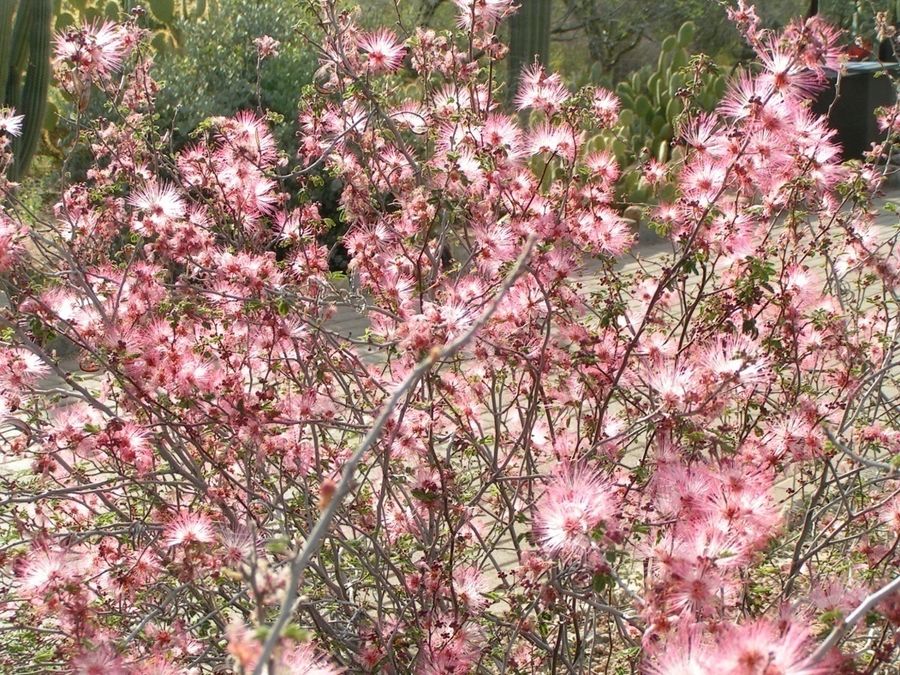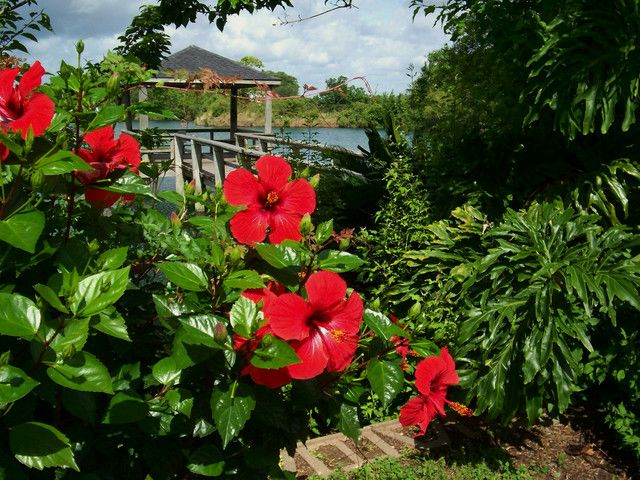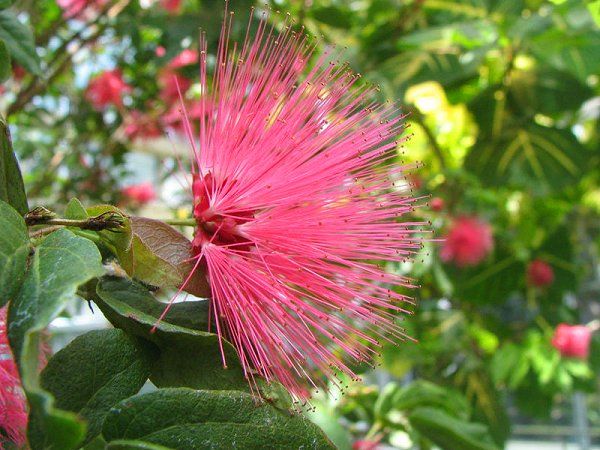
A tropical shrub with soft, fern-like leaves and large, fluffy pink puffs of stamens. It brings a lush, resort feel to protected spots in a Phoenix garden.
Living with it in the Phoenix Valley
Watering
Follow the shrub schedule in our Landscape Care guide. Unlike its desert relative the fairy duster, it is not drought tolerant and needs regular water during the warm months. Cut back somewhat in winter when growth slows.
Pruning
Shape it after the main bloom. Leave frost-damaged tips in place until spring, then cut back to healthy wood. This pruning tends to give it a rounder, shrubbier shape.
Cold
Plant it where it is sheltered, such as near a south or east wall or under a tree canopy, and cover it on frost nights. Plants in open, low-lying areas can be badly damaged in a cold winter.
How our designers use it
Tropical courtyards
Its soft foliage and large flowers suit protected courtyards and patios with a lush, resort look.
Against warm walls
A south- or east-facing wall gives it the winter warmth it needs to flower well.
Small specimen tree
Raised on a few trunks, it becomes a flowering accent tree for a sheltered entry.
Good to know
Around the pool
Spent flower puffs and small leaflets drop through the bloom season. Keep it a few feet back from the water.
Frost
Expect some winter damage in colder years. It usually regrows by late spring if the roots are protected.