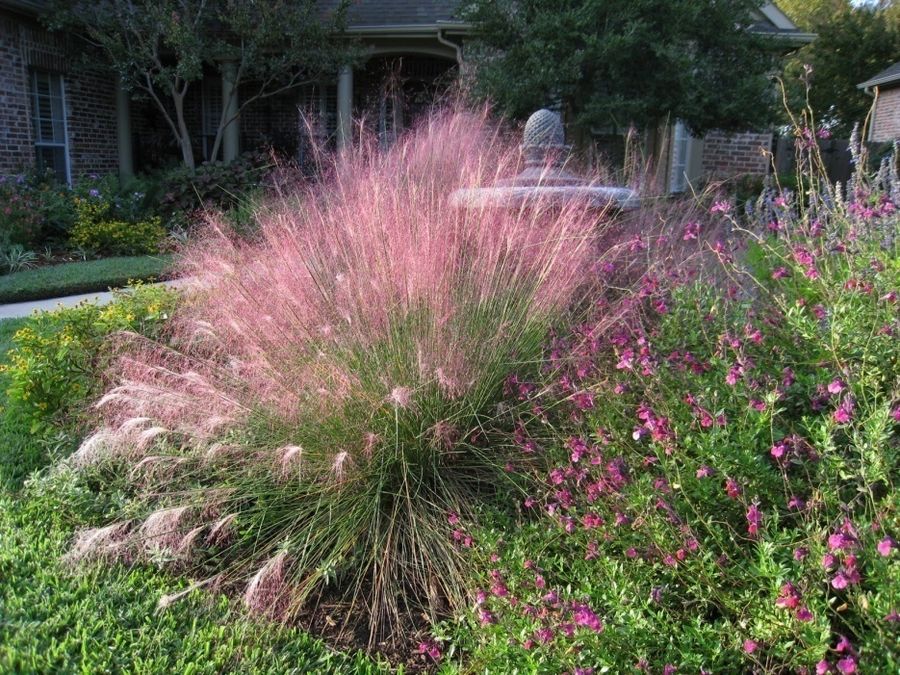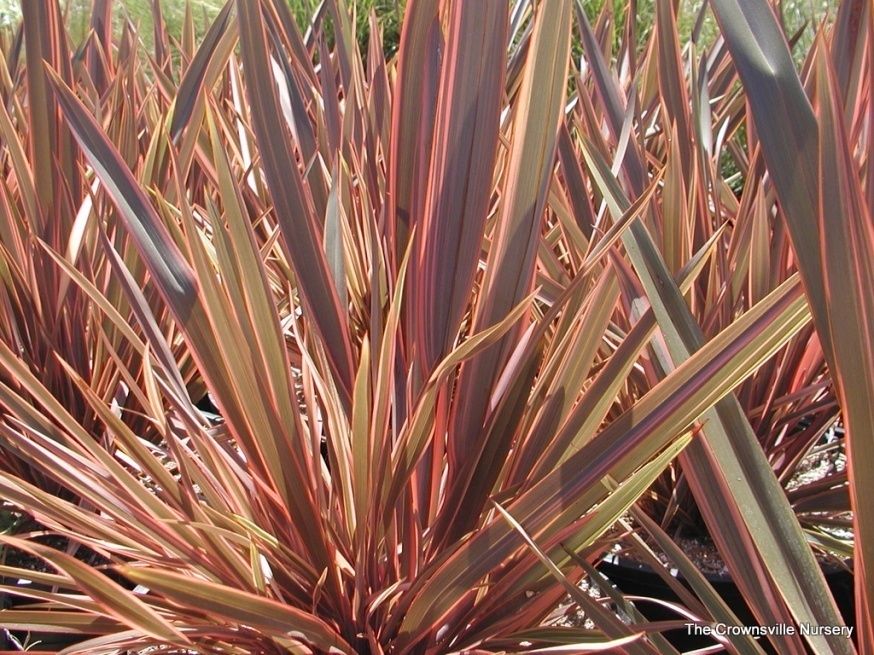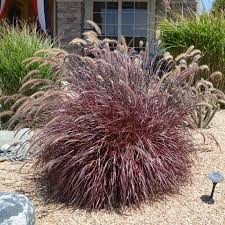
A clumping ornamental grass with burgundy-purple blades and soft, arching plumes from summer into fall. It grows fast and adds color and movement that few desert plants match.
Living with it in the Phoenix Valley
Watering
Follow the shrub schedule in our Landscape Care guide. It holds its color best with moderate water through summer. Drip irrigation is preferred.
Pruning
Cut the whole clump down to a few inches above the ground in late winter or early spring, once frost danger has passed. New blades come back quickly. Avoid shearing it into a ball during the growing season.
Cold
Frost turns the blades tan, and the clump can look rough by late winter. The spring cutback takes care of it.
How our designers use it
Color and movement
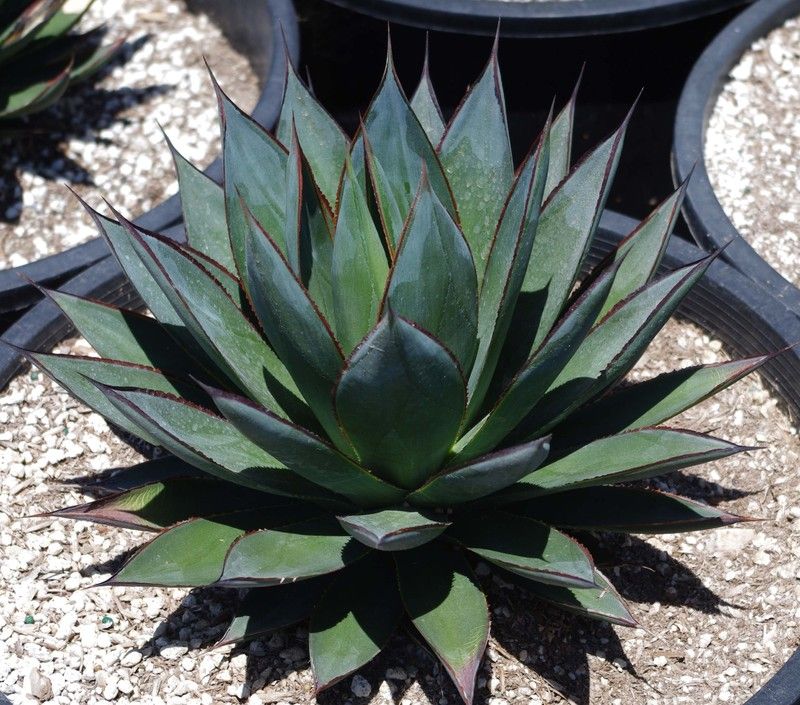
Its purple blades and plumes catch the light and move in the breeze, a contrast to stiff agaves and yuccas.
Massed in drifts
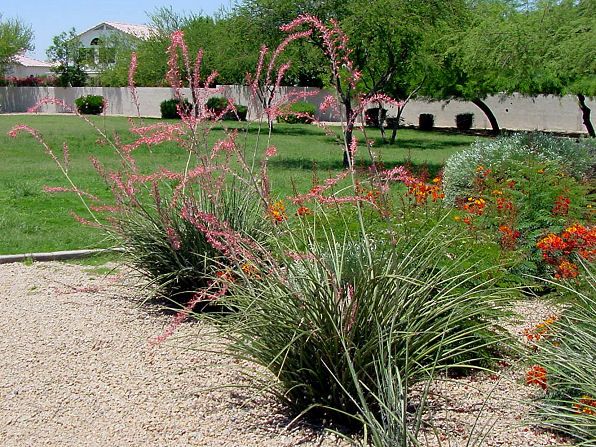
Planted in groups, it reads as a soft band of color along walls, walks and slopes.
Paired with gold and silver
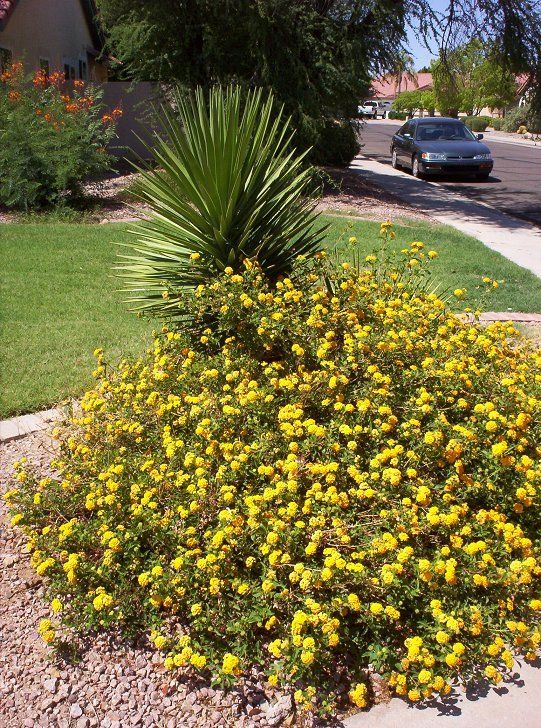
It stands out beside yellow flowers and blue-gray foliage.
Good to know
Planting rules
Green fountain grass (Pennisetum setaceum) is an Arizona noxious weed and is not allowed in landscapes in many Valley communities. Purple fountain grass is a different, low-seeding selection, but some HOAs and cities restrict it too. Check your local rules before planting.
Around the pool
No thorns, but plumes shed fluff and blades break off in wind. Keep it a few feet back from the water.