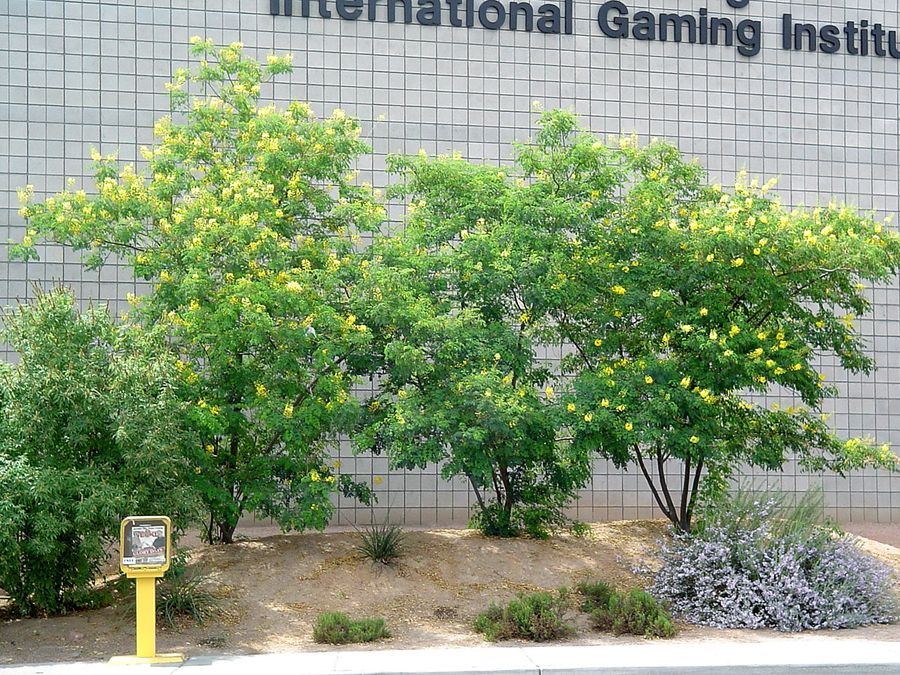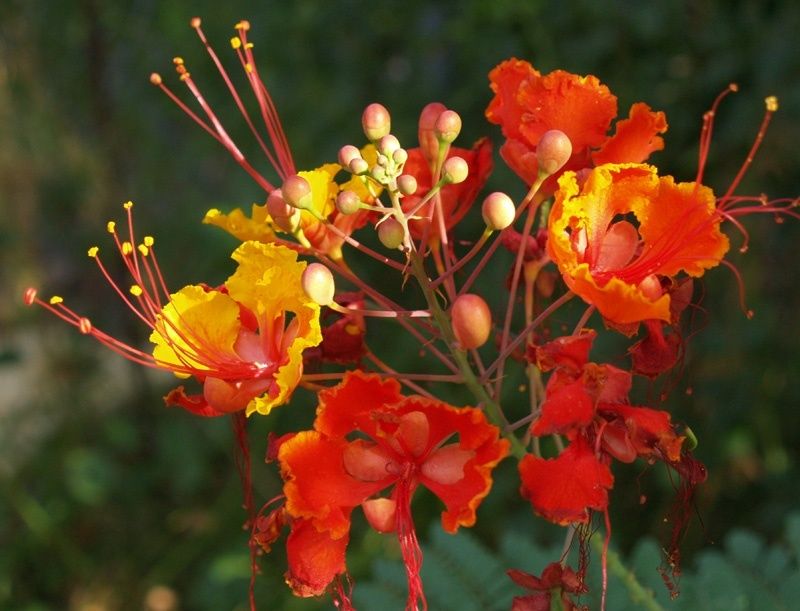
A fast-growing tropical shrub with fine, fern-like leaves and big clusters of red-orange flowers edged in yellow. It is at its best in the hottest months of the year, and a hard cutback each winter keeps it full and blooming.
Living with it in the Phoenix Valley
Watering
Follow the shrub schedule in our Landscape Care guide. It tolerates dry spells, but flowers best with regular deep watering through the warm months. It needs little or no extra water in winter while it is dormant.
Pruning
Cut it back hard in late winter, to about a foot tall or even to the ground, once the danger of frost has passed. It regrows quickly and flowers on the new growth. A lighter head-back in August can bring a second flush of flowers in fall.
Cold
Frost burns the leaves, and a freeze in the mid-20s kills the stems back. The roots are much hardier, and plants regrow each spring.
Winter look
Between the winter cutback and spring regrowth there is little to see for a few months, so place it where that gap won’t matter.
How our designers use it
Summer color
It is one of the few shrubs that looks its best in July and August, when heat stops most other plants from blooming.
A tropical look on less water
Our designers like it near patios and courtyards for a lush, tropical feel that uses far less water than true tropicals.
Behind evergreen plants
Planting it behind agaves, hesperaloe or other evergreens hides the bare stubs after the winter cutback.
Good to know
Around the pool
Spent flowers, leaves and seed pods drop through the season, and the flowers draw hummingbirds, butterflies and bees. We generally keep it a few feet back from the water.
Pets
Red Bird of Paradise is listed as toxic to dogs, cats and horses. Eating it can cause vomiting and diarrhea.