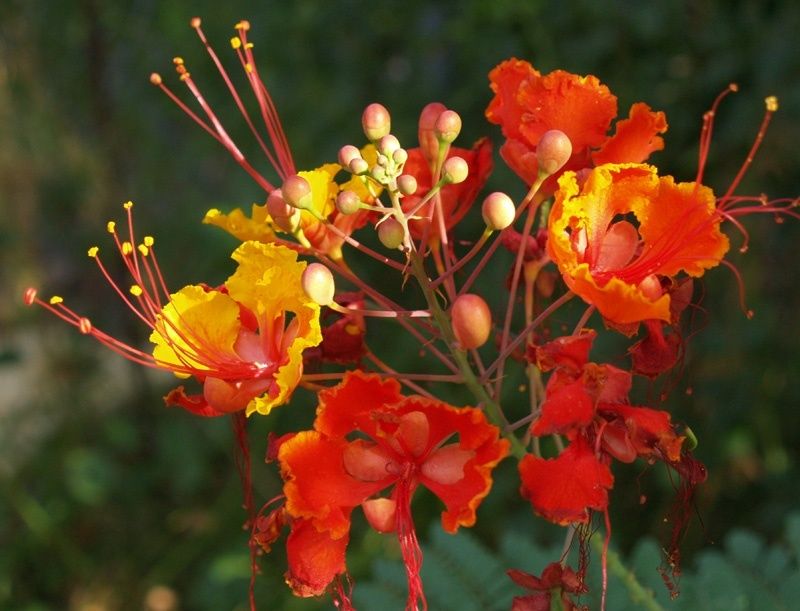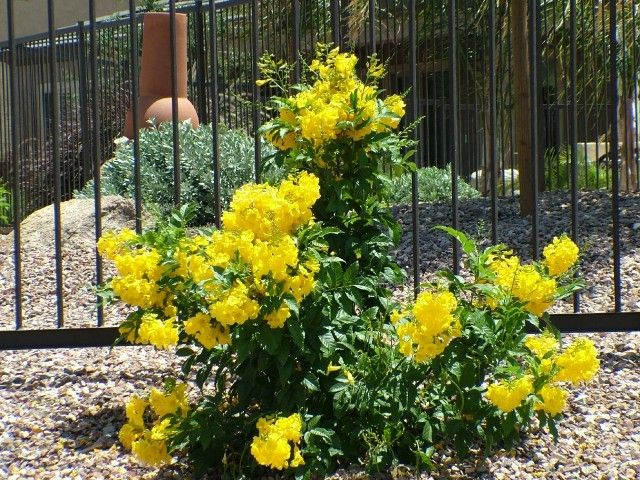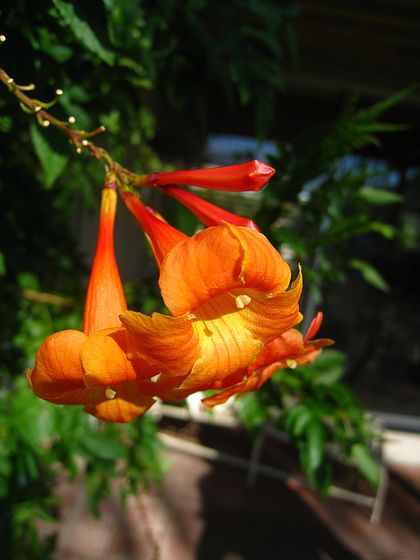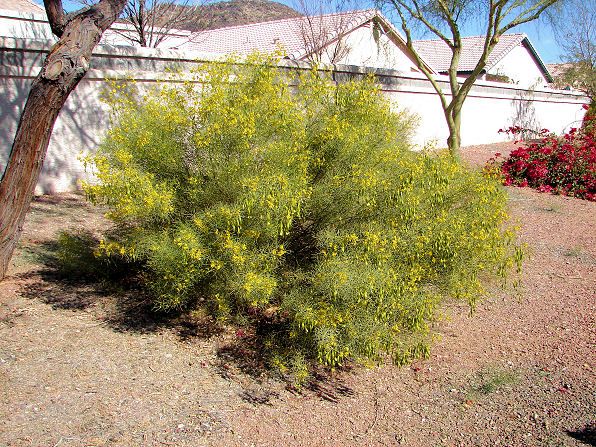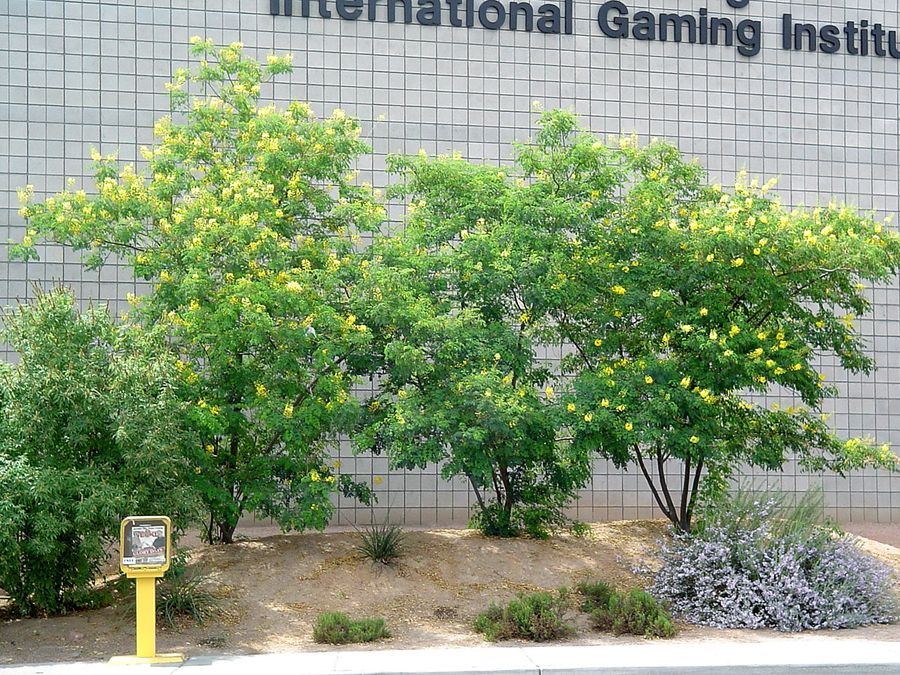
A large, thornless evergreen shrub with lemon-yellow flower spikes and bright green, lacy leaves. Also sold as Mexican bird of paradise, it has a fuller, more lush look than most desert shrubs and can be trained into a small patio tree.
Living with it in the Phoenix Valley
Watering
Follow the shrub schedule in our Landscape Care guide. It handles the heat well but looks fullest and blooms best with steady summer water. Cutting back water slows growth if it is outgrowing its space.
Pruning
Grown as a shrub, it can be cut back hard in late winter and shaped lightly again in early summer. Grown as a small tree, raise the canopy by removing lower branches over time. The wood is brittle, so avoid long, heavy limbs.
Seed pods
Pods form in tight clusters after the spring bloom and can weigh down branches. Clipping spent flower spikes keeps the plant tidier and encourages more bloom.
Cold
A hard freeze can burn the leaves. Established plants recover quickly in spring.
How our designers use it
A small patio tree
Trained to one or a few trunks, it gives light shade and color where a full-size tree would be too big.
Screening with color
Its height and evergreen leaves make it useful along walls and property lines, with yellow flowers for much of the year.
A softer desert look
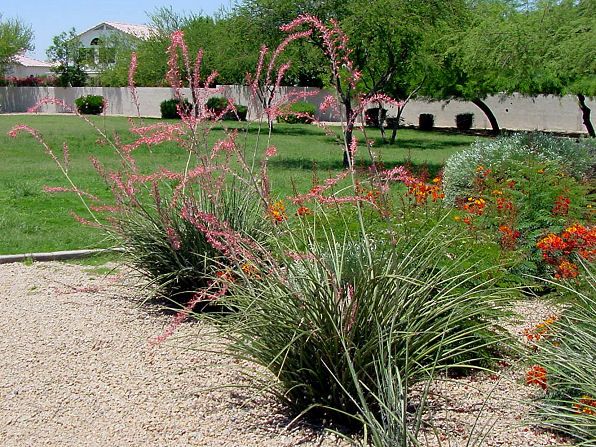
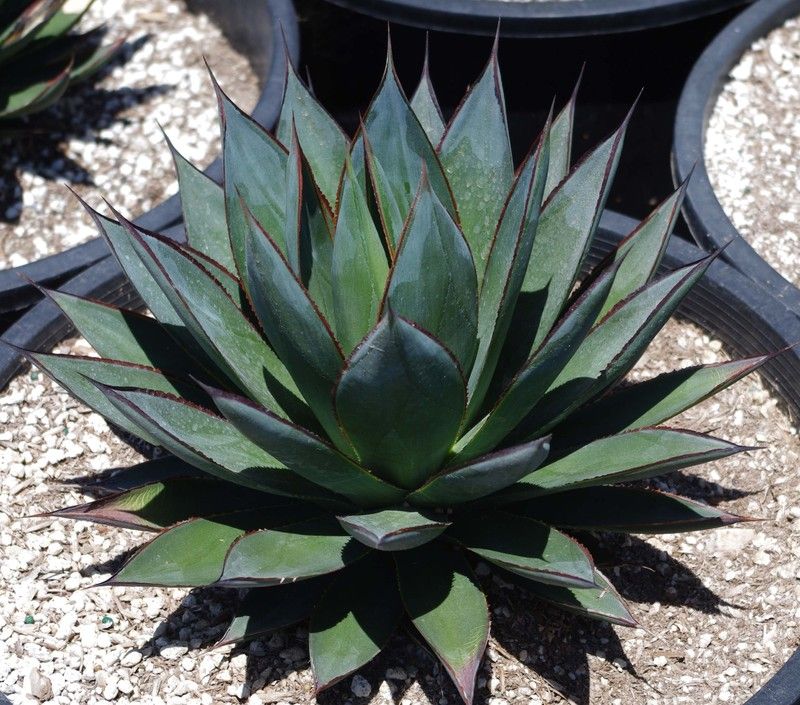
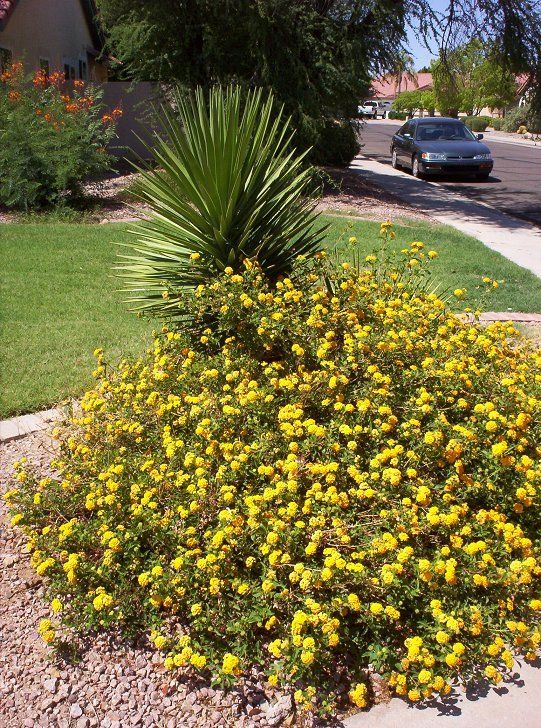
It bridges lush and desert plantings, sitting comfortably beside agaves, red yucca and red bird of paradise.
Good to know
Around the pool
It is thornless, but it drops flowers, leaflets and seed pods, and litter is fairly high. We generally keep it back from the water’s edge.
Wind
The wood is brittle. Good pruning and a sheltered spot help it get through monsoon storms.