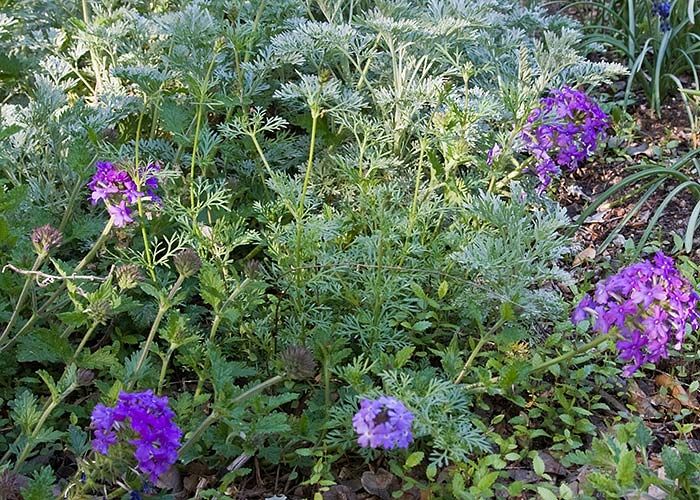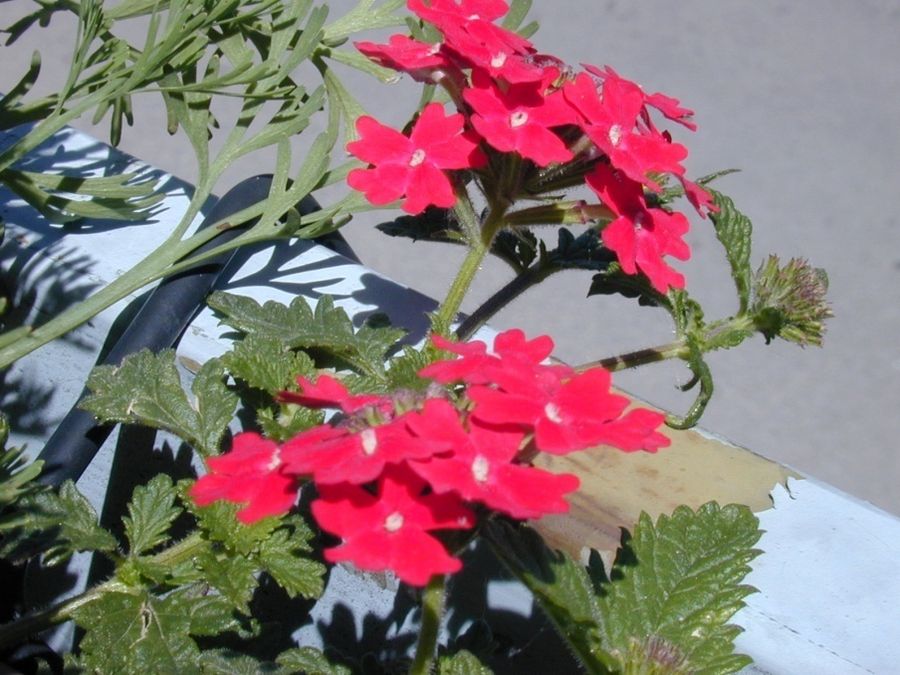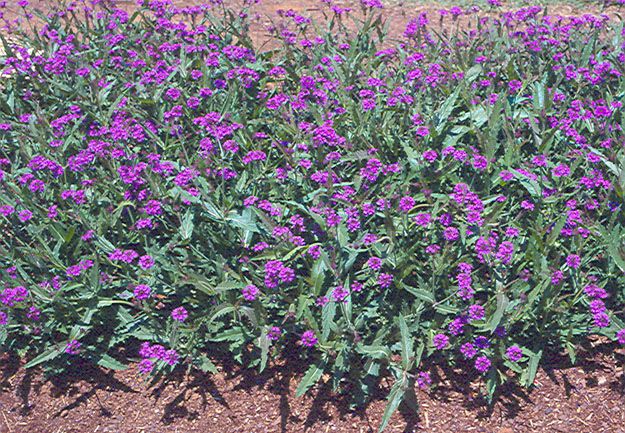
A spreading verbena with stiff, rough leaves, named for their sandpaper feel, and clusters of vivid purple flowers on upright stems. It grows from underground stems, so it fills an area well and can bounce back from hard freezes.
Living with it in the Phoenix Valley
Watering
Follow the shrub, groundcover and succulent schedule in our Landscape Care guide. It needs fast-draining soil. It is sensitive to salt, and the Valley’s mineral-heavy water can burn leaf edges, so occasional deep watering that flushes salts helps.
Pruning
Cut back after a flush of flowers to tidy it and encourage more bloom. If it looks ragged, it can be cut nearly to the ground and will regrow from its underground stems.
Leaf burn
Brown, tattered leaf edges are its most common problem here. A decomposed granite mulch and good drainage help.
How our designers use it
Filling open ground
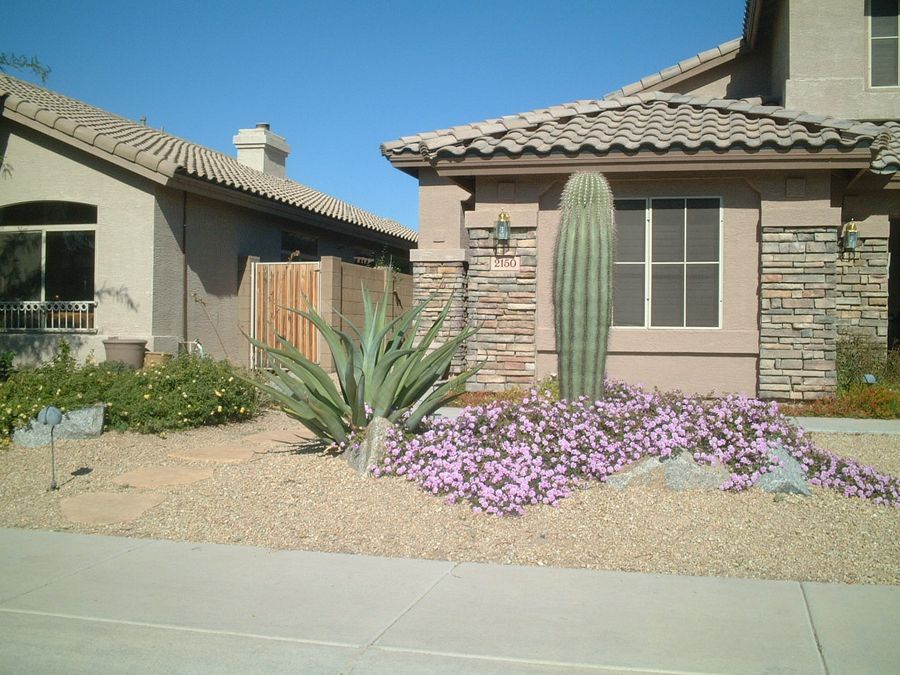
Its spreading habit covers small to mid-sized areas with a loose, flowering mat.
Desert perennial plantings
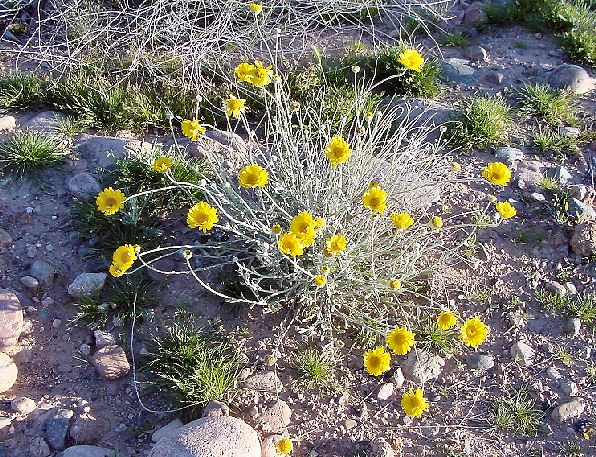
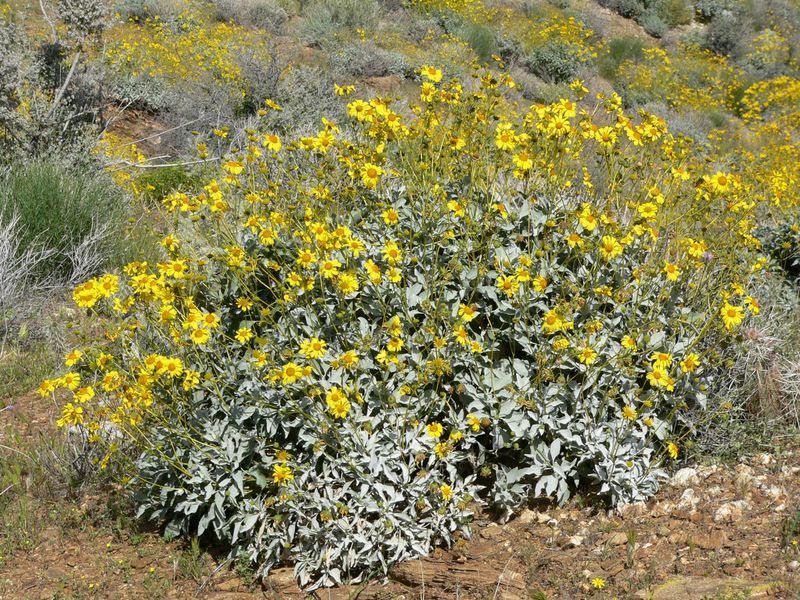
Its purple flowers contrast well with yellow-flowered natives like desert marigold and brittlebush.
Rock gardens and borders
It works as a low accent along gravel paths and between boulders.
Good to know
Around the pool
No thorns and little litter, but the flowers draw bees and butterflies. We keep it a step back from the deck edge.
Spreading
It can be aggressive and spread beyond its bed. It has naturalized in parts of the southeastern U.S., so give it room or an edge to grow against.