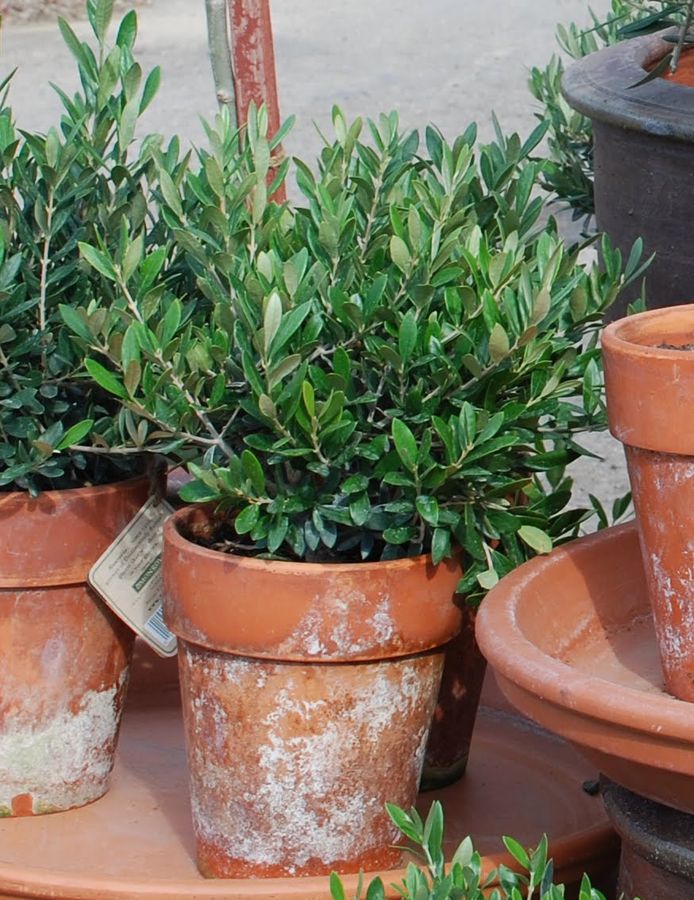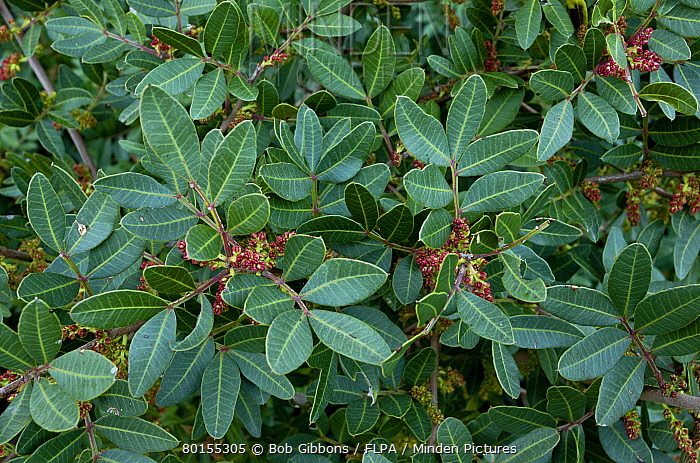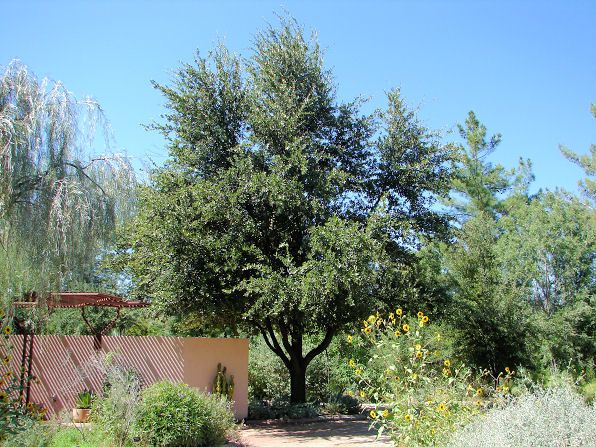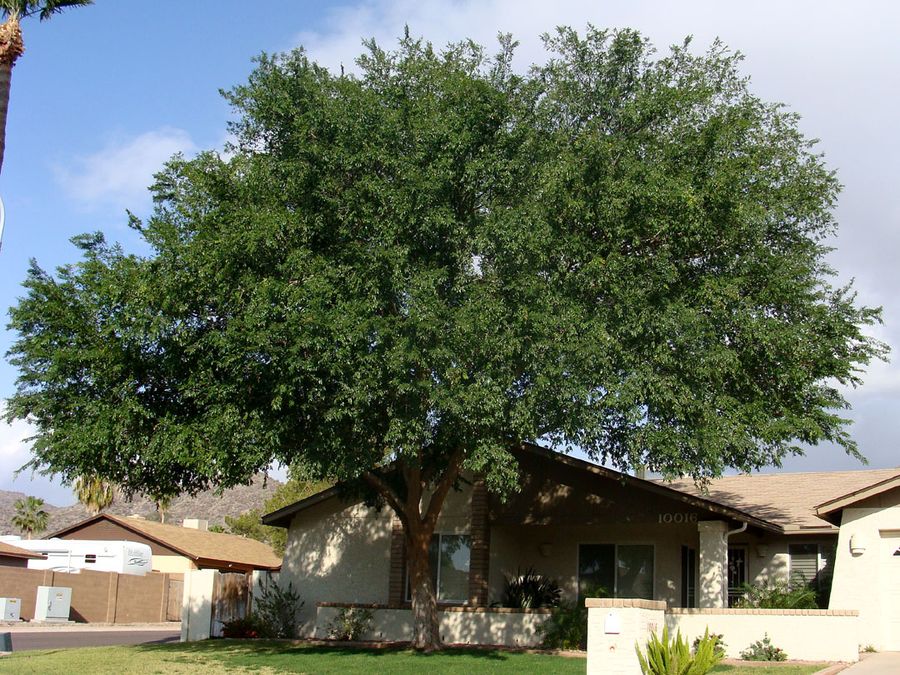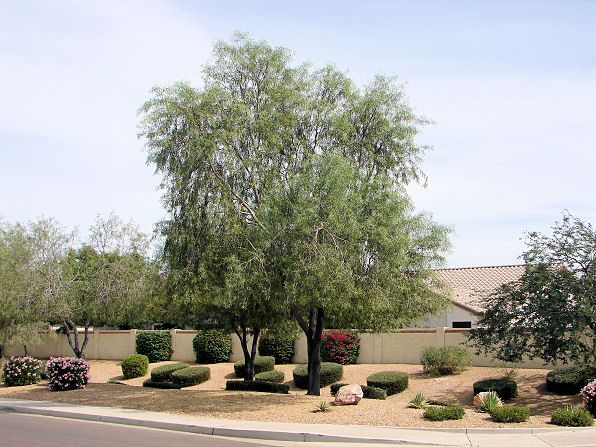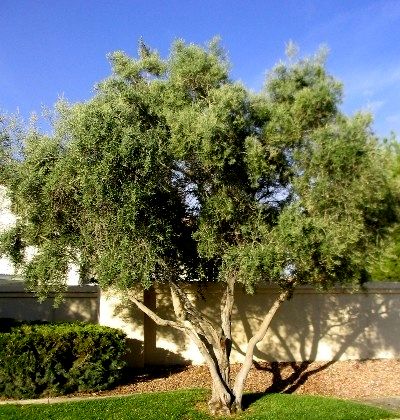
A fruitless olive selection with soft gray-green leaves and a gnarled, sculptural trunk as it ages. It gives the Mediterranean look of a classic olive without the dropped fruit, and it produces little or no pollen, which makes it the olive of choice for Phoenix yards.
Living with it in the Phoenix Valley
Watering
Follow the tree schedule in our Landscape Care guide while it establishes. Once mature it is quite drought tolerant, though it looks fuller with occasional deep watering through the summer. It needs well-drained soil and dislikes staying wet.
Pruning
Thin lightly to open the canopy and show off the trunks. Avoid shearing it into a ball, and skip heavy cuts in midsummer, which can expose bark to sunburn.
Pests
Usually trouble-free. Watch for scale insects on stems and leaves, and plant in soil that drains well to avoid root rot.
How our designers use it
A sculptural focal point
A multi-trunk specimen gives a courtyard, entry or motor court instant character, especially when lit from below at night.
Mediterranean and Tuscan settings
Its silvery foliage pairs naturally with stone, stucco, rosemary and lavender, and it reads as mature even when newly planted.
Evergreen screening
Planted in a row, it softens a view or a neighbor’s second story without the bulk of a hedge.
Good to know
Around the pool
With no fruit to drop, it is one of the better trees to place near water. It does shed older leaves through the year, so keep the canopy back from the pool’s edge.
Allergies
Fruiting olives are a major source of spring pollen in the desert. Swan Hill produces little or none, so confirm the variety on the nursery tag before planting.