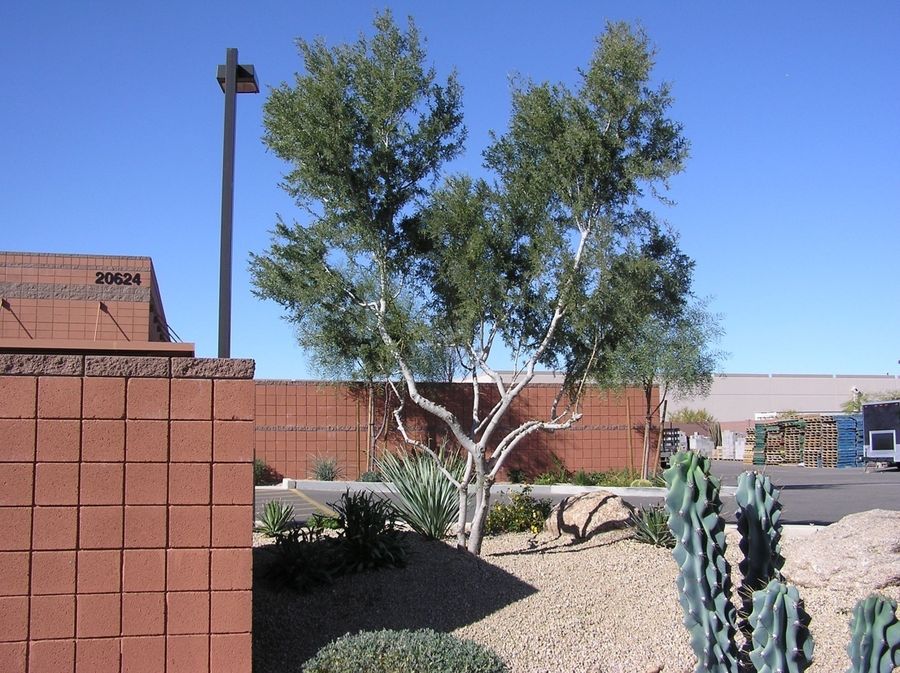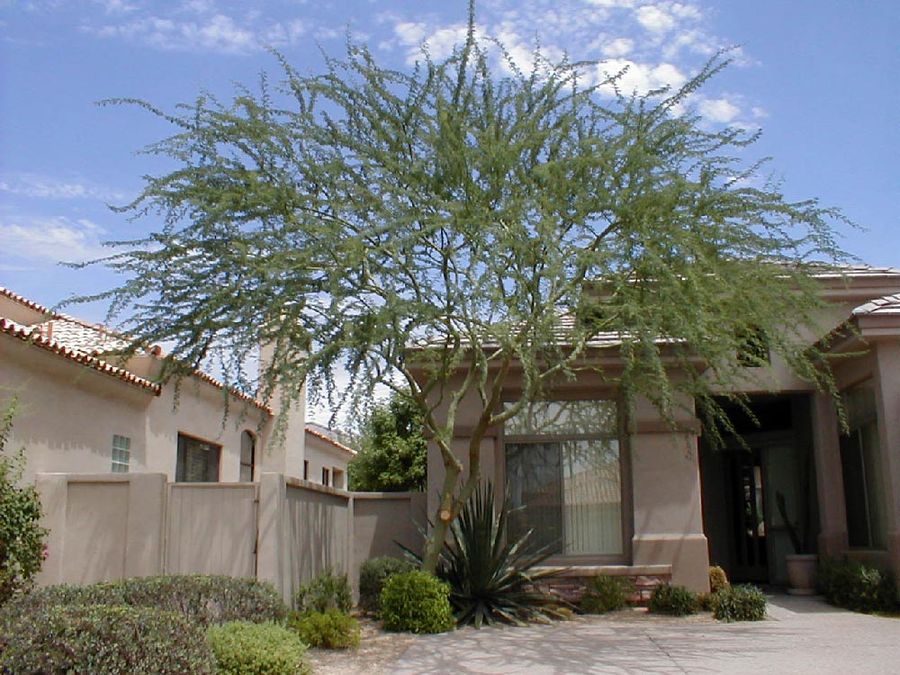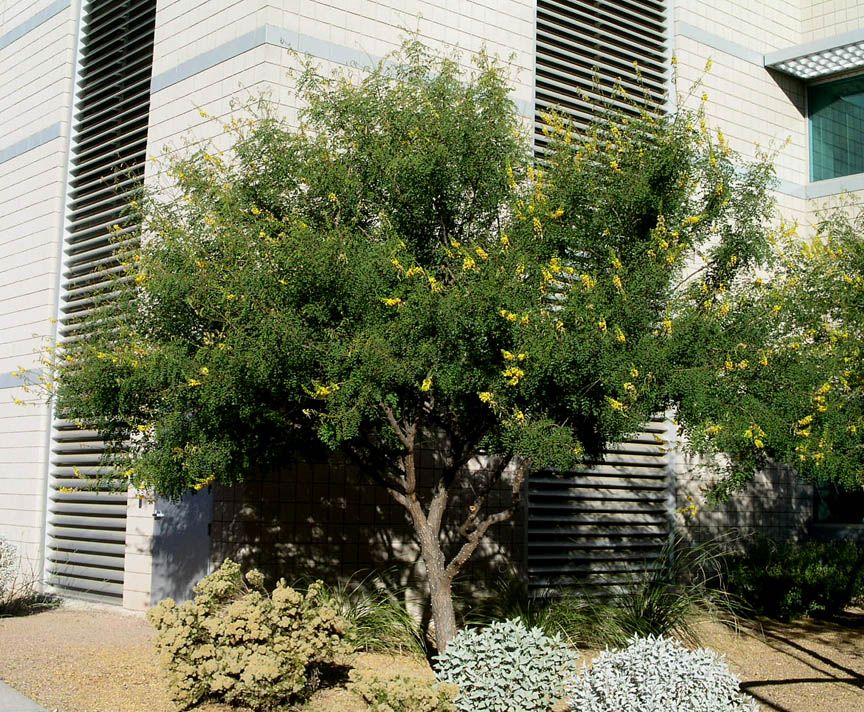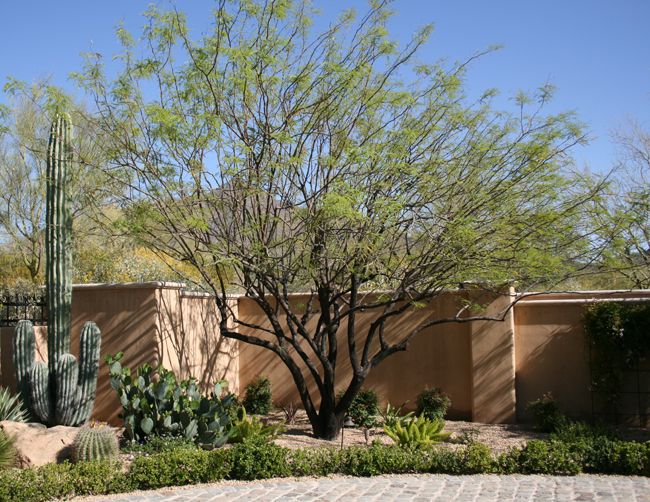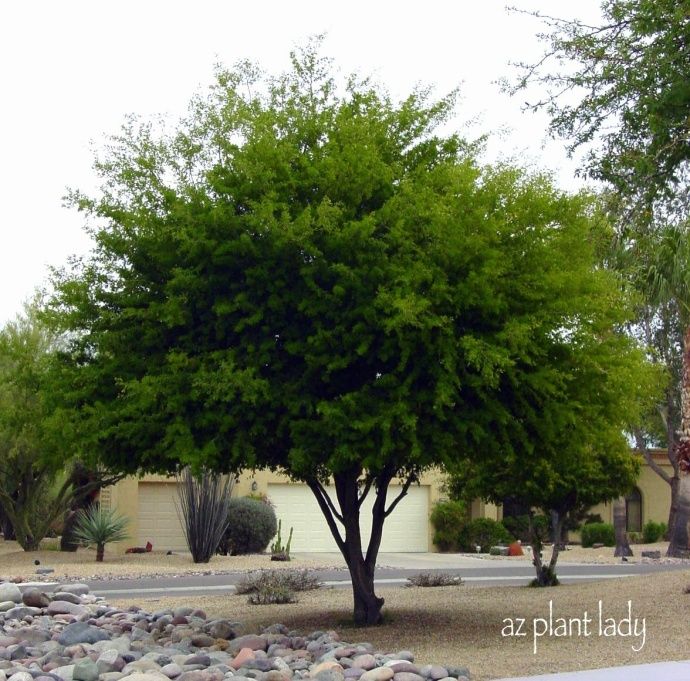
A slow-growing desert tree with some of the darkest green foliage of any low-water tree, a dense canopy and a smoky gray trunk. People choose it for deep shade and year-round color without high water use, and it holds its tidy, sculptural shape for decades.
Living with it in the Phoenix Valley
Watering
Follow the tree schedule in our Landscape Care guide while it establishes. Young trees grow noticeably faster with steady water. Once mature, it is very drought tolerant and needs far less than most shade trees.
Pruning
Train young trees early to set the trunk and scaffold branches. Never shear it; shearing creates a tangle of crossing branches that takes years to correct. Wear gloves and long sleeves, since the spines are hidden under the leaves.
Cold
A typical Phoenix winter is fine. In a hard freeze it may drop leaves for a while, and stems can die back below about 20°F.
Heat and sunburn
Exposed trunks on the south and west side can sunscald. Keep lower foliage to shade the trunk while the tree is young.
How our designers use it
Dense shade in a low-water yard
Its full canopy casts real shade over a patio or seating area, which few desert trees can do on so little water.
A dark green anchor
The deep green color stands out against gray stone, cactus and silver-leaved shrubs, and it reads as lush without high water.
Security and screening
Planted along a property edge, its thorny, dense branching discourages cutting through and blocks views.
Good to know
Around the pool
It is tidier than many desert trees, but it sheds small leaflets and holds woody seed pods that eventually fall. With its spines, we generally keep it back from pool decks and paths where people walk barefoot.
Thorns
Keep it a few feet off walkways and gates so branches don’t reach into foot traffic as it grows.