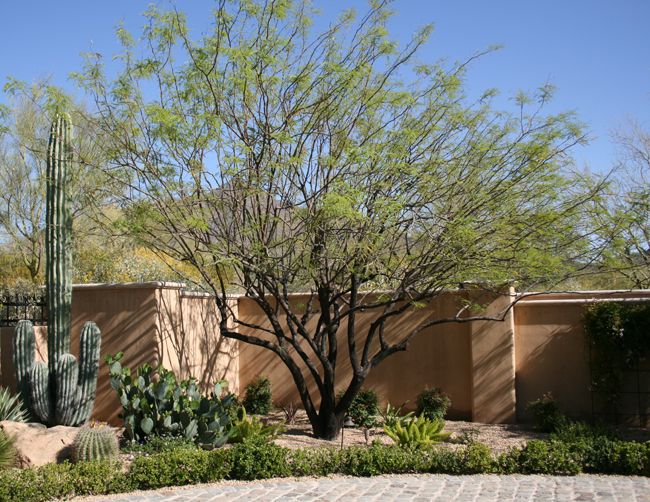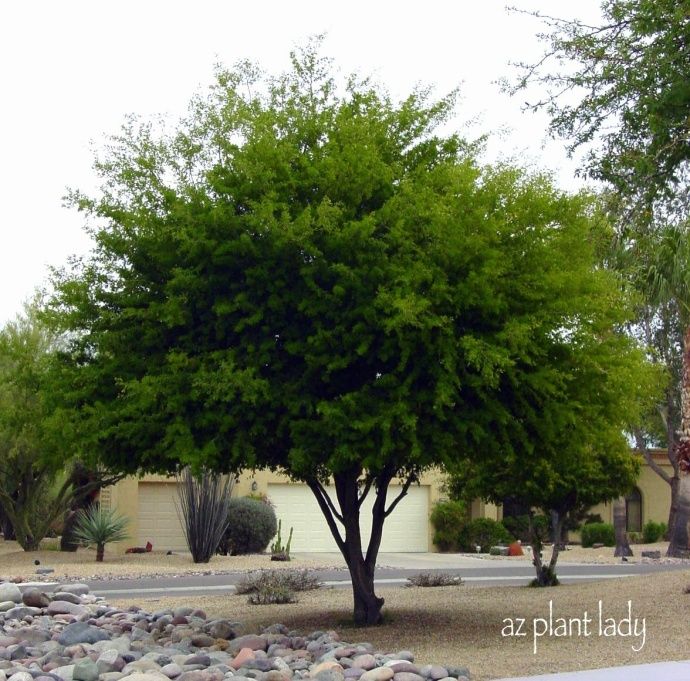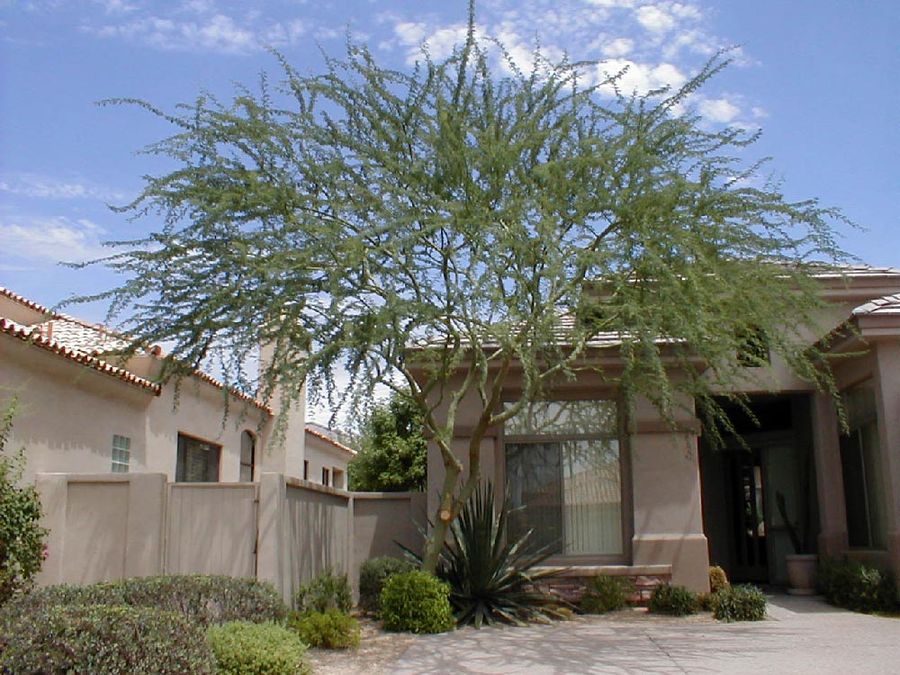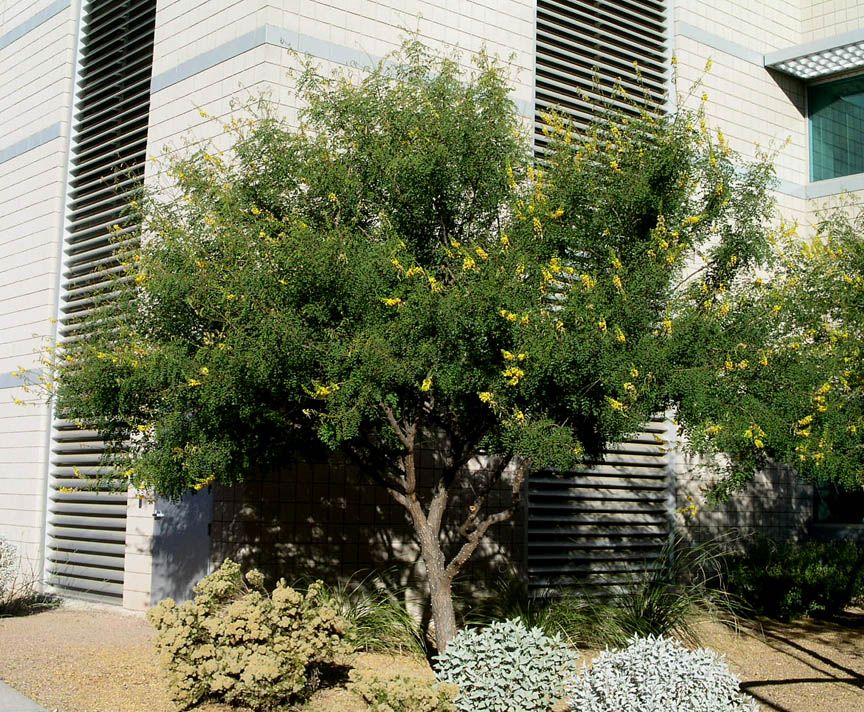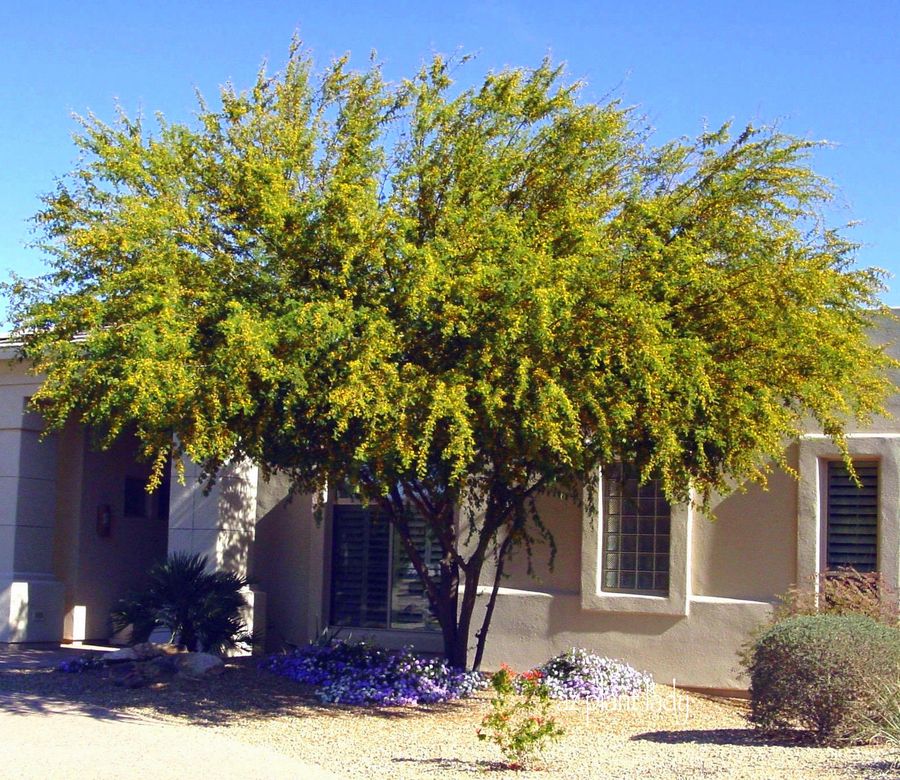
A small desert tree native from the southern United States into South America, with fine, feathery leaves and golden puffball flowers that perfume the yard in late winter and spring. It is tough, low-water and at home in Phoenix heat, with small thorns to keep in mind when placing it.
Living with it in the Phoenix Valley
Watering
Follow the tree schedule in our Landscape Care guide while it establishes. Once mature, it gets by on little supplemental water. Deep, occasional soaks spread away from the trunk build a wide root system that holds up better in monsoon winds.
Pruning
It pushes shoots along the trunk and wants to grow as a large shrub. Train it early to the trunk form you want and keep up with light pruning. Avoid removing more than about a quarter of the canopy in summer, and wear gloves; the thorns are small but sharp.
Cold
A hard freeze can thin the leaves or nip new growth. Established trees usually leaf out again in spring.
Pests
Generally trouble-free. Aphids, whiteflies or spider mites can appear, mostly in dry, dusty weather.
How our designers use it
Fragrance you can enjoy
The late-winter scent is the highlight. Our designers like it where it can be noticed from a patio or window, set back far enough that no one brushes against the thorns.
A native desert palette
It sits naturally with native shrubs, cacti and boulders, and its flowers feed bees while the canopy shelters birds.
Shade at a small scale
Its vase shape and modest size suit courtyards and front yards that cannot take a large shade tree.
Good to know
Around the pool
Litter is moderate: spent flowers, fine leaflets and dark seed pods. Along with the thorns, that is why we keep it away from pool decks and bare feet.
Allergies
It is considered allergenic. Worth weighing if someone in the home has pollen allergies.