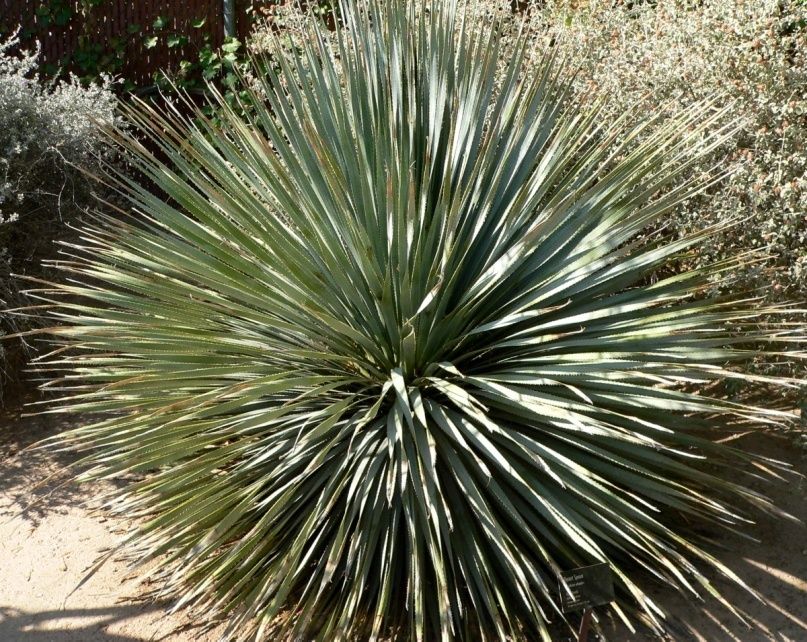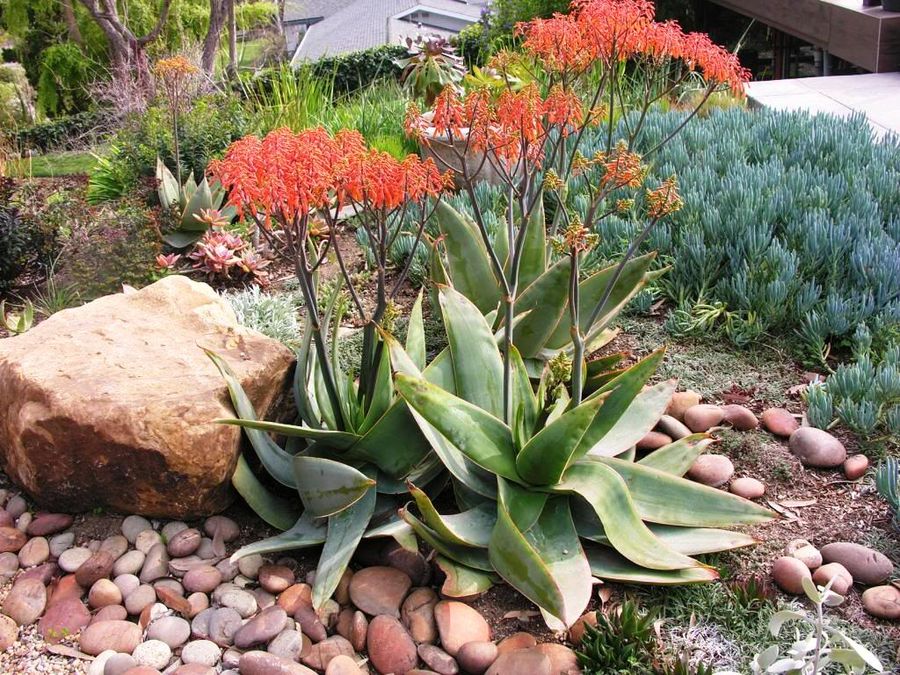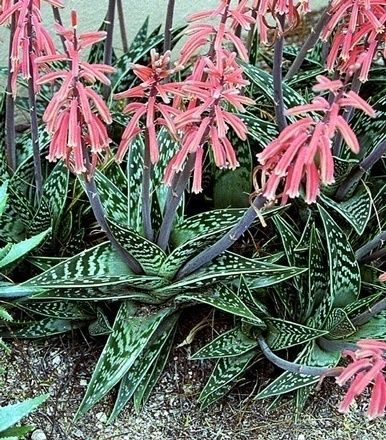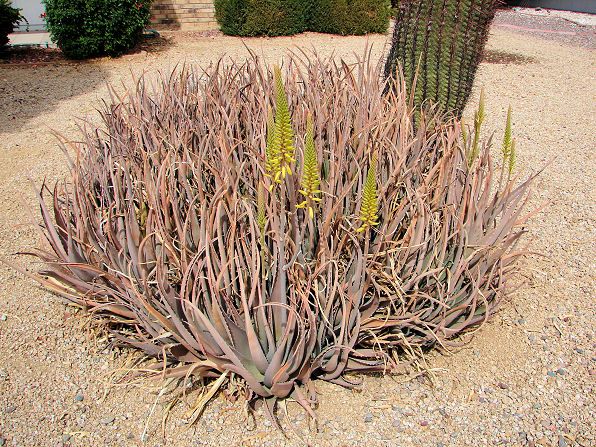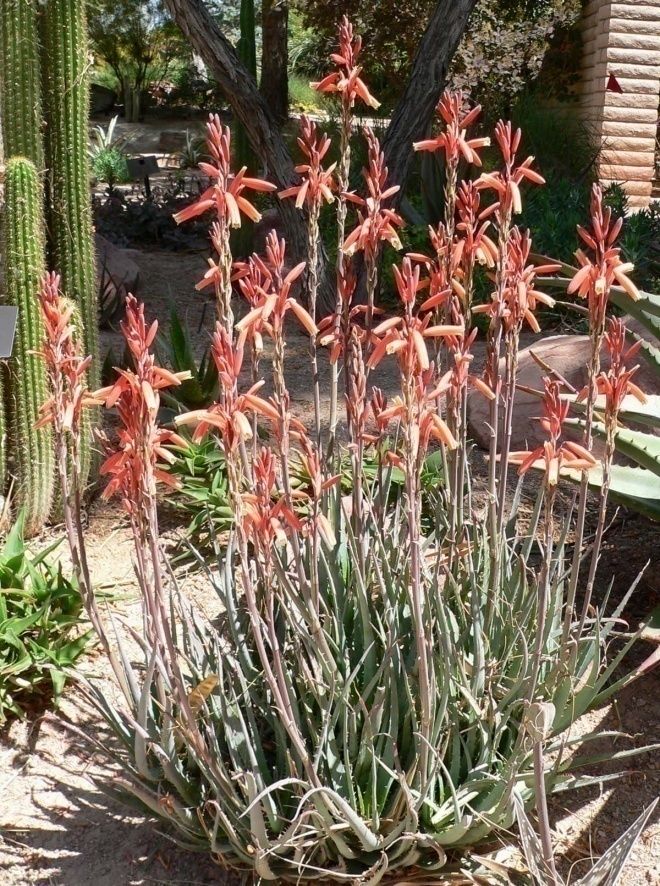
A dwarf hybrid aloe that forms tight clumps of narrow, upright blue-gray leaves. From late winter into spring it sends up spikes of orange flowers that draw hummingbirds, giving the garden color when little else is in bloom.
Living with it in the Phoenix Valley
Watering
Follow the shrub, groundcover and succulent schedule in our Landscape Care guide. Established plants get by on little, but an occasional deep soak in the hottest months keeps the leaves plump. Gravelly, well-drained soil matters more than extra water; soggy soil leads to rot.
Pruning
Remove spent flower stalks after bloom. Otherwise it needs little. Overcrowded clumps can be divided and the offsets replanted elsewhere.
Heat/sunburn
It handles more sun than many aloes. In very reflective spots, such as against a west wall, a little afternoon relief keeps it looking its best.
How our designers use it
Massing
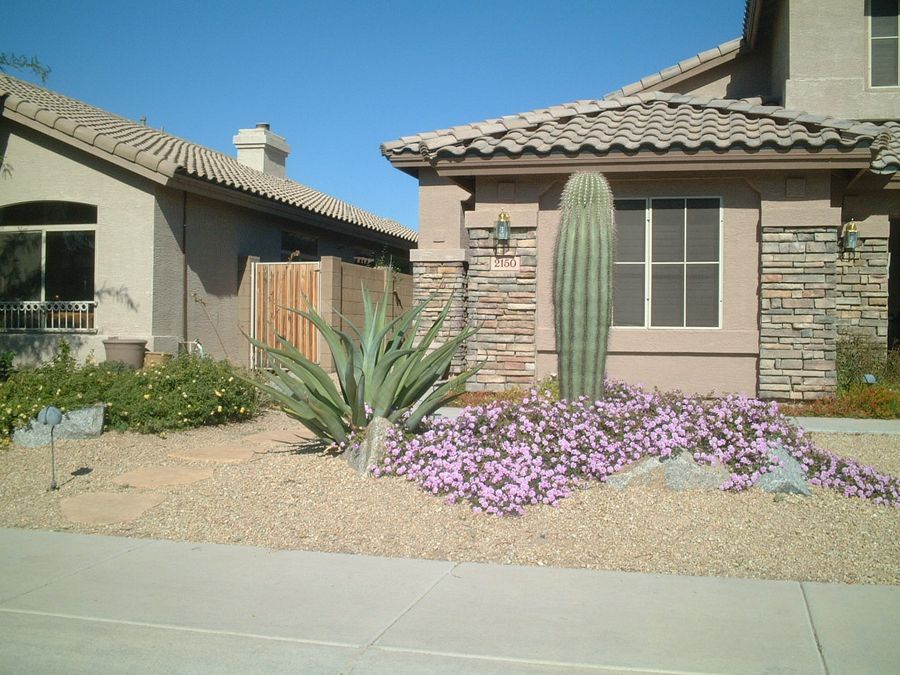
Its even size and shape make it easy to repeat in rows or drifts, giving a clean, modern rhythm to a front yard or courtyard.
Winter color
Planted where it can be seen from the house, it brings orange flowers and hummingbirds to the garden in the cool months.
With cactus and boulders
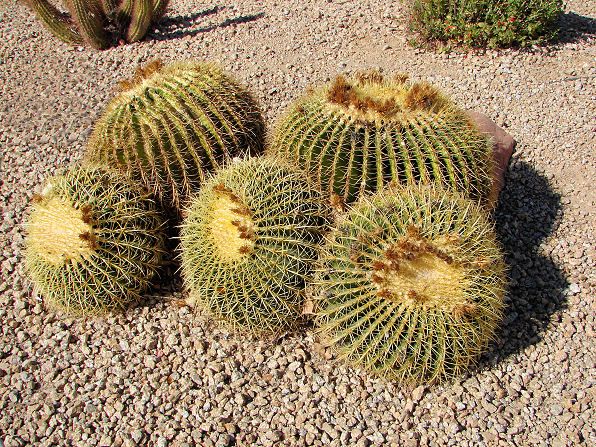
Its blue-gray color sits well against golden barrels, dark boulders and decomposed granite.
Good to know
Around the pool
The leaf edges carry small, sharp teeth, but the plant stays low and compact. We are comfortable using it in pool beds set a step back from the walking path. Flower spikes draw hummingbirds in late winter.