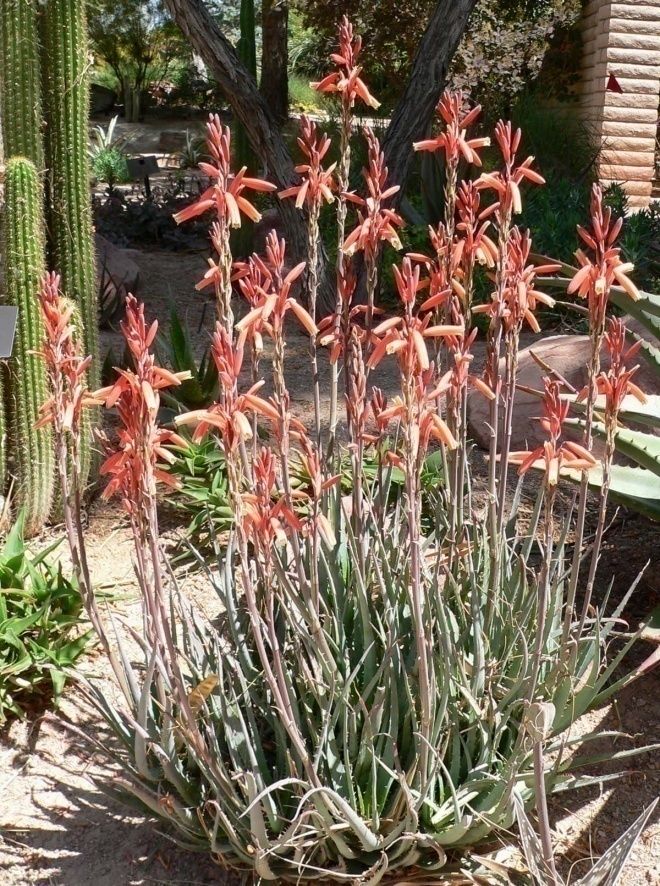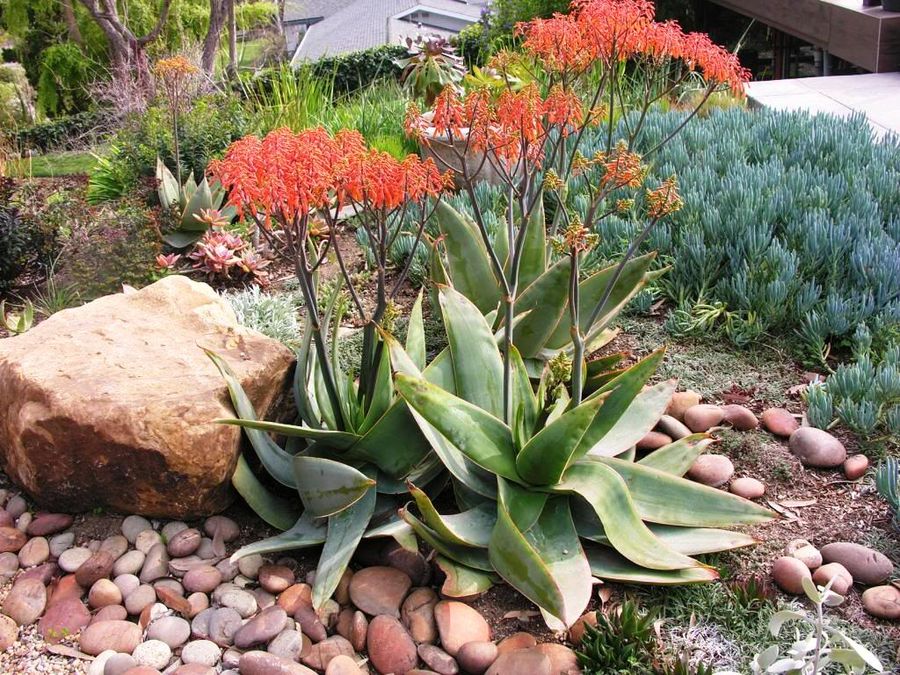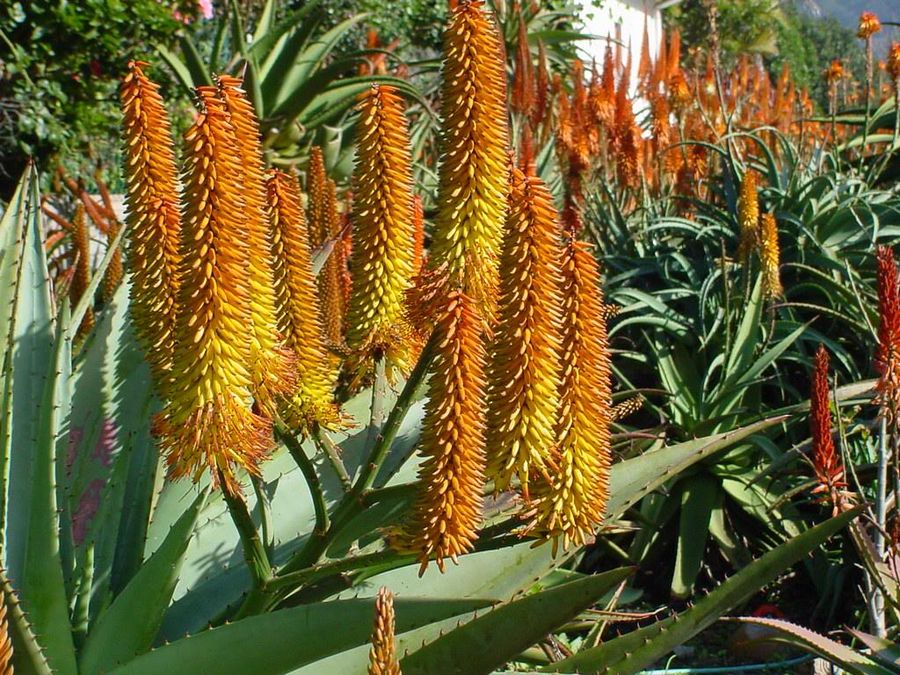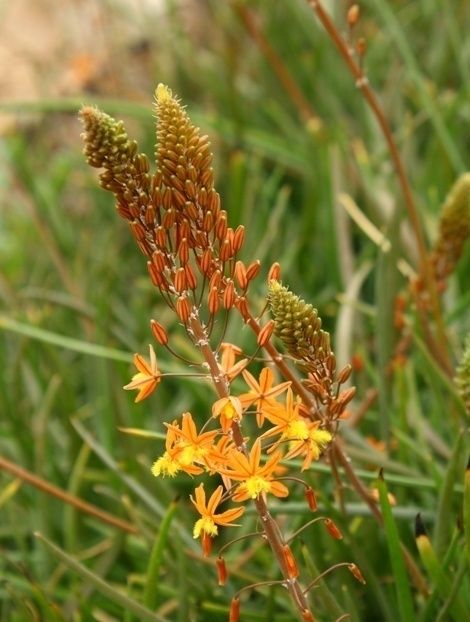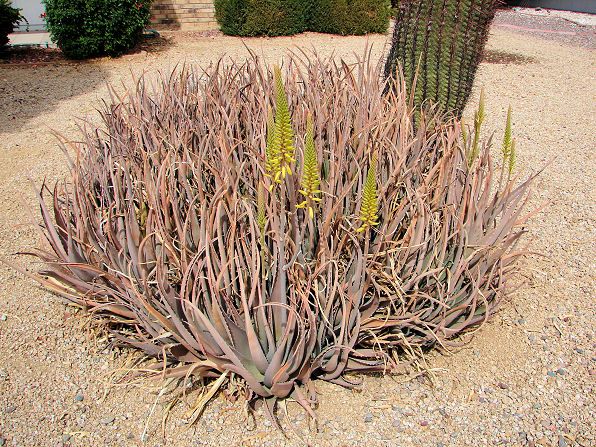
The familiar aloe vera, with fleshy gray-green leaves and spikes of yellow flowers in late winter. It is tough and forgiving, fills in quickly with offsets, and many homeowners like having a clump close at hand in the garden.
Living with it in the Phoenix Valley
Watering
Follow the shrub, groundcover and succulent schedule in our Landscape Care guide. It needs only occasional water in summer. Leaves that turn soft and purplish are a sign of drought or cold stress. Avoid keeping the soil wet, especially in winter.
Pruning
Remove spent flower stalks after bloom. Every three to five years, dig and divide crowded clumps; the offsets replant easily.
Cold
Frost below the mid-20s can damage the leaves. Cover it on the coldest nights.
Pests
Generally trouble-free, but black widow spiders like to nest in dense, mature clumps. Wear gloves when dividing or cleaning them out.
How our designers use it
Edging and borders
Planted in a row, it makes a low, tidy edge along beds and walks.
Kitchen and courtyard gardens
Many clients like a clump near the kitchen door or in a courtyard herb garden.
Rock gardens
Its upright gray-green leaves pair well with boulders and low desert wildflowers.
Good to know
Around the pool
The leaf edges have small teeth, but the plant stays compact, so it can sit in beds near the pool. Hummingbirds visit the late-winter flowers.
Pets
Aloe vera is considered toxic to dogs, cats and horses. Eating the leaves can cause vomiting, lethargy and diarrhea.